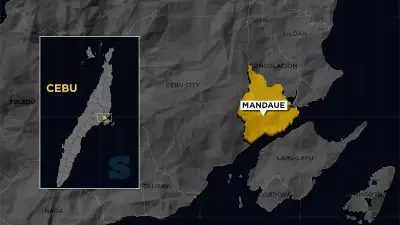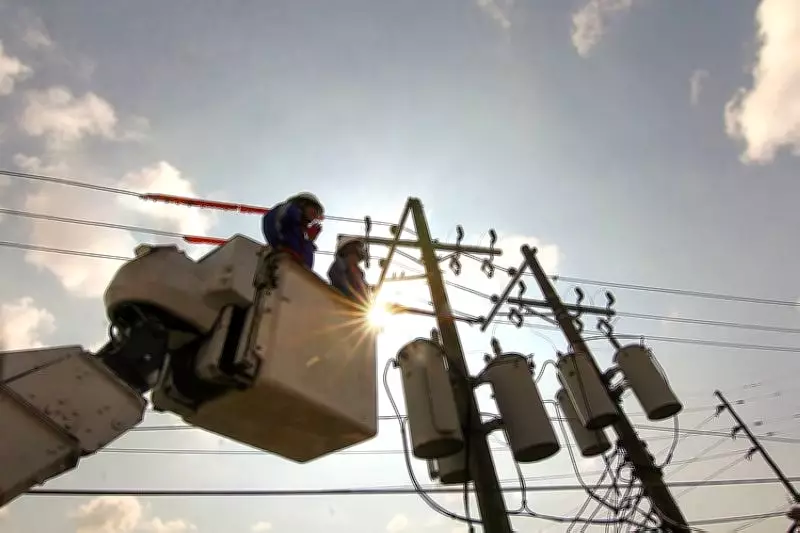
Parts of Cebu were placed under one-hour rotational brownouts on Wednesday evening, May 13, 2026, as tight power supply conditions triggered a Red Alert in the Visayas Grid, forcing utilities to implement emergency load management to prevent a system-wide collapse.
Implementation of Controlled Outages
The Visayan Electric implemented the controlled outages starting at 5:45 p.m., covering portions of Cebu City, Mandaue City, the City of Naga and the town of San Fernando. Electricity was restored after approximately one hour in each affected area.
Engineering Technical Support representative Nico Arancillo said the interruptions were a last-resort measure ordered in coordination with the National Grid Corp. of the Philippines (NGCP), which placed the Visayas Grid under Red Alert because of insufficient operating reserves.

Power Grid Stability
Arancillo said Visayan Electric is closely coordinating with NGCP to manage the situation and maintain grid stability through the rotational scheme. He explained the grid operated under tight conditions after several generating plants either went on forced outages or remained unable to resume operations, while others ran below their rated capacity, leaving the supply unable to keep up with rising demand.
The rotational scheme is designed to limit disruption, with each affected area subjected to approximately one hour of interruption before power is restored and rotated elsewhere if needed. Arancillo said the utility tries to manage outages at a maximum of one hour per area, though the duration and frequency depend on real-time advisories from NGCP. In some instances, Visayan Electric had to begin load curtailment as early as 5 p.m. after receiving Red Alert advisories indicating critically low reserves.
Plant Outages and Deficits
NGCP officials said the grid entered Red Alert status after available generating capacity fell close to or below peak demand levels, leaving little to no operating reserve. Michael Ortega Ligalig, government relations and regional affairs lead specialist for NGCP District 2 (Cebu-Bohol), said the Visayas Grid experienced a generation deficiency because of multiple plant outages.
Ligalig said the available capacity was only 2,568 megawatts while the peak demand reached 2,413 megawatts. The situation worsened as several generating units remained offline. As of May 2026, 12 power plants were on forced outage, while others have remained offline since 2025, resulting in an estimated 866-megawatt capacity loss. Ligalig warned that similar critical conditions may occur from 4 p.m. to 9 p.m. when demand typically peaks.
Interconnected Supply Risks
NGCP clarified that its transmission facilities remain normal and fully operational, stressing that the issue lies in power generation rather than grid infrastructure. Ligalig said the Visayas Grid remains interconnected with Luzon, meaning outages or supply constraints in the north can affect local power availability. Because the grids draw power from one another, what happens in Luzon also affects the Visayas.
During the Red Alert period, NGCP directed distribution utilities, including Visayan Electric, Mactan Electric Company and several electric cooperatives in Bohol, to implement manual load drops. Ligalig said the coordinated system ensures outages are distributed fairly across affected areas so no single area is excluded. Distribution utilities are tasked with implementing and announcing affected areas through official channels like Facebook.
Conservation and Industrial Support
To ease pressure on the grid, Visayan Electric activated the Interruptible Load Program (ILP), where large power users like shopping malls temporarily disconnect from the grid and run on their own generator sets. Participants include major establishments such as SM malls and Gaisano Country Mall, which help stabilize supply by reducing demand during peak strain periods. Arancillo said these establishments generate their own power during Red Alert conditions so they do not draw from the grid.

The Department of Energy (DOE) on Thursday, May 14, urged industries and households to adopt energy conservation habits as the grid remains under alert. Energy Secretary Sharon Garin said the agency has directed generation companies to resolve plant issues immediately and restore affected units to full capacity. The DOE advised consumers to set air conditioning units at 24–25 degrees Celsius and avoid using heavy appliances during peak hours to help ease pressure on the National Government infrastructure.