Agriculture Department Urges Local Governments and Farmers to Boost Investments in Priority Sectors
Agriculture Undersecretary for Operations Roger Navarro has issued a compelling call to action for farmers and local government units across the Philippines. He emphasized the urgent need to ramp up investments in livestock and other priority agricultural commodities. This strategic move aims to capitalize on the vast domestic market and significantly reduce the country's heavy reliance on food imports, which continues to strain the national economy.
Addressing the P650 Billion Agricultural Trade Deficit
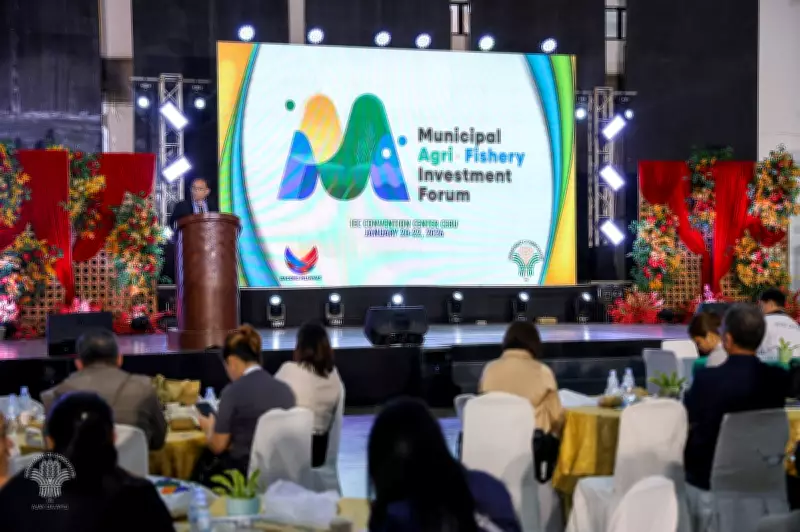
Speaking at the Municipal Agri-Fishery Investment Forum held from January 20 to 22 in Cebu City, Navarro highlighted a critical economic challenge. The Philippines' agricultural trade deficit remains alarmingly high at approximately USD 11 billion, equivalent to more than P650 billion at current exchange rates. This substantial figure underscores persistent structural gaps in domestic supply chains, even as consumer demand grows steadily alongside population increases and rising incomes.
"The local market is enormous," Navarro told forum participants. "That is exactly why importation is also large." His statement reflects the dual reality of a booming domestic appetite for food products coupled with insufficient local production capacity to meet it.

Priority Commodities for Strategic Investment
Navarro urged municipalities to diversify and spread their agricultural investments across several key sectors to build resilience and competitiveness. The priority list includes:
- Bananas: While widely planted, the Philippines has lost export competitiveness as rival producers have adopted technical expertise originally developed here, highlighting the cost of underinvestment in productivity and innovation.
- Coffee: Identified as a priority crop under Agriculture Secretary Francisco P. Tiu Laurel Jr., with new production areas being developed in Mindanao, particularly in Cotabato and Agusan del Sur.
- Coconut: Suffering from decades of neglect, leading to aging trees and farmers that pose risks to long-term supply, limiting the sector's ability to benefit from rising global demand.
- Livestock and Poultry: Conditions in the swine industry are improving following African swine fever outbreaks, thanks to containment measures by the Bureau of Animal Industry. Programs promoting dual-purpose cattle for milk and meat are gaining traction, while the poultry sector has remained relatively resilient despite rising imports.
- Fisheries and Aquaculture: Continue to anchor the government's food security strategy, with policymakers viewing aquaculture expansion as one of the fastest ways to narrow protein supply gaps.
Critical Post-Harvest Infrastructure Gaps
However, Navarro cautioned that production gains alone will not materially reduce import dependence. He pointed to weak post-harvest infrastructure as a major bottleneck. Inadequate facilities for drying, warehousing, and cold storage continue to inflate losses, erode product quality, and amplify price volatility. This issue is particularly acute during the rainy season when harvests peak and typhoons frequently disrupt logistics networks.
"We invest too much in milling and not enough in drying," Navarro stated, adding that temporary or stopgap inputs cannot substitute for robust and properly designed post-harvest systems.
Government Initiatives and Persistent Challenges
To bridge this infrastructure gap, the Department of Agriculture has outlined concrete plans. These include building approximately 300 drying facilities with integrated warehouses this year, along with rolling out mega and modular cold storage facilities. These investments are designed to extend the shelf life of critical staples like rice, corn, and vegetables. They are deemed essential for local governments to translate higher agricultural output into stable market supply, lower consumer prices, and sustained farmer incomes.
Beyond infrastructure, Navarro also flagged other persistent constraints hindering the sector's growth:

- High input costs for seeds, fertilizers, and feed.
- Weak logistics and transportation networks.
- Limited access to affordable credit for farmers and agribusinesses.
- Increasing climate risks and vulnerability to extreme weather events.
The investment forums, such as the one held in Cebu, are intended to better align national funding and policy support with local production realities. Navarro emphasized that this alignment is a key strategic step if the Philippines is to successfully narrow its substantial agricultural trade deficit over the medium term and build a more self-reliant food system.