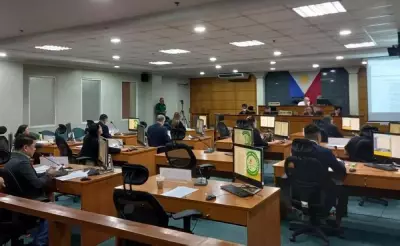
A Philippine lawmaker is advocating for tax relief measures for micro businesses through the proposed Ginhawa bill, as economic uncertainty persists due to tensions in the Middle East and rising oil prices.
Proposed Tax Incentives for Micro Enterprises
Senator Sherwin Gatchalian, vice chairman of the Senate Committee on Ways and Means, emphasized that reducing the tax burden on small enterprises would help them sustain operations, expand their livelihoods, and protect jobs.
“When we lighten the tax burden of small businesses, they can further grow their livelihood and ensure steady income and employment for their workers,” he stated.

The Ginhawa bill, formally known as the Granting Increase in Take-Home Pay for All Working Filipinos Act, proposes granting micro-entrepreneurs an additional deductible expense equivalent to 50 percent of their labor costs. This incentive would cover small businesses such as sari-sari stores, carinderias, laundry shops, tailoring services, food stalls, and small e-commerce enterprises.
Gatchalian noted that lower taxes could encourage informal businesses to register formally, granting them better access to bank financing and expansion opportunities that contribute to economic growth. Under Republic Act 11976, or the Ease of Paying Taxes Act, micro taxpayers are defined as businesses with annual gross sales below P3 million.
Call for Political Restraint Amid Economic Strain
In addition to the tax proposal, Gatchalian urged political leaders to exercise restraint and promote responsible public discourse to restore investor confidence. He warned that rising political tensions are beginning to weigh on the Philippine economy.
The senator made this appeal as the peso weakened to a record low of P61.721 against the US dollar on May 15, 2026, amid concerns over political uncertainty.
“The cost of all this political chatter is starkly evident in the peso’s performance against the dollar. While external factors are at play, analysts are now citing an ‘uncertainty premium’ attributed to political tensions,” Gatchalian said.
He cautioned that the current political climate is dampening confidence among both regional and global investors, potentially affecting the country’s macroeconomic stability.
“We cannot allow this to continue. The country’s economic growth and the welfare of our people are at stake,” he added.
Gatchalian emphasized that movements in financial markets signal the need for political leaders to adopt a more constructive and accountable tone in public discussions.
“This is a clear signal coming from our financial markets. It is important for everyone to demonstrate orderly public discourse that is constructive and responsible,” he stated.
According to the senator, further depreciation of the peso could worsen inflationary pressures by increasing the cost of imported goods such as fuel and rice, adding to the burden on consumers and businesses already grappling with elevated prices.