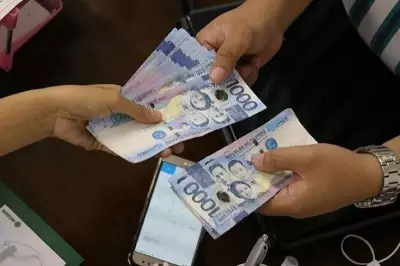
The Bangko Sentral ng Pilipinas (BSP) has stated that the country's inflation outlook remains favorable, with expectations firmly anchored, even after consumer price growth accelerated in December 2025.
December Inflation Data and Annual Average
Official data released by the Philippine Statistics Authority (PSA) on Tuesday, January 6, 2026, showed the inflation rate rose to 1.8 percent in December 2025, up from 1.5 percent in November. The increase was primarily driven by faster price movements in the heavily-weighted food and non-alcoholic beverages category, as well as in clothing and footwear.
For the entire year of 2025, the average inflation rate settled at 1.7 percent. This figure falls comfortably below the BSP's target range of 2 to 4 percent for the year, indicating a period of overall price stability. The central bank's earlier forecast had projected the December inflation to land between 1.2 and 2.0 percent.

Central Bank's Assessment and Forward Guidance
BSP Governor Eli M. Remolona Jr., speaking at a briefing during the Tuesday Club meeting in Mandaluyong City, described the December inflation figure as "a welcome number." He noted that monetary authorities anticipate inflation to gradually accelerate throughout 2026, moving back within the BSP's 2-4 percent target band.
In an official statement, the BSP's policy-making Monetary Board acknowledged that the outlook for domestic economic growth has weakened further. It attributed continued declines in business sentiment to governance concerns and global trade policy uncertainty.
However, the statement also pointed to expected support: "Domestic demand is expected to rebound gradually as the effects of monetary policy easing work its way through the economy and public spending improves." On balance, the Board indicated that the monetary policy easing cycle is nearing its end, with any future rate cuts likely to be limited and strictly data-dependent.
Economist Forecasts and External Factors
Rizal Commercial Banking Corp. (RCBC) chief economist Michael Ricafort provided his analysis, forecasting that inflation could remain at or slightly below 2 percent until February 2026, before rising to between 2 and 3 percent from March onward.
Ricafort noted that the low 0.9 percent inflation recorded in July 2025 likely marked the bottom, influenced by higher base effects from the previous year. He projects an average inflation rate of 3.2 percent for 2026.
This trajectory, according to Ricafort, could support future local policy rate reductions that would align with anticipated cuts by the US Federal Reserve, potentially happening in the latter part of 2026.