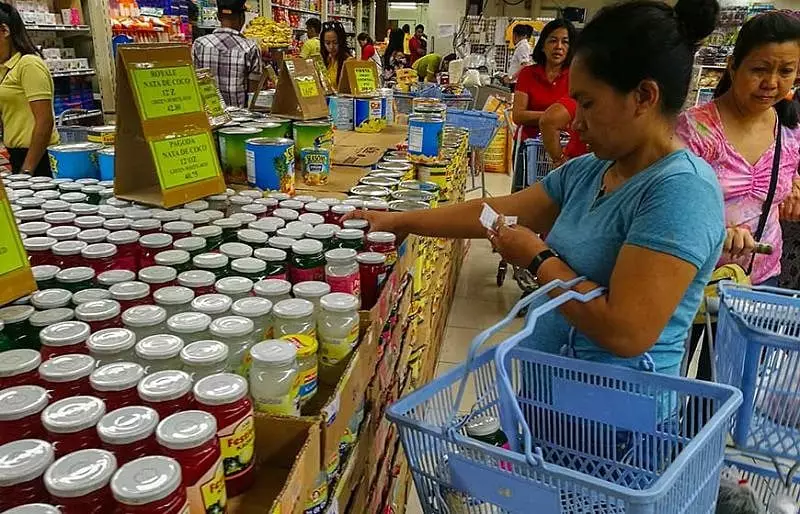
Inflation in Central Visayas remained the fastest in the entire Philippines during December 2025, a situation exacerbated by food shortages following a powerful late-year typhoon that devastated farms and supply lines.
Food Prices Surge After Typhoon Tino
Data released by the Philippine Statistics Authority (PSA) on Tuesday, January 6, 2026, showed the region's inflation rate reached 3.8 percent in December 2025. This marked the fifth consecutive month Central Visayas posted the highest price increases nationwide. For the full year 2025, the region also had the highest average inflation outside Metro Manila, at 2.5 percent.
The primary driver was a dramatic jump in food costs. Prices for food and non-alcoholic beverages in Central Visayas soared by 8.2 percent in December, a sharp acceleration from the 3.5 percent rise recorded in November. Economic officials directly linked this spike to Typhoon Tino (international name: Kalmaegi), which struck Cebu and neighboring provinces on November 4, 2025.

The typhoon's heavy rains caused severe flooding in low-lying and agricultural zones, leading to widespread crop damage. It also disrupted critical transport routes, delaying deliveries of produce to local markets. The resulting scarcity of food items in the weeks following the storm forced consumer prices upward.
National Trends and Offsetting Factors
While the surge was most acute in Central Visayas, food inflation also picked up across the country. Nationally, vegetable prices surged 11.6 percent as supplies tightened, and fish prices climbed nine percent, partly due to limited import arrivals. Specific items like onions, eggplants, and pumpkins saw particularly sharp increases.
However, these pressures were partially offset by other factors. Rice prices continued to fall, posting a significant 12.3 percent deflation, which helped prevent overall inflation from climbing even higher. Additionally, inflation for housing, electricity, water, and gas slowed considerably, while transport prices entered negative territory due to lower fuel costs.
At the national level, headline inflation rose slightly to 1.8 percent in December from 1.5 percent in November. This figure stayed within the forecast range of the Bangko Sentral ng Pilipinas (BSP) and was well below the 2.9 percent rate from December 2024. Core inflation, which excludes volatile food and energy items, held steady at 2.4 percent.
Impact on Households and Government Outlook
For families in Central Visayas, the faster inflation rate means a larger portion of household budgets is consumed by food expenses. This burden falls heaviest on lower-income earners who spend a greater share of their income on basic necessities. The situation highlights how regions dependent on local agriculture remain vulnerable to temporary supply shocks from extreme weather.
Looking forward, the BSP expects inflation to stay within its target range of 2-4 percent for 2026 and 2027, assuming food supplies stabilize. To address the root causes, the government plans a multi-pronged approach:
- A P297.1-billion allocation for agriculture in the 2026 national budget to bolster food security.
- Accelerating more than 200 power generation projects to ensure reliable energy supply and ease related cost pressures.
- Enhanced inter-agency coordination focused on containing price spikes.
These measures aim to prevent short-term shocks, like those from Typhoon Tino, from evolving into prolonged inflationary problems, especially in weather-vulnerable regions like Central Visayas.