Official data confirms that Central Visayas endured the highest inflation rate in the Philippines for the fifth consecutive month in December 2025, a direct consequence of the severe food supply disruptions caused by Typhoon Tino.
Storm's Aftermath Fuels Price Surge
Data released by the Philippine Statistics Authority on Tuesday, January 6, 2026, shows the region's inflation rate climbed to 3.8 percent in December 2025. This marks the fifth straight month Central Visayas has led the nation in price increases. For the entire year of 2025, the region also recorded the highest annual average inflation outside Metro Manila at 2.5 percent.
The primary driver was a sharp spike in the cost of food and non-alcoholic beverages, which soared by 8.2 percent in December, a significant acceleration from the 3.5 percent rate in November. Economic officials directly linked this surge to Typhoon Tino (Kalmaegi), which struck Cebu and neighboring provinces on November 4, 2025.

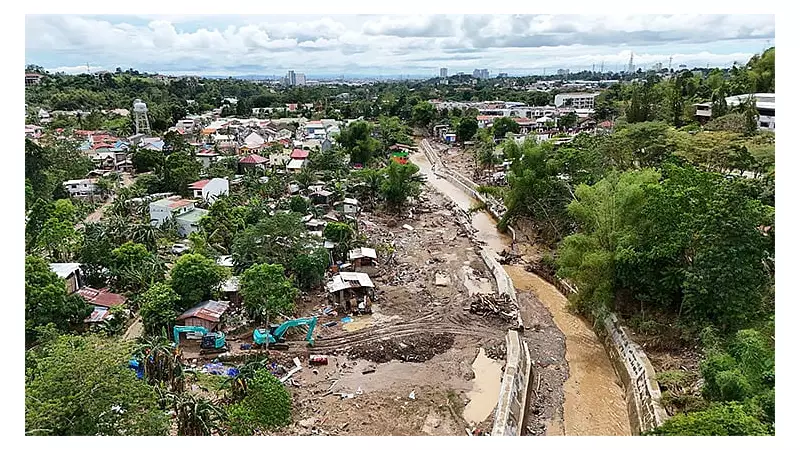
The typhoon triggered massive flooding in low-lying and agricultural zones, including areas along the Butuanon River in Cebu City. The storm's impact was tragic and economic, claiming 13 lives, including children, while simultaneously disrupting food production, damaging transport links, and delaying market deliveries.
National Inflation Trends and Food Breakdown
At the national level, headline inflation increased slightly to 1.8 percent in December from 1.5 percent in November. While influenced by the same weather-related pressures, this rate remained within the Bangko Sentral ng Pilipinas (BSP) forecast range of 1.2 to two percent and was notably lower than the 2.9 percent recorded in December 2024.
A closer look at food prices reveals the storm's specific impact:
- Vegetable prices surged by 11.6 percent due to supply disruptions, with onions, eggplants, and pumpkins seeing sharp increases.
- Fish inflation rose to nine percent, partly due to limited import arrivals.
- These pressures were partially offset by slower inflation in meat and a continued decline in rice prices, which posted a 12.3 percent deflation.
Core inflation, which excludes volatile food and energy items, held steady at 2.4 percent in December.
Government Response and Economic Outlook
In response to the challenges, the government emphasized coordinated policy to manage prices. Arsenio M. Balisacan, Secretary of the Department of Economy, Planning, and Development, highlighted the economy's resilience and outlined plans to sustain a downward inflation trend.
Key initiatives include a P297.1-billion allocation for agriculture in the 2026 national budget aimed at boosting productivity and strengthening food security. Simultaneously, the Department of Energy is accelerating 200 power generation projects to manage energy-related price pressures.
The BSP noted that the outlook for domestic growth has weakened due to softer business sentiment and global uncertainties. However, it expects a gradual recovery as monetary easing takes effect and public spending improves, signaling that the easing cycle is nearing its end.
For the full year 2025, average national inflation eased to 1.7 percent, sharply lower than the 3.2 percent recorded in 2024. The BSP projects inflation will return to within the target range of 3.0 percent, plus or minus one percentage point, for both 2026 and 2027.