The Philippines capped 2025 with an annual inflation rate of 1.7 percent, comfortably below the national government's target range of 2.0 to 4.0 percent for the year, according to the Philippine Statistics Authority (PSA).
December Uptick Driven by Food and Clothing
In its report released on Tuesday, January 6, 2026, the PSA noted that headline inflation saw a slight increase in the final month of the year. The rate rose to 1.8 percent in December 2025, up from 1.5 percent in November.
This uptrend was primarily fueled by faster year-on-year price increases in two key areas:

- The index for the heavily weighted food and non-alcoholic beverages, which accelerated to 1.4 percent in December from a minimal 0.1 percent in November.
- The index for clothing and footwear, which increased to 2.2 percent from 1.8 percent the previous month.
The top three contributors to the December headline inflation were the indices for food and non-alcoholic beverages; housing, water, electricity, gas, and other fuels; and restaurants and accommodation services.
Annual Average Shows Significant Slowdown
The 1.7 percent annual average inflation rate for 2025 marks a substantial deceleration from the 2024 average of 3.2 percent. The PSA attributed this significant decrease to much lower average price increases in critical sectors.
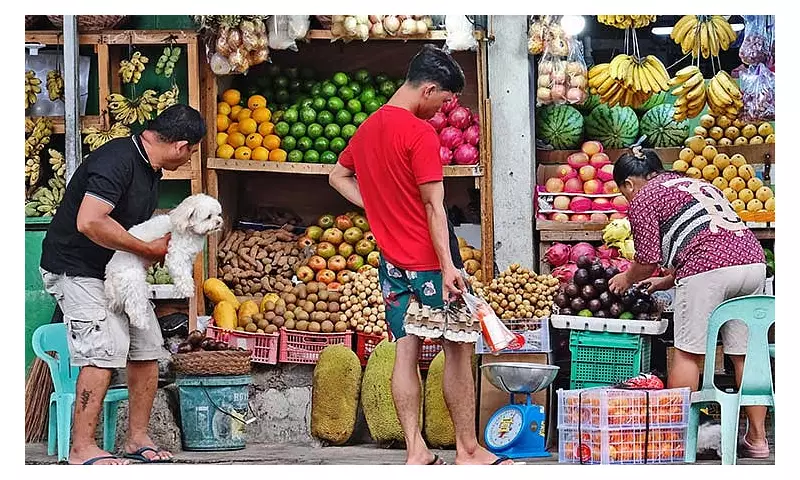
Notably, the annual average increase for food and non-alcoholic beverages dropped sharply to 1.2 percent in 2025 from 4.4 percent in 2024. Similarly, restaurants and accommodation services saw their average inflation halve to 2.4 percent from 4.8 percent.
Lower annual average inflation rates were recorded across nearly all commodity groups, including:
- Alcoholic beverages and tobacco (3.8% from 4.6%)
- Clothing and footwear (1.8% from 3.2%)
- Health (2.6% from 2.8%)
- Education services (3.8% from 4.3%)
Of the total 1.7 percent annual inflation, housing and utilities contributed 0.5 percentage points, food and non-alcoholic beverages contributed another 0.5 percentage points, and restaurants and accommodation services added 0.2 percentage points.
Government Vows Sustained Measures for 2026
In a statement, the Department of Economy, Planning, and Development (DepDev) credited the lower inflation to proactive and well-coordinated government measures aimed at stabilizing prices and protecting the purchasing power of Filipino households.
DepDev Secretary Arsenio Balisacan stated, "Despite global headwinds and domestic challenges, the Philippine economy has remained resilient against inflationary pressures due to the government’s timely and targeted interventions."
Balisacan vowed to continue policies to keep inflation within the 2.0 to 4.0 percent target range for 2026 to 2028. A key component is the P297.1-billion allocation for agriculture in the 2026 national budget, intended to boost farm productivity and strengthen food security through:
- Construction of farm-to-market roads and bridges.
- Development of food hubs, cold storage facilities, and rice mills.
- Programs to maintain affordable prices for agricultural products.
To manage energy-related price pressures, the Department of Energy is accelerating 200 power generation projects to ensure committed capacity is delivered on schedule. Balisacan emphasized these initiatives are part of a broader thrust to achieve food security and inclusive growth for all Filipinos.