DepEd's Trimester Proposal: Promising Reform or Administrative Reshuffling?
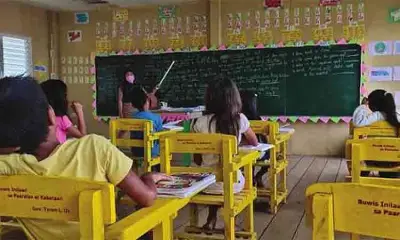
The Department of Education has unveiled a significant proposal to transition basic education to a trimester calendar for School Year 2026-2027, presenting it as a comprehensive solution to longstanding educational challenges. The plan promises extended uninterrupted learning periods, improved lesson pacing, and reduced administrative burdens for educators, all framed within the ambitious language of "holistic reform." However, this sweeping initiative invites careful scrutiny, as successful educational reforms require meticulous attention to detail that matches the ambitious rhetoric.
The Proposed Calendar Architecture
On paper, the trimester structure appears meticulously organized. The Department of Education outlines three academic terms spanning 201 school days, with each term divided into distinct instructional and enrichment blocks. Instructional periods would cover approximately 54 to 61 days, while enrichment blocks would focus on remediation activities, grading procedures, administrative forms, and wellness breaks for both students and teachers. An additional opening block would initiate each academic year.
The proposed calendar would run from June through September for the first term, September through December for the second term, and January through late March for the final term, with strategic breaks interspersed for planning and professional development tasks. This structure aims to create a more predictable and organized academic year.

Potential Benefits of the Trimester System
The proposal correctly identifies several persistent challenges in Philippine education. First, it acknowledges the fragmentation of instructional time caused by numerous activities, paperwork requirements, and recurring interruptions that disrupt lesson continuity. The Department of Education itself recognizes that current structures compress teaching time due to mandated observances at both local and national levels, along with extensive reporting requirements.
Second, the plan attempts to integrate observances into classroom instruction rather than treating each commemoration as a separate event that cancels regular lessons. Through "low-disruption alternatives," civic and cultural themes would be embedded into reading materials, writing assignments, science discussions, and project-based learning. This approach represents a practical compromise between compliance requirements and educational coherence.
Third, the proposal explicitly recognizes that teachers need protected time for assessment, reflection, and preparation. The designated enrichment blocks and inter-term breaks aim to create predictable spaces for grade computation, school form completion, remediation planning, and wellness activities. This represents a welcome acknowledgment that quality instruction depends fundamentally on working conditions, not merely on policy directives.
Critical Questions and Implementation Challenges
Despite these potential benefits, the proposal raises significant questions about whether calendar redesign will meaningfully address the learning crisis or merely reorganize administrative tasks. Critics have warned against implementing another "trial-and-error" reform that treats schools as laboratories while deeper systemic issues persist.
The most substantial risk involves workload management. While the Department of Education claims the trimester structure will reduce administrative burdens through better organization, teachers express concerns that fewer terms could create tighter assessment windows and intensify pressure during reporting periods, especially if compliance requirements remain unchanged.
Evidence gaps present another concern. While officials cite findings from EDCOM II as motivation for the calendar shift, a nationwide transformation of basic education structure deserves transparent pilot results, clear metrics, and implementation studies that reflect diverse Philippine regional realities.

Operational Complexities and Practical Considerations
The transition to a trimester system involves far more than simply editing academic calendars. This structural change affects procurement timelines, feeding program rhythms, transportation arrangements, local government coordination, and private school alignment. It also reshapes the cadence of co-curricular competitions and school-level planning cycles in systems where institutions already struggle to maintain stable routines.
Timing presents additional complications. While a June opening and late March conclusion might help avoid peak summer heat, the first term from June to September overlaps with typhoon season in many regions. This makes the promise of uninterrupted learning dependent on robust disaster preparedness, flexible learning continuity plans, and realistic expectations about weather-related suspensions.
Pathways to Successful Implementation
For the trimester proposal to succeed in practice, several conditions must be met. First, the Department of Education must approach workload reduction as an engineering challenge rather than a slogan, actively cutting unnecessary forms, streamlining reports, and enforcing limits on non-teaching assignments to prevent enrichment blocks from becoming catch-all dumping grounds.
Second, if mandated observances are to be integrated into lessons, the department should provide high-quality lesson exemplars and reality-based training to ensure integration enhances learning quality rather than becoming another compliance checklist.
Finally, the Department of Education must build trust through genuine consultation and transparent piloting. While officials have promised guidelines will follow consultations with teachers, school leaders, and stakeholders, the true test will be whether these consultations meaningfully shape the final design. Pilots must be conducted across diverse educational contexts, with findings, tradeoffs, and costs published before any full rollout. A trimester system can only function as an intelligent scheduling reform when paired with structural fixes that make learning time genuinely usable for both students and educators.