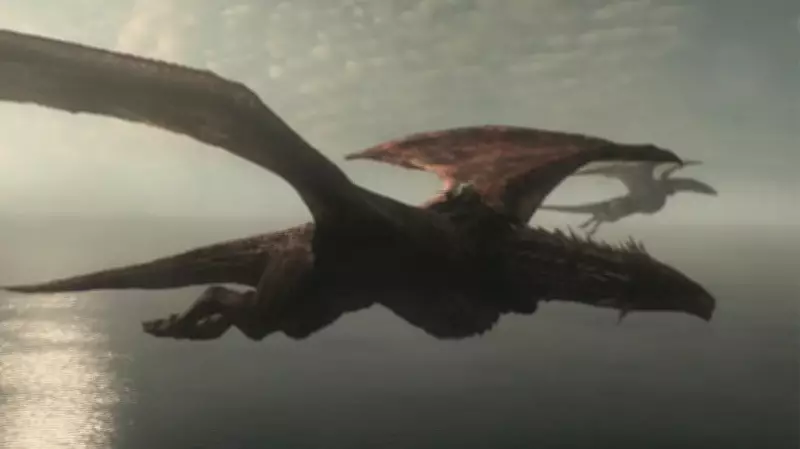
When Warner Bros. confirmed the development of Game of Thrones: Aegon's Conquest, the announcement was met with a mix of excitement and a growing sense of franchise fatigue. For a series that once defined a generation of television, the question now feels unavoidable: do we really need another return to Westeros?
A Legacy Complicated by Controversy
At its peak, Game of Thrones was a cultural phenomenon. It dominated conversations, inspired endless fan theories, and turned weekly episodes into global events. Yet its controversial final season left a complicated legacy, one that House of the Dragon has been carefully trying to rebuild. While the prequel has managed to restore some faith in the franchise, it also signals that Westeros never truly left our screens.
And that is precisely the point: it has not. Even as new projects are announced, the world of Game of Thrones is already expanding in multiple directions. Ongoing and developing spin-offs like A Knight of the Seven Kingdoms continue to mine the same universe for stories. The addition of Aegon's Conquest, this time as a feature film, feels less like a new chapter and more like another layer in an already crowded narrative landscape.

Unfinished Foundation
Complicating this further is the unfinished foundation of the saga itself. George R. R. Martin, the creator of the original series, has yet to complete The Winds of Winter, the long-awaited next installment in A Song of Ice and Fire. For many fans, the core story remains unresolved, making the expansion into prequels and spin-offs feel premature, if not misplaced.
Hollywood's fascination with cinematic universes is nothing new. Studios continue to stretch successful properties across formats in the hope of sustaining audience interest. But more does not always mean better. At some point, expansion risks turning into oversaturation, where familiarity replaces excitement.
A Compelling Story, But at What Cost?
To be fair, Aegon's Conquest is a compelling story on its own. It tells the rise of Aegon Targaryen, a defining moment in Westeros history filled with conquest, dragons, and political intrigue. It has all the ingredients of an epic. But it also exists in a time when audiences are more selective and less easily swayed by nostalgia alone.
The real question is not whether this story deserves to be told, but whether it can justify its existence beyond the weight of the franchise name. What made Game of Thrones truly resonate was its willingness to take risks. It challenged its viewers, subverted expectations, and built a world where consequences mattered. Recreating that impact requires the same creative boldness.
From Series to Film: Higher Stakes
The decision to shift Aegon's Conquest from a planned series to a feature film also raises the stakes. A cinematic format promises spectacle, but it must also deliver depth, something the original series achieved over multiple seasons. So, do we need another Game of Thrones? Perhaps not. But if this new project can offer something genuinely fresh—new perspectives, meaningful storytelling, and the courage to evolve beyond its origins—then Westeros may still have stories worth telling. Otherwise, even the most powerful kingdoms can fall, not from a lack of stories, but from telling too many of the same ones.