President Ferdinand Marcos Jr.'s official visit to Canada concluded with the elevation of bilateral relations to a strategic partnership and the securing of US$2.5 billion in investment commitments from Canadian companies. The investments target key sectors including mining, energy, and the digital economy, as announced at the conclusion of the visit.
Strategic Partnership and Investment Commitments
Marcos stated that his meetings with Canadian Prime Minister Mark Carney, senior government officials, and business leaders marked a new chapter in bilateral relations, deepening cooperation in trade, investment, security, technology, and sustainable development. The President described the visit as productive, with both governments agreeing on several initiatives involving the public and private sectors. He emphasized that the work now shifts toward translating those commitments into tangible benefits for Filipinos.
“Tunay na naging matagumpay ang ating biyahe kung saan napag-sang-ayunan natin ang ilang mga inisiyatibo sa hanay ng gobyerno at ng pribadong sector. Hard work, though, does not end here. Patuloy tayong magsisikap upang ang ating nakamit at nasimulan sa Canada ay yayabong at madarama ng mas nakakaraming Pilipino,” he said. (Our trip has truly been successful, as we reached agreements on several initiatives between the government and the private sector. However, the hard work does not end here. We will continue striving to ensure that what we have achieved and begun in Canada will grow further and bring tangible benefits to more Filipinos.)

Upgraded Bilateral Ties and Action Plan
A centerpiece of the visit was the decision by Manila and Ottawa to elevate bilateral ties to a strategic partnership, reflecting the growing scope of cooperation. Marcos said the upgraded relationship provides a framework for closer collaboration as both countries respond to evolving global challenges and pursue long-term economic growth. To implement the partnership, the President directed the Department of Foreign Affairs and Canada's foreign ministry to develop a joint action plan covering future initiatives in security, economic cooperation, innovation, and capacity building.
“I have tasked the secretary of Foreign Affairs, Maria Teresa Lazaro, to work together with Canadian Foreign Minister Anita Anand to create a plan of action focusing on joint initiatives that will help both our countries adapt to shifting global realities, address shared challenges, and build capacities for future-ready partnerships,” he said.
Investment Details and Key Sectors
The visit generated US$2.5 billion in investment commitments from Canadian firms, with projects spanning mining, critical minerals, energy, information technology-business process management (IT-BPM), and digital services. Among the companies that met with the President were B2Gold Corporation, OceanaGold Corporation, Telus Corporation, and NQX. Marcos said discussions with technology companies also focused on establishing artificial intelligence (AI) hubs and learning centers in the Philippines to develop AI talent for the global workforce. He noted that the investment pledges reinforce the importance of ongoing negotiations for a Philippines-Canada Free Trade Agreement, which is expected to provide a more stable and predictable framework for trade and investment once concluded.
Canada also committed an initial two million Canadian dollars to support the Luzon Economic Corridor through infrastructure, clean energy, and supply chain projects. The two governments witnessed the signing of a Joint Declaration of Intent on Energy and Natural Resources Cooperation, aimed at enhancing collaboration on energy security, resilient supply chains, and sustainable economic growth.

Mining Expansion and Policy Reforms
Canadian mining companies presented expansion initiatives that would strengthen their long-term presence in the Philippines. OceanaGold Corporation outlined a US$1.9-billion expansion plan tied to the continued operation of the Didipio Gold-Copper Mine until 2037, with the project expected to support mining activities in Nueva Vizcaya and Quirino while utilizing incentives under the Create More Act. Meanwhile, B2Gold Corporation and its Philippine partner, Filminera Resources Corporation, announced approximately US$14 million in planned investments for the expansion of the Masbate Gold Project's solar facilities and new exploration programs. B2Gold also expressed interest in providing technical expertise to help identify opportunities to further extend the mine's operational life.
During the meetings, company executives credited recent policy reforms for improving investor confidence while also encouraging continued efforts to streamline permitting processes. “The Philippines is certainly open for business, ready for partnerships, and committed to create a long-term value to responsible resource development and sustainable growth,” Marcos said as he participated in the Philippines-Canada roundtable discussion on mining, critical minerals, and energy. “As we continue to strengthen our economic ties, we look forward to working with Canadian partners in transforming opportunity into tangible investments, innovation, and shared progress,” he added.
IT-BPM and Digital Economy Collaboration
Marcos also met with executives from Canada's leading IT-BPM companies, where he positioned the Philippines as a partner in shaping the future of the global digital economy. He said the country's strengths in customer experience, cybersecurity, analytics, healthcare information management, financial services, and digital operations make it well-positioned to attract higher-value investments. The President noted that Canadian companies already have a significant presence in the Philippine IT-BPM industry and said the planned free trade agreement could further accelerate collaboration in innovation and digital transformation. Participating companies included BlackBerry, CGI, Everise, Manulife, OpenText, NQX, Sun Life, Telus Corporation, and InTouchCX.
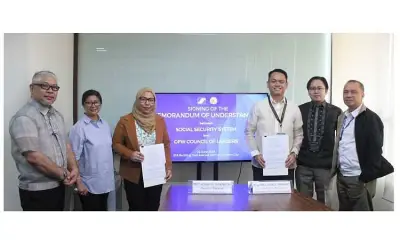
Marcos also witnessed the signing of a memorandum of understanding between the Philippine Chamber of Commerce and Industry and the Business Council of Canada to expand private sector cooperation.
Defense and Regional Security
On defense, Marcos and Carney agreed to deepen security cooperation through existing mechanisms, including the Status of Visiting Forces Agreement and the Mutual Logistics Support Arrangement. Regional security also figured prominently in the bilateral discussions. Marcos said both countries reaffirmed the strategic importance of maintaining peace and stability in the Indo-Pacific and agreed to strengthen cooperation on shared regional priorities. He also welcomed Canada's continued support for a rules-based international order in the South China Sea, particularly its recognition of the United Nations Convention on the Law of the Sea (UNCLOS) and the 2016 Arbitral Award. The President expressed hope that Canada would continue advocating for the arbitral ruling as the international community marks its 10th anniversary.
People-to-People Ties
The President's visit also highlighted the role of the nearly one million Filipinos living in Canada, describing the Filipino community as a strong foundation for expanding people-to-people and economic ties. Marcos and Carney visited a Jollibee branch in Vancouver, where they sampled Filipino dishes, interacted with Filipino workers and customers, and underscored the strong people-to-people ties linking both countries.