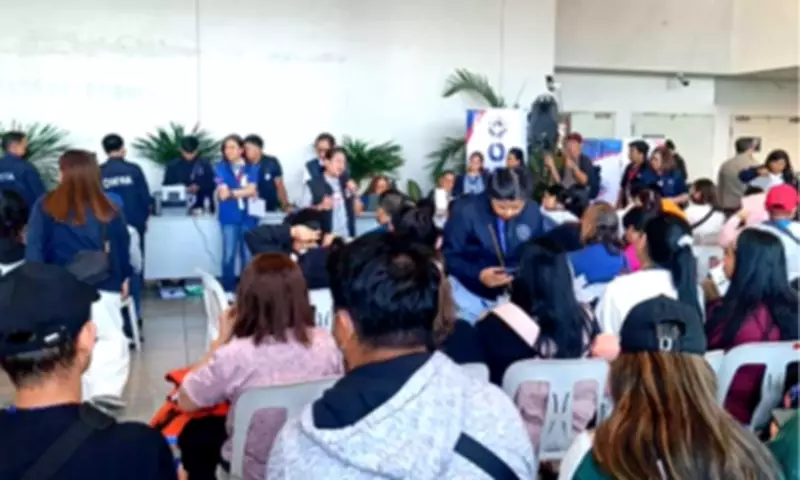
In a significant operation underscoring the Philippine government's commitment to its citizens abroad, 166 Overseas Filipino Workers (OFWs) and their dependents safely returned to Manila on Thursday, having fled escalating tensions in the Middle East. The repatriates, who arrived via Ninoy Aquino International Airport (NAIA) Terminal 3, expressed profound relief and gratitude after a harrowing experience in conflict zones.
Coordinated Repatriation Effort
Migrant Workers Secretary Hans Leo Cacdac, leading a whole-of-government team, welcomed the group, which included 150 OFWs and 16 dependents. He detailed the complex logistics involved: the Filipinos were transported from Kuwait via a coordinated land crossing into the Kingdom of Saudi Arabia (KSA), where they boarded a Gulf Air flight bound for Manila. "166 OFWs from Kuwait, there was a land crossing involved and they were crossed over to KSA, and from there, there was a Gulf Air flight waiting for them, so that's it, they are home now," Cacdac stated, emphasizing the successful execution of the mission.
Fear and Anxiety Drive Return
The returnees unanimously cited fear as the primary motivator for seeking repatriation. OFW Juvie Mangcawil shared, "We were scared every time because we hear sirens, bombs and explosions. It's really frightening." Roselyn Echon echoed this sentiment, noting the continuous nature of the threats: "It was very scary. Explosions are happening continuously." Cacdac added that many had directly experienced the impact of ongoing hostilities, with even missile interceptions by countries with strong air defense systems contributing to their anxiety. Approximately 63 percent of the returnees decided to come home due to safety concerns, highlighting the precarious situation in the region.

Government Assistance and Support
Despite the traumatic circumstances, the OFWs praised the government's unwavering support throughout their journey. Dingle Ardiente remarked, "They took care of us," describing the repatriation process as smooth. Upon arrival, teams from multiple agencies, including the Department of Migrant Workers (DMW), Overseas Workers Welfare Administration, Department of Social Welfare and Development, and Department of Health, provided comprehensive assistance. This included:
- Food and temporary accommodation
- Transportation arrangements
- Financial assistance to help with immediate needs
Ongoing Repatriation and Future Outlook
Cacdac announced that repatriation efforts will continue, with more Filipinos expected to arrive in the coming days. "There will be another one tomorrow, around a similar number, and then our eighth charter from UAE (United Arab Emirates) is coming in tomorrow also," he said. To date, the government has funded the return of approximately 3,900 OFWs, with the total number, including those who paid their own fares, reaching around 4,200.
Looking ahead, Cacdac expressed hope that a two-week ceasefire between the U.S. and Iran would hold, potentially leading to normalization and reducing repatriation requests. For those seeking new opportunities, the department is ready to assist, with around 200,000 job orders available in countries across Asia and Europe. This proactive approach aims to support OFWs in transitioning to safer employment options while addressing the broader challenges posed by global conflicts.