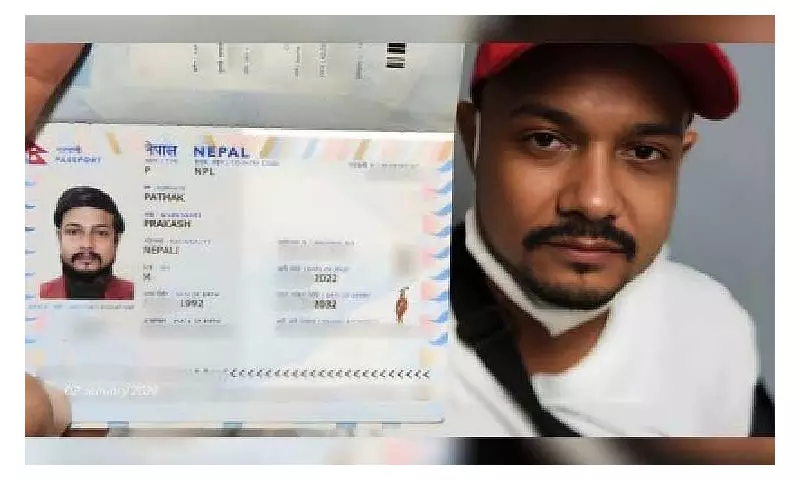
The Bureau of Immigration (BI) announced on Friday its move to deport a high-profile fugitive from Nepal who is facing serious criminal charges in his home country and is linked to international security threats.
Arrest and Charges Against the Fugitive
Immigration agents apprehended the suspect, identified as 33-year-old Prakash Pathak, on December 31 in Malolos City, Bulacan. He is currently detained at a BI facility while awaiting deportation proceedings.
The arrest was initiated after the Philippine Center on Transnational Crime (PCTC) coordinated with the BI, providing information on an active warrant for Pathak. The Kathmandu District Court issued the warrant on December 1, 2025, for the charge of criminal breach of trust.

Furthermore, the International Criminal Police Organization (Interpol) circulated a diffusion against Pathak on December 12, 2025. This alert, requested directly by Nepal, cites him for extortion and criminal conspiracy. An Interpol diffusion is a direct request between member countries for assistance in locating or arresting an individual.
Links to Serious Security Threats
BI investigations uncovered that Pathak is implicated in activities that pose a significant security risk. Official information received by the bureau indicates he encouraged escaped prisoners to resist surrender, offered them financial support, and alluded to access to weapons.
More alarmingly, Pathak is also connected to a conspiracy to assassinate a high-ranking foreign government official. His entry records show he arrived in the Philippines on August 18, 2025, and his authorized stay was valid until December 18.
PH Stance Against Foreign Fugitives
BI Commissioner Joel Anthony Viado stated that this enforcement action is a direct result of President Ferdinand R. Marcos Jr.'s firm directive to prevent the Philippines from becoming a safe haven for fugitives and individuals involved in transnational crimes.
"Under the President’s clear instructions, we will not allow foreign fugitives or extremists to exploit our immigration system," Viado emphasized. "Those who enter the country and pose a threat to public safety or international security will be located, arrested, and dealt with in accordance with the law."
The bureau's swift action highlights the government's commitment to international cooperation in law enforcement and its dedication to maintaining national security.