"History has shown us time and again that violence only begets more violence and is never a lasting foundation for peace," stated the 14th Dalai Lama. This profound observation resonates deeply in the context of the Philippines, where the Communist Party of the Philippines-New People's Army (CPP-NPA) has waged one of the world's longest-running armed insurgencies. As of April 5, 2026, this conflict has persisted for 57 years, yet it remains farther than ever from its objective of instituting Communism—a one-party political system with state-controlled economics—across the nation.
The Human and Economic Toll of Endless Conflict
Thousands of Filipino lives have been lost over the decades, including a significant number of idealistic youth drawn into the struggle. The insurgency continues to exact a heavy toll, not just in human terms but also economically. A corrupt government perpetuates the conflict, benefiting from intelligence funds and commissions that military and civilian officials receive through counter-insurgency measures. On the other side, the NPA sustains itself by extorting money from politicians and businessmen. Both factions exhaust the nation's precious resources, ultimately at the expense of the general population, who bear the brunt of this wasteful cycle.
Red-Tagging and the Erosion of Democratic Spaces
Meanwhile, the plight of marginalized communities worsens. Government officials, frequently criticized for incompetence, corruption, and neglect of basic needs, often defend themselves not by addressing these issues but by red-tagging those who speak out against their self-serving ways. This dangerous practice leads to state violence, which in turn frightens away well-meaning, peaceful citizens from opposing unjust systems. A recent example involves efforts to stop the privatization of Carbon, where entities like Megawide or the Cebu City LGU have resorted to red-tagging small vendors instead of seeking collaborative, win-win solutions.

Reevaluating Marxist Ideals in a Modern Context
Karl Marx correctly identified the existence of class struggle and envisioned a higher form of social existence once class contradictions were resolved. However, his advocacy for resolving these contradictions through violence has proven flawed. In his later writings, Marx even acknowledged the possibility of peaceful change in countries with strong democratic traditions. While the Philippines may not boast a robust democratic tradition, it is painfully clear that violence is worlds away from installing the system insurgents believe will improve social conditions.
The Insanity of Repeating Failed Strategies
If insanity is defined as doing the same thing repeatedly while expecting different results, then it is high time for armed insurgents to recognize the futility of their violent strategy. After 57 years without achieving desired outcomes, abandoning this ineffective approach seems the only sensible course. One viable option is to revive peace talks and collaborate with all progressive, non-communist groups to devise a non-violent strategy for addressing the country's deep-seated problems.
Government Ineptitude and the Need for Unity
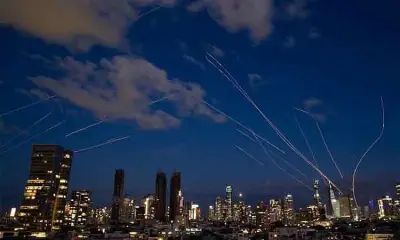
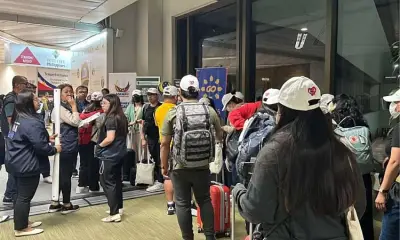
Compounding the issue is governmental ineptitude, as seen in scandals like the flood control debacle where accountability remains elusive. While neighboring countries efficiently implement pre-planned crisis-management programs, the Philippine government struggles to improvise responses to crises, such as those stemming from the Middle East war. In this context, coming together simply as Filipinos—setting aside ideological divides—might prove more effective in solving national problems today and tomorrow.
Facing an armed insurgency that has aggravated rather than resolved issues, pursuing peace and unity is not just idealistic; it is the pragmatic path forward for a nation weary of conflict.