Iran Confronts Profound Leadership Vacuum Following Fatal Strike on Top Officials
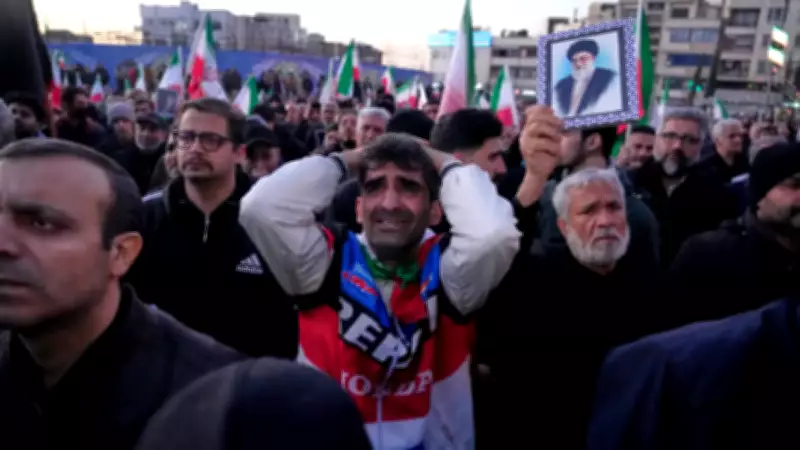
Iran is currently navigating a deep and unprecedented leadership crisis after reports confirmed the death of its Supreme Leader, Ayatollah Ali Khamenei, alongside numerous other senior officials. The situation has intensified dramatically with additional reports suggesting his interim successor has also perished, plunging the nation's political landscape into turmoil and uncertainty.
Operation Epic Fury Claims Lives of Iran's Military and Security Elite
The catalyst for this crisis was the joint military action dubbed "Operation Epic Fury," conducted by the United States and Israel on February 28, 2026. The operation resulted in the deaths of several key Iranian figures, creating a significant power vacuum at the highest levels of the Islamic Republic's governance and military structure.
The list of confirmed casualties among Iran's leadership includes:

- General Abdol Rahim Mousavi, Iran's army chief of staff
- General Aziz Nasirzadeh, the Defence Minister
- Major General Mohammad Pakpour, a top commander in the Revolutionary Guard
- Ali Shamkhani, a senior security adviser to the late Supreme Leader
Iranian state media further reported that several members of Ayatollah Khamenei's immediate family were also killed in the attack, including his daughter, grandchild, son-in-law, and daughter-in-law, adding a profound personal dimension to the national tragedy.
Israel Confirms Elimination of Additional High-Value Targets
The Israel Defence Forces (IDF) have corroborated the elimination of other senior Iranian officials during the operation, significantly degrading the nation's command and intelligence apparatus. These individuals were pivotal in Iran's military and strategic research sectors.
- Saleh Asadi, Head of the Intelligence Directorate for the Khatam al Anbiya emergency command
- Mohammad Shirazi, Head of the military bureau
- Hossein Jabal Amelian, Head of the SPND (Organisation of Defensive Innovation and Research)
- Reza Mozaffari-Nia, Former head of SPND and former deputy defence minister
Establishment of a Temporary Leadership Council
In response to the escalating crisis, Iran has moved swiftly to establish a temporary leadership council. This body is tasked with governing the country and assuming the critical functions of the supreme leader during this period of transition and instability.
The council is composed of three prominent figures representing different power centers within Iran:
- Masoud Pezeshkian, Iran's current reformist president
- Gholamhossein Mohseni Ejei, the hard-line head of the judiciary
- Alireza Arafi, a member of Iran's Guardian Council and head of the Basij paramilitary force
Mohammad Bagher Qalibaf, Iran's parliamentary speaker, expressed confidence in this interim solution, stating, "You will see that after the leadership council is formed, the power and integrity of officials, defensive forces and the people will be beyond imagination." He also indicated that plans are already in place for a more permanent succession.
The Complex Path to Selecting a New Supreme Leader
While the temporary council assumes immediate control, the constitutional duty of appointing a new permanent Supreme Leader falls to the Assembly of Experts. This 88-member panel, predominantly composed of Shia clerics, is elected every eight years, though its candidates are vetted by the conservative Guardian Council, known for disqualifying contenders.
The process is complicated by the doctrine of vilayat-e faqih (guardianship of the Islamic jurist), which requires the supreme leader to wield supreme political and religious authority. Ayatollah Khamenei did not publicly name a successor before his death, leaving the future of Iran's leadership profoundly uncertain.

Potential candidates within this opaque system include Mojtaba Khamenei, the 56-year-old son of the late leader. Although he has never held a formal government position, he is considered a hardliner with strong connections to the Revolutionary Guard. The previous potential successor, former President Ebrahim Raisi, died in a helicopter crash in May 2024, further clouding Iran's long-term succession planning and leaving the nation at a critical historical juncture.