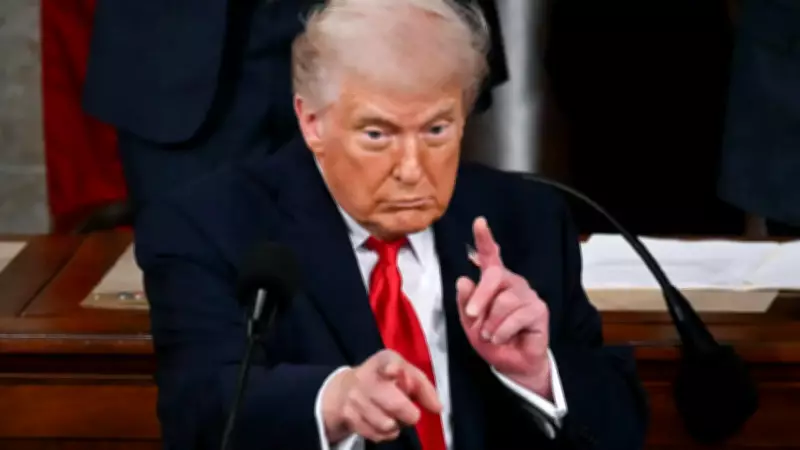
Trump Insists on US Veto Power Over Iran's Next Supreme Leader
In a striking declaration, former U.S. President Donald Trump has stated that the next supreme leader of Iran must first obtain approval from the United States, warning that failure to do so would result in a short tenure. This bold pronouncement came during a recent interview, where Trump emphasized the critical importance of preventing Iran from acquiring nuclear capabilities in the future.
Direct Quotes and Nuclear Concerns
"He's going to have to get approval from us. If he doesn't get approval from us he's not going to last long," Trump asserted, underscoring his stance on Iran's leadership succession. He elaborated that this measure is essential to avoid a repeat of past conflicts, specifically referencing the U.S. bombing of three Iranian nuclear facilities on June 22, 2025. Trump expressed a desire to steer clear of similar escalations, highlighting the ongoing tensions in the region.
When questioned about whether he would consider approving a leader linked to the previous regime, Trump indicated a conditional openness, stating he might do so if he believes the candidate could be an effective leader. However, he also accused Iran of harboring ambitions to dominate the entire Middle East, a plan he claims the U.S. has successfully thwarted. "They are a paper tiger… Their plan was to attack the entire Middle East," he remarked, downplaying Iran's military capabilities.

Military Strategies and Uranium Threats
Trump did not rule out the possibility of deploying U.S. special forces to control Iran's enriched uranium, citing intelligence from a senior administration official. According to this source, Iran possesses enough uranium to produce weapons-grade material within just ten days. Much of this uranium is believed to be located in facilities targeted during Operation Midnight Hammer, including key sites such as the Natanz Nuclear Facility, Isfahan Nuclear Technology Center, and Fordow Fuel Enrichment Plant.
Despite the lack of a specific timeline for ending the conflict, Trump boasted that U.S. operations are "ahead of schedule" in terms of both time and offensive strength. He also addressed the economic impact of regional tensions, particularly the rise in gasoline prices, which he dismissed as "a little glitch." Additionally, Trump touted significant damages inflicted on Iran's military, claiming destruction of their navy, air force, and communication systems.
Broader Implications and Regional Stability
This demand for approval over Iran's leadership reflects a broader strategy by Trump to assert U.S. influence in Middle Eastern affairs. The insistence on vetting the supreme leader underscores deep-seated concerns about Iran's nuclear program and its regional influence. As tensions persist, this stance could further complicate diplomatic relations and stability in the area, with potential repercussions for global energy markets and international security.
In summary, Trump's comments highlight a proactive approach to curbing Iran's power, blending military readiness with political oversight. The situation remains fluid, with ongoing developments likely to shape the future of U.S.-Iran relations and the broader geopolitical landscape.