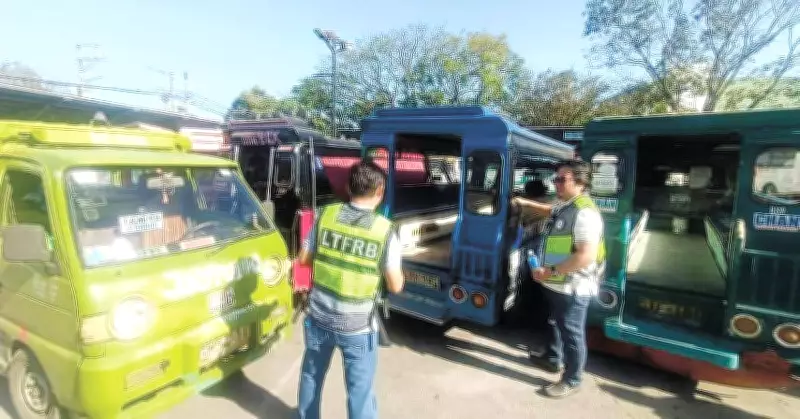
The Land Transportation Franchising and Regulatory Board (LTFRB) in Region 7 has issued a clear and firm warning to all public utility vehicle operators and drivers across Central Visayas. Despite the recent surge in oil prices, driven by geopolitical tensions in the Middle East, the regulatory body emphasizes that no fare increase has been officially authorized by their office.
LTFRB Conducts Inspections to Enforce Compliance
To ensure adherence to regulations, personnel from the LTFRB Regional Franchising Office carried out a thorough inspection at a public utility jeepney terminal in Lapu-Lapu City on February 16, 2026. The primary focus of this operation was to verify that all vehicles met roadworthiness standards, but it also served as a reminder against implementing unauthorized fare hikes.
Students Bear the Brunt of Rising Transportation Costs
The looming threat of fare increases poses significant additional challenges for students commuting to school. Many rely on public transportation daily, and any hike in fares directly impacts their already tight budgets. SunStar Cebu previously reported an instance where a van-for-hire (V-hire) was charging P50 instead of the standard P40 fare for trips to Lapu-Lapu City, highlighting the real-world consequences of such unauthorized adjustments.

Zophie Angel R. Dinoy, a Grade 11 STEM student at the University of Cebu, shared her struggles. "As students, not all of us are financially stable. I don't receive an allowance every day. When commuting becomes difficult, I just walk," she explained. Dinoy added that the combination of daily responsibilities and financial stress often makes it challenging to concentrate on academic work.
John Anthon T. Cadiz, another Grade 11 STEM student at UC, pointed out the broader family impact. "It's difficult because my parents are also affected when they give me my allowance. Our commuting costs increase, so they also have to give me a higher allowance. It's not just me who struggles, they do as well because we still have other necessities to pay for. It's really a big change for us," he stated.
Fuel Price Fluctuations Hit Student Drivers Hard
The issue extends beyond public transport users to students who drive their own vehicles to campus. Rising fuel prices have made commuting more expensive and time-consuming. One student noted, "It really affects us because P50 used to be enough for a liter, but now it's only about 0.72 liters. It already takes around P80 to buy one liter. Instead of saving the extra money, I end up spending it on gasoline. It's also very inconvenient to keep looking for cheaper gas stations because it takes a lot of time."
As fuel prices continue to fluctuate unpredictably, students across the region report that the escalating cost of transportation remains a pressing concern. This not only affects their daily commute but also hampers their ability to manage school-related expenses effectively. The LTFRB's warning aims to curb unauthorized practices, but the underlying economic pressures highlight a broader need for sustainable solutions in public transportation affordability.