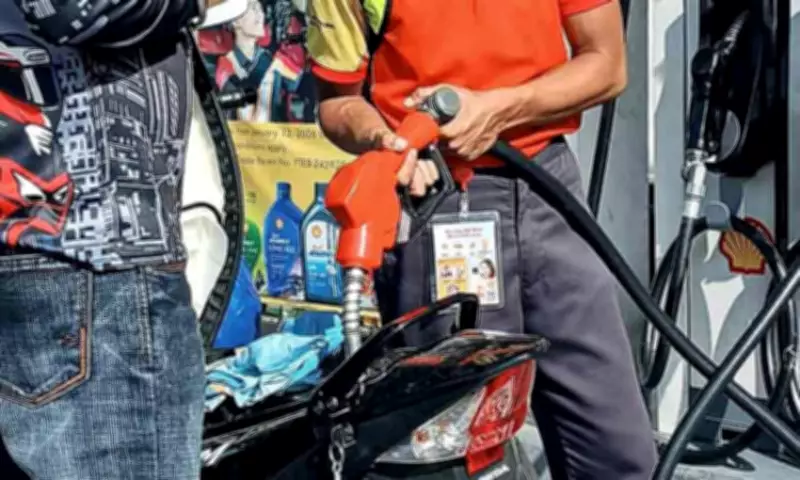
The Philippine transportation system is buckling under immense strain as escalating global tensions drive fuel prices to unprecedented levels. The closure of the Strait of Hormuz, coupled with other international conflicts, has triggered the third substantial price surge this month alone, placing motorists and public utility vehicle (PUV) operators in a dire financial predicament.
Staggering Fuel Increases Roll Out Gradually
In response to the crisis, the Department of Energy (DOE) has mandated a phased implementation of price hikes, but the figures are alarming. Diesel prices are skyrocketing by P20.40 to P23.90 per liter, gasoline by P12.90 to P16.60, and kerosene by P6.90 to P8.90. Cumulatively for the month, increases have reached P13 for gasoline, P24.25 for diesel, and a staggering P38.50 for kerosene, pushing many drivers to the brink of insolvency.
Commuters and Drivers Bear the Brunt
These relentless price spikes are rendering it nearly impossible for numerous drivers to sustain their livelihoods. While the government has activated a P5,000 fuel subsidy, transport groups widely criticize it as insufficient to offset mounting losses. In a bid for survival, the transport organization Piston intends to petition the Land Transportation Franchising and Regulatory Board (LTFRB) for a P5 fare increase.

Some adjustments are already underway; the LTFRB recently elevated the base fare for ordinary provincial buses by P1, setting a new minimum of P12 for the initial five kilometers, with an additional P2.20 charged per subsequent kilometer.
Nationwide Strike Declared for March 19
The escalating crisis has ignited a major confrontation between transport leaders and governmental authorities. Piston national president Mody Floranda has announced a comprehensive protest and strike scheduled for March 19, extending beyond the National Capital Region to encompass the entire nation.
Floranda emphasized that the strike is a direct response to the administration's handling of the fuel crisis and what he describes as "US aggression," which he asserts is exacerbating hardships for Filipinos. This mobilization underscores the deepening rift between transport sectors and policy makers.
Debate Intensifies Over Government Aid Distribution
Local officials are vigorously contesting the allocation of financial assistance. In Cebu, Board Member Neneth Reluya argued that since drivers and operators receive subsidies, commuters should not be burdened with higher fares. Board Member Cesar Baricuatro concurred, proposing that affluent owners of large bus fleets do not require government funds, suggesting aid should be directed solely to drivers who are in genuine need.
Conversely, Eugenio Ibo Jr. of the LTFRB defended providing aid to operators, highlighting their struggles with exorbitant maintenance costs across regions like Cebu and Bohol. This debate highlights the complexities of distributing relief in a sector with diverse stakeholders.
Legislative Measures and Future Prospects
To expedite relief, the House of Representatives is advancing House Bill 8418, which would grant President Ferdinand Marcos Jr. special authority to temporarily reduce or suspend fuel excise taxes during periods of excessively high global oil prices. Key provisions of the bill include:
- Initiating relief measures if oil prices remain above $80 per barrel for one month.
- Implementing tax cuts for a duration of six months to one year.
- Aiming to mitigate "ripple effect" inflation that drives up costs for essentials like food and electricity.
As the March 19 strike approaches, national attention is focused on whether the government will pursue long-term reforms, such as amending the Oil Deregulation Law, to ensure the transportation system remains operational and affordable. The outcome of these deliberations will critically impact the economic stability and daily lives of millions of Filipinos.