Nationwide Transport Strike Looms as Fuel Price Crisis Sparks Government Clash
In a dramatic escalation of tensions over the ongoing fuel price crisis, transport group Manibela has announced a three-day nationwide strike set to commence on April 15, 2026. The protest aims to condemn what the group describes as government inaction on soaring fuel costs, exacerbated by prolonged volatility in global oil markets and escalating Middle East conflicts.
Strike Details and Demands
Manibela chairperson Mar Valbuena revealed in a press conference that the strike, which will run until April 17, is expected to involve an estimated 500,000 jeepneys and other public utility vehicles across the Philippines. The group is demanding a reduction in fuel prices to P55 per liter, along with the suspension of value-added tax (VAT) and excise taxes on petroleum products.
Valbuena accused the government, particularly the Department of Energy (DOE) and Department of Transportation (DOTr), of negligence and collusion with oil companies. He stated, "This is a condemnation of the government’s negligence, especially of the DOE and DOTr, and their collusion with oil companies that have benefited by billions of pesos."

Government Response and Recovery Plan
In response, Palace Press Officer Undersecretary Claire Castro called for dialogue, emphasizing that protest actions are unnecessary. She clarified that President Ferdinand "Bongbong" Marcos Jr. lacks the legal authority to unilaterally suspend VAT on fuel, as no existing law grants such power to the executive branch.
"There is no power for the President to suspend VAT because there is currently no law that grants him such authority," Castro explained. "So there might be a misconception that with just one click, the President can suspend VAT."
Castro highlighted the administration's efforts, noting that the transport sector has been prioritized with cash assistance programs to cushion the impact of rising fuel prices. She added, "We are seeing for ourselves what the President and the administration have done for the transport sector. With or without any strike, the President listens to the concerns of every Filipino."
Legislative Measures and Global Context
Amid the crisis, President Marcos earlier signed Republic Act 12316 into law, granting the executive branch temporary authority to suspend or reduce excise taxes on petroleum products. This move was a direct response to surging global oil prices driven by Middle East tensions.
Concurrently, Department of Development (DepDev) Secretary Arsenio Balisacan announced a strategic shift from immediate crisis response to a long-term recovery plan. This transition comes as fuel prices remain high and volatile, reflecting the prolonged global oil shock that continues to strain the Philippine economy.
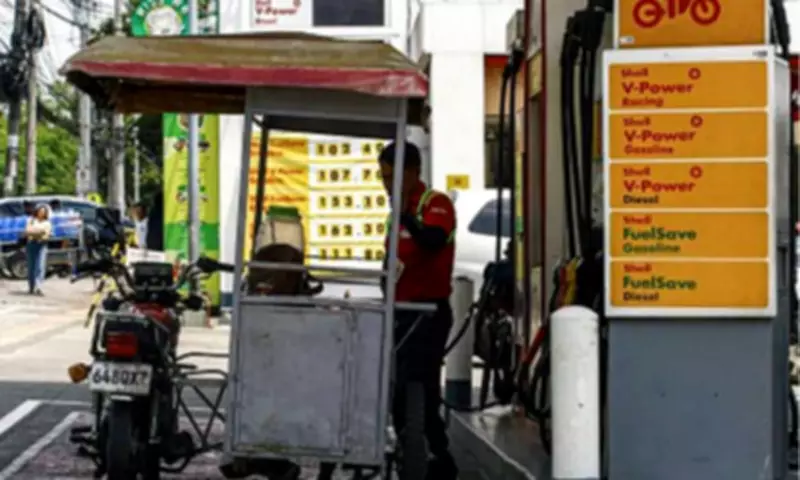
The strike announcement follows a scene captured on April 7, 2026, in Quezon City, where a mobile food cart was seen refueling at a gasoline station—a stark reminder of the daily challenges faced by small businesses and transport operators amid the fuel price surge.