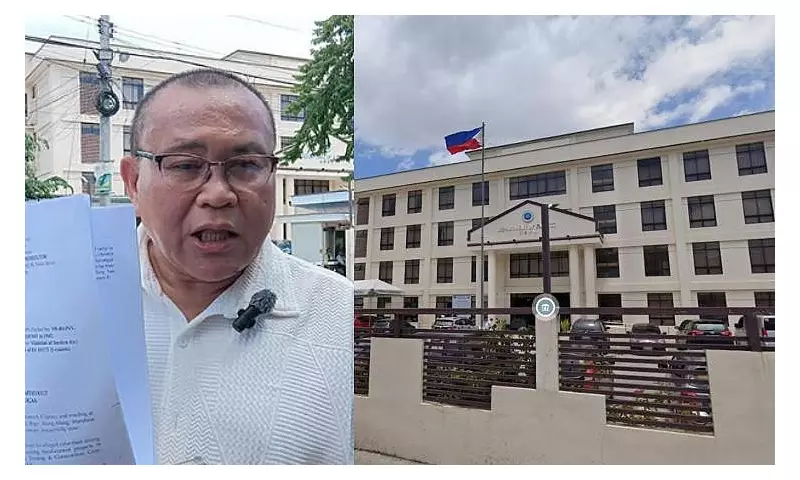
In a significant ruling, the Cebu Provincial Prosecutor's Office has dismissed all five cyber-libel complaints filed against broadcaster Edward Ligas. The complaints stemmed from his social media commentary on a controversial flood control project.
The Core of the Dismissal: A Question of 'Publication'
The resolution, signed by Assistant Provincial Prosecutor Aldwin Z. Flores on November 15, 2025 and approved by Provincial Prosecutor Ludivico Vastal Guaran, hinged on a critical legal element. Prosecutors found no 'prima facie evidence with reasonable certainty of conviction,' a stringent standard set by Department of Justice rules from July 2024.
Investigators focused on one of the four required elements of libel: publication. They ruled that the complainant, Jerome G. Awit, president of ZLREJ Trading and Construction Corp., failed to prove that the allegedly defamatory posts were communicated to a third party.

'Without such allegation and evidence, the supposed publication remains unsubstantiated,' the prosecutors stated. This was despite Ligas's Facebook account having approximately 8,700 followers at the time.
Background of the Controversial Posts
The case originated from five separate Facebook posts made by Ligas between August 14 and 23, 2025. In these posts, Ligas accused Awit's company of 'engaging in corrupt and unlawful activities' related to a riprap project in Barangay Maguikay, Mandaue City.
The posts criticized the use of flood control funds, referenced a P3.8 billion district budget, and questioned the actions of a congresswoman and the contractor. Awit, filing on behalf of ZLREJ, argued the posts were factually inaccurate and intended to destroy his company's reputation.
Unresolved Questions on Press Freedom and Public Interest
Notably, the prosecutor's resolution did not address several substantive defenses raised by Ligas. These included claims of press freedom, fair commentary on a matter of public interest, privileged communication, and absence of malice.
The ruling also left untouched the core question of whether the posts were actually defamatory. By dismissing the case solely on the technical absence of alleged publication, the office sidestepped a broader legal debate.
This case highlights the tension between holding commentators accountable and protecting discourse on issues of significant public concern, such as the alleged misuse of public funds for flood control.
The dismissal was made public on Thursday, January 15, 2026, concluding this initial legal chapter but leaving larger questions about the limits of online commentary and libel law in the Philippines unanswered.