The Philippine Institute of Volcanology and Seismology (Phivolcs) Mindanao Cluster Monitoring Center for Earthquake and Tsunami (PMCMCET) has urged local government units (LGUs) to prohibit the construction of structures on newly exposed coastal areas formed by the recent coastal uplift in Mindanao.
Uplifted areas unsafe for development
Edward Louise Orquillas, science research assistant at PMCMCET, said the uplifted areas are unsuitable for development because they are primarily composed of coral formations exposed by a major earthquake and are not structurally stable. “It is not applicable to put up a structure or transform it into a resort, because it is not naturally safe,” he said during a press briefing on July 3, 2026, at the Pinnacle Hotel in Davao City.
Orquillas recommended that LGUs immediately classify the uplifted coastal areas as protected scientific zones or strict environmental protection areas. He said these areas should be reserved for marine and earthquake research and should remain free from infrastructure development.

DENR warns of hazards
Earlier, Department of Environment and Natural Resources (DENR) Mines and Geosciences Bureau (MGB) Assistant Secretary Karlo Queaño also warned against constructing buildings, including houses, on the newly formed coastal plains created by the uplift in some areas in Davao Occidental and Soccsksargen Region. Speaking on June 17, 2026, Queaño said the areas remain unsafe for settlement and cited the coastal uplift that occurred in Bohol following the 2013 earthquake as a similar case. He added that the uplifted areas remain vulnerable to geological and climate-related hazards.
Earthquake details and impact
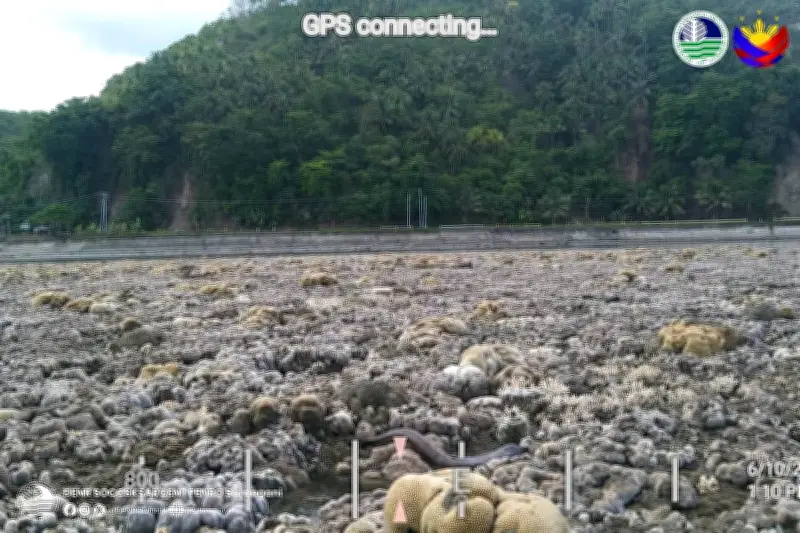
Following the magnitude 7.8 earthquake, several portions of the seabed in heavily affected areas were uplifted, extending some shorelines by as much as 200 meters and exposing coral reefs and seagrass beds. Reports of unusually low sea levels emerged after the earthquake, with field surveys documenting exposed marine life, some of which had already died. Phivolcs said the coastal uplift was caused by movement along the Cotabato Trench, affecting parts of Sarangani and Davao Occidental.
The magnitude 7.8 earthquake struck offshore of Maasim, Sarangani, at 7:37 a.m. on June 8, 2026, and was felt across several parts of Mindanao. Phivolcs issued a tsunami warning shortly after the earthquake.