Dumper Partylist Advocates for Enhanced Fuel Subsidies and Policy Reforms
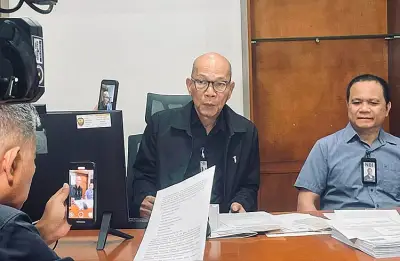
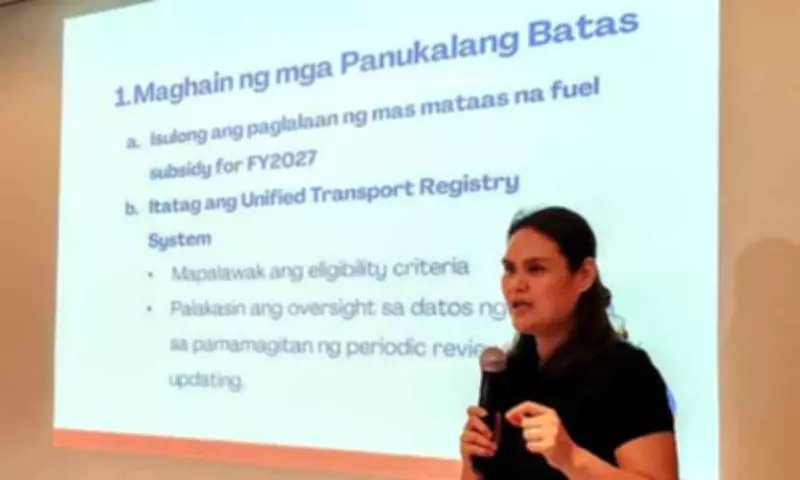
Dumper Partylist spearheaded a crucial dialogue with transport leaders at the Acacia Hotel in Davao City on Monday morning, March 30, 2026. The discussion, led by Dumper Representative Claudine Bautista-Lim, focused on pressing concerns from the transport sector regarding continuous oil price increases that are severely impacting public utility vehicle (PUV) drivers nationwide.
Lawmaker Calls for Immediate Government Action
During the dialogue, Bautista-Lim emphasized the urgent need for higher fuel subsidies and a comprehensive review of existing oil policies. She argued that current measures are insufficient as fuel prices continue their upward trajectory, placing an unsustainable burden on transport workers and commuters alike.
"There's very little the government can do under the current setup," Bautista-Lim stated, highlighting the limitations imposed by the deregulated oil industry. She revealed that Congress is actively drafting amendments to the Oil Deregulation Law (Republic Act No. 8479) to enable government intervention during periods of sharp price increases.

Identifying Critical Gaps in Current Programs
The lawmaker identified significant shortcomings in the existing fuel subsidy framework. She noted that the P2.5-billion allocation managed by the Department of Transportation falls far short of covering all affected drivers. Furthermore, Bautista-Lim cited troubling inconsistencies in beneficiary lists maintained by multiple agencies including:
- The Land Transportation Franchising and Regulatory Board (LTFRB)
- Various local government units
- The Department of Social Welfare and Development (DSWD)
These administrative discrepancies have resulted in numerous drivers being excluded from much-needed assistance despite qualifying for support.
Proposed Solutions for Systemic Improvement
To address these systemic issues, Bautista-Lim proposed several concrete measures:
- Establishing a centralized, regularly updated registry of transport workers to standardize aid distribution across all government agencies
- Reviewing the current trigger mechanism for subsidies, which only activates when global oil prices reach $80 per barrel for sustained periods
"That takes time, and by then, people have already felt the impact," she explained, advocating for a lower threshold to accelerate aid delivery to those most affected by price fluctuations.
Broader Policy Reforms Under Consideration
Beyond immediate subsidy concerns, Bautista-Lim endorsed broader structural reforms. She supported potential amendments or even repeal of the Oil Deregulation Law, which currently leaves pricing decisions largely in the hands of private companies. The lawmaker emphasized that high fuel costs create ripple effects throughout the economy, influencing not only transportation but also the prices of basic goods and services.
This interconnected impact, she argued, warrants consideration of a more extensive subsidy program that addresses multiple sectors of the economy affected by volatile fuel prices.
Interim Assistance Measures Implemented
While awaiting government action on these proposed reforms, Bautista-Lim reported that her office has coordinated with private partners to distribute limited fuel assistance. Recent distributions have included:
- Approximately 1,200 jeepney drivers receiving P2,000 each
- In Davao City: 400 taxi drivers, 500 jeepney drivers, and 100 transport network vehicle service (TNVS) drivers receiving P2,000 each, with riders receiving P1,000
- Additional aid reaching 3,900 tricycle drivers in Digos City, Davao del Sur, and 1,054 in Malita, Davao Occidental, who received full fuel tanks
Bautista-Lim clarified that these private initiatives serve only as temporary stopgap measures, emphasizing that transport groups continue to advocate for sustained government support amid persistently volatile fuel markets.

Historical Context and Executive Response
The Oil Deregulation Law, enacted in 1998, liberalized the downstream oil industry by removing government control over pricing and supply. While originally intended to promote competition, critics argue it has made local fuel prices more vulnerable to global market fluctuations and geopolitical tensions.
President Ferdinand Marcos Jr. has previously stated that all policy options remain under consideration, including amending the law or removing value-added tax on fuel imports. However, the administration has emphasized its current focus on mitigating the immediate impact of rising fuel costs, which have been exacerbated by ongoing tensions in the Middle East.
The dialogue in Davao City represents a significant step in addressing these complex economic challenges, with transport sector leaders and legislative representatives collaborating to develop practical solutions for affected workers and communities.