Marcos to Request Emergency Powers for Fuel Tax Reduction
President Ferdinand Marcos Jr. is poised to formally request Congress to grant him emergency powers, specifically aimed at reducing the excise tax on petroleum products. This move comes in response to looming fuel supply disruptions, which threaten to drive up prices due to escalating tensions in the Middle East.
Official Request and Warnings Against Profiteering
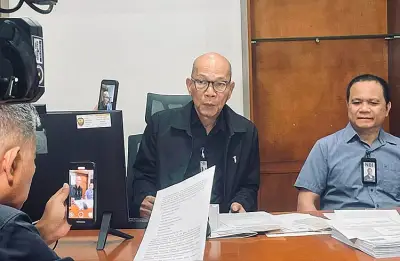
During an interview with reporters in New York, where Marcos is on an official work visit, Presidential Communications Office Undersecretary and Palace Press Officer Claire Castro announced that the Department of Energy will submit the request to Congress on Monday, March 9, 2026, on behalf of the President. Castro emphasized the President's call for unity and cooperation amid the crisis, urging the public not to exploit the situation.
"The President's call is for us to unite regarding what is happening in the Middle East. We should come together and help one another. We don't need to drag each other down," Castro stated. "And to the people, you should not take advantage of others. The President wants us to work together. If you exploit the situation, there will be consequences. You may face legal action and could lose the opportunity to do business."

DOE Actions and Proposed Price Hikes
The DOE has already taken action against alleged fraudulent activities, issuing show cause orders to 54 gas stations accused of untimely price increases and hoarding. Firms involved in such illegal acts risk having their permits canceled. Earlier, DOE Secretary Sharon Garin revealed that Pilipinas Shell is expected to implement significant price hikes: a P24.25 per liter increase on diesel and a P19.2 per liter increase for Petron.
Major oil companies have proposed implementing these increases in three tranches. For Shell, the hikes will be P14.55 per liter on March 10, P7.30 per liter on March 11, and P2.40 per liter on March 12. For Petron, the changes will be P11.60 per liter on the first day, followed by P3.80 each on the second and third days.
New Monitoring Platform and Public Engagement
In a proactive measure, the DOE, in partnership with the Department of Information and Communications Technology, has launched an electronic complaint platform. This initiative aims to strengthen monitoring efforts and ensure gasoline stations comply with fuel pricing policies. The agency is encouraging the public to use this platform to report various issues, including panic buying, long queues, fuel hoarding, non-compliance with repricing, refusal to sell fuel, and fuel shortages.
President Marcos had previously indicated he would seek emergency powers to cut the excise tax on petroleum products if the price of Dubai crude reaches or exceeds $80 per barrel, highlighting the government's preparedness to address economic pressures from global oil market volatility.