Top security and development officials in Mindanao have assured the public that the island remains generally safe and secure despite a recent travel advisory issued by the Australian Embassy in the Philippines, which warned its citizens against travel to several parts of Mindanao due to potential terrorism threats.
Official Responses to the Advisory
The Police Regional Office-Davao Region (PRO-Davao) and the Mindanao Development Authority (MinDA) stated that authorities have not monitored any active terrorism movements in Eastern Mindanao, particularly in the Davao Region. Police and military units continue intelligence monitoring and security operations across the island.
The assurance came after the Australian Embassy on May 12, 2026, advised its nationals to “reconsider your need to travel to eastern Mindanao (excluding Camiguin, Dinagat, and Siargao Islands) and do not travel to other areas of Mindanao,” citing threats of terrorism and kidnapping activities.

In an interview with SunStar Davao, PRO-Davao spokesperson Police Major Catherine Dela Rey said authorities have not monitored any direct terrorist threat in the Davao Region and emphasized that police and military units continue to coordinate closely to preserve peace and order.
Dela Rey said the region remains peaceful and secure for residents, tourists, and investors, adding that authorities heightened police visibility, checkpoint operations, and intelligence monitoring following the release of the travel advisory. “No active threats in the region, and so far our jurisdiction is peaceful,” Dela Rey said.
Speaking during the Habi at Kape Media Forum on May 13, MinDA Deputy Executive Director and Assistant Secretary Romeo Montenegro said Mindanao has achieved significant gains in peace and security through sustained law enforcement efforts, stronger local governance, and continuing peacebuilding initiatives.
Montenegro said recent perception studies conducted by MinDA reflected growing public confidence in Mindanao’s safety and stability despite advisories issued by some foreign governments warning against travel to parts of the island. He acknowledged that countries such as Australia use their own intelligence systems and security assessments before issuing travel advisories.
“It goes all the way up to their head country, to say, from Canberra, for instance, where the capital of Australia is. So we respect them having their assessment of the situation on the ground and coming up with those advisories,” Montenegro said.
At the same time, Montenegro said MinDA also seeks clarification on the basis of such advisories, noting that embassies gather information from different intelligence sources before issuing decisions. “The same question as well to the embassy as to the basis of them coming up, but then again, as pointed out earlier, they have their own way of gathering intelligence information. They have their own means of assessing situations and obtaining essential information from different sources for them to be able to come up with a decision,” he added.
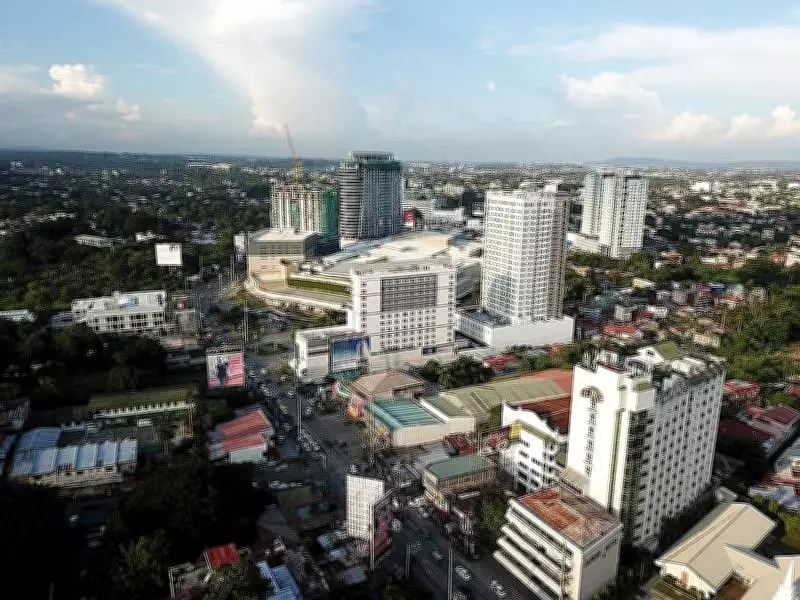
Montenegro said that local authorities continue monitoring the peace and order situation across Mindanao, particularly in key urban centers such as Davao City, one of the country’s major economic hubs and tourism gateways.
Military and Security Updates
The 10th Infantry “Agila” Division of the Philippine Army also assured the public that its area of responsibility remains peaceful following the advisory covering Eastern Mindanao. “First of all, we respect the sovereign prerogative of the Australian government. However, the 10th ID, our area of responsibility, is generally stable,” spokesperson Major Ruben Gadut said during the Davao Peace and Security Press Corps briefing.
Safety Ratings and Public Perception
According to MinDA’s latest Mindanao Safety Rating survey, the island posted an overall safety rating of 89.69 percent in 2024, higher than the 88 percent recorded in 2023. The survey gathered responses from more than 7,200 residents, travelers, and travel vloggers across Mindanao.

The survey showed several areas previously associated with conflict posted high safety ratings, including Basilan and Lanao del Sur, with 95 percent each, while Cotabato City recorded a 90 percent rating. In the Davao Region, Davao Oriental emerged as the safest province with 95 percent, followed by Davao del Sur with 94 percent.
Northern Mindanao provinces also posted strong public confidence ratings, with Iligan City recording 98 percent, Camiguin 97 percent, and Cagayan de Oro City 95 percent. In Caraga Region, Agusan del Sur topped the safety ratings with 91 percent, followed by Surigao del Norte with 88 percent and Agusan del Norte with 87 percent.
MinDA officials said the survey reflected improving public perception toward Mindanao amid continuing economic growth, tourism expansion, and improving peace conditions in previously conflict-affected communities.
Separate MinDA data released in early 2026 also showed sustained public trust in Mindanao’s peace and order situation. As of the third quarter of 2025, the agency recorded public perception ratings of 88.51 percent for safety and 90.15 percent for security across the island.
“Mindanao is not a terror hotspot,” MinDA Chair Secretary Leo Tereso Magno earlier stressed, saying reports branding the island as unsafe do not reflect the actual peace and order situation in most areas.
Isolated Incidents and Security Operations
Despite the improving security landscape, authorities acknowledged that isolated incidents involving extremist and insurgent groups still occur in remote and conflict-affected areas. Among the recent incidents was the March 28 ambush in Shariff Aguak, Maguindanao del Sur, where five police officers were killed in an attack linked to members of the Dawlah Islamiyah group. Security forces later neutralized three suspected extremists during operations in April.
Officials emphasized that authorities immediately addressed the incidents to prevent escalation. Authorities also cited continuing anti-insurgency operations in the Caraga Region as proof that security forces remain proactive against remaining communist rebel groups operating in parts of Mindanao.
On Monday, government troops killed high-ranking New People’s Army leader Edilberto Daval, also known as “Bong,” “Waco,” and “Bill,” during an encounter in Marihatag, Surigao del Sur. Daval served as second deputy secretary of the executive committee of the North Eastern Mindanao Regional Committee and commanding officer of its Regional Operations Command, according to the military.
Troops also captured one of Daval’s alleged companions and recovered high-powered firearms from the encounter site. Indigenous Peoples leaders in Surigao del Sur and Agusan del Sur welcomed the operation and accused Daval of years of harassment and extortion targeting tribal communities. Military officials described Daval’s death as a major setback to the remaining insurgent network in Caraga Region and Northeastern Mindanao.
Conclusion
Despite isolated incidents, officials maintained that the overall peace and order situation in Mindanao remains stable, particularly in major urban centers and tourism hubs. Authorities added that economic activities, tourism programs, and infrastructure projects across the island continue to expand amid improving investor confidence and sustained peace initiatives.