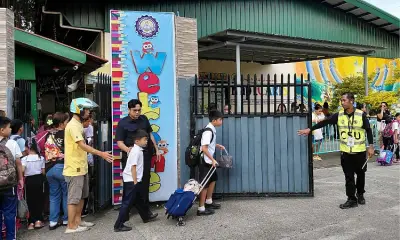
The recent spate of violence, bullying, killings, and obscenity in the Philippines has exposed a grim reality: schools, once considered safe havens, are now mirrors of a society in deep distress. According to Jose Mario D. De Vega, a faculty member at the Philippine Normal University, the problem is not merely video games, lack of school security, or negligent parenting. Instead, it is a systemic failure that has penetrated the academic community.
Root Cause: Systemic Poverty and Exploitation
De Vega echoes the statement of the Bukluran ng Manggagawang Pilipino (BMP), a workers' organization, which argues that the root of youth involvement in crime is widespread and systematic poverty. This poverty stems from the lack of decent jobs, low wages for parents, high prices of goods, and inadequate education and social services. Children caught in crime are victims of an exploitative system and a government that has betrayed their rights and future, the BMP insists.
Manifestations of a Nation in Agony
De Vega draws a parallel to José Rizal's declaration that the nation has a cancer. He describes the current situation as a nation in agony, with symptoms including laziness, escapism, and addiction to shallow pleasures among citizens. He criticizes political leaders as heartless and corrupt, senators and congressmen as thieves, and institutions as weak and hollow. The educational system is a failed experiment, the justice system is rotten, and foreign policy is servile.

Diversionary Calls to Lower MACR
The call to lower the Minimum Age of Criminal Responsibility (MACR) is a diversion from real problems, De Vega argues. While millions of families suffer, a handful of elitist families enjoy luxury born of corruption and exploitation. The true criminals are those who benefit from the system, not the children who are its victims.
A Call for Systemic Transformation
De Vega insists that the solution is comprehensive development for all children, regardless of gender, race, or social status. Education and support services must be adequately funded, and the government must dismantle policies that privatize social services. Decent jobs, higher wages, and subsidies for marginalized communities are essential. He urges the public to awaken and take collective action to transform the system, invoking the spirit of Andres Bonifacio and the Katipunan. The system is fixed, but it can be changed only by transforming the whole social structure.