Cyberattacks Escalate in the Philippines, Forcing Organizations to Rethink Data Protection
Cyberattacks are increasingly disrupting digital systems across the Philippines, prompting organizations to reassess their preparedness for outages and data loss as threats grow more sophisticated and complex. This surge in incidents highlights the urgent need for enhanced security measures in a nation heavily reliant on digital infrastructure.
Alarming Rise in Cyber Incidents and Emerging AI Risks
According to a recent cybersecurity report, cyber incidents in the Philippines surged by an alarming 49 percent quarter-on-quarter during the third quarter of 2025. This spike involved 76 breach incidents that affected more than four million accounts, underscoring the widespread impact on individuals and businesses alike. Separately, the World Economic Forum has issued a stark warning in its Global Cybersecurity Outlook 2026, identifying AI-enabled fraud as a top emerging risk. The report notes that generative AI tools are making scams easier to scale and significantly harder to detect, adding a new layer of complexity to the cybersecurity landscape.
Critical Impact on Key Economic Sectors
For sectors that depend heavily on digital infrastructure—such as business process outsourcing, retail, logistics, healthcare, and financial services—system downtime can lead to severe operational disruption, substantial revenue loss, and lasting reputational damage. The interconnected nature of these industries means that a single cyber incident can ripple through the economy, affecting productivity and consumer trust.

Expert Insights from CyberSecPhil Conference 2026
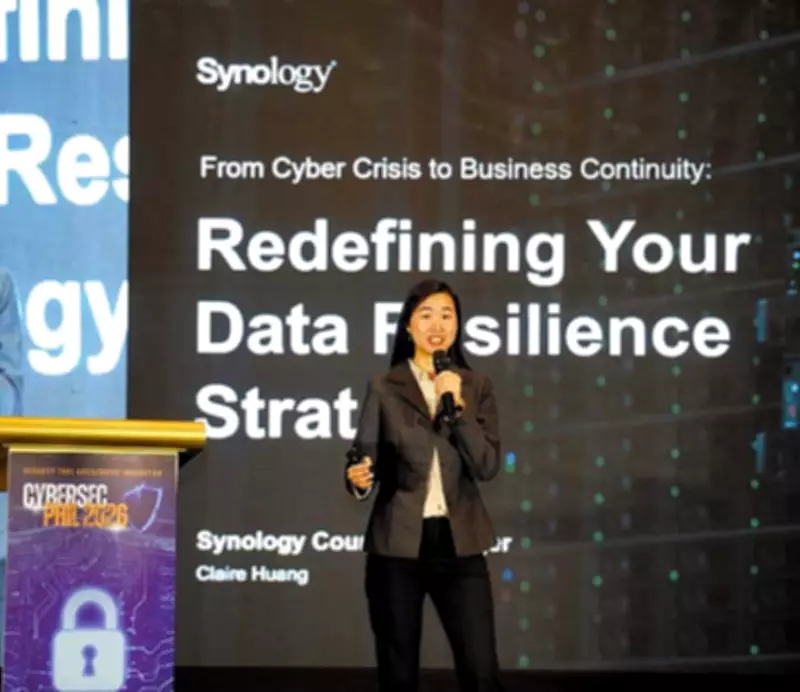
Speaking at the CyberSecPhil Conference 2026, Claire Huang, country manager for the Philippines at data management company Synology, emphasized that organizations should view data protection as a business-wide responsibility rather than a purely technical concern. This shift in perspective is particularly crucial as cyber incidents increasingly target recovery systems in addition to primary networks. "With digital operations now central to day-to-day business, the ability to recover data and systems quickly is becoming critical during cyber incidents," Huang stated.
Evolving Threats and the Need for Advanced Backup Strategies
Huang further noted that traditional backup strategies alone are no longer sufficient, as attackers are now specifically targeting backup and recovery environments to maximize disruption. "Effective data protection is no longer just about keeping copies of data," she explained. "It must ensure that data remains secure and that systems can be restored quickly even if primary environments are compromised." This evolution in attack methods requires a more robust and integrated approach to cybersecurity.
Persistent Gaps in Data Protection and Regulatory Implications
Industry assessments reveal that many organizations continue to face significant gaps in their data protection frameworks. Common issues include weak access controls and limited visibility across systems. In some cases, backup environments remain connected to production networks, leaving them vulnerable during ransomware attacks designed to disrupt operations rather than simply steal data. Cyber incidents also carry regulatory consequences under the Data Privacy Act, which mandates that organizations implement reasonable and appropriate safeguards to protect personal information, including measures to ensure data availability and protection following security breaches.
Building Resilience Through Coordinated Strategies
As cyber risks continue to evolve, organizations are increasingly examining structured data protection strategies that prioritize recovery readiness alongside prevention. This is especially important as IT environments become more distributed and complex. "Resilience has become a core part of security planning," Huang concluded. "Organizations need coordinated data protection and tested recovery processes to limit disruption during incidents." By adopting a holistic approach that integrates prevention, detection, and rapid recovery, businesses in the Philippines can better safeguard their digital assets and maintain operational continuity in the face of growing cyber threats.