GCash Intensifies Fight Against 'Quishing' Scams, Blocks Thousands of Fraudulent Merchants
GCash, the Philippines' leading finance super app, has taken a strong stance against digital fraud by blocking over 4,900 fraudulent merchants engaged in 'quishing' scams. This new tactic involves scammers using fake QR codes to steal payments from unsuspecting users. The crackdown comes as Filipinos face rising transportation costs and broader economic pressures, making the protection of every peso more critical than ever.
The Rise of 'Quishing' and How It Works
Recent monitoring by GCash has uncovered sophisticated schemes where fake websites mimic legitimate GCash payment pages and use QRPh codes to collect payments. Known as 'quishing' or QR phishing, this scam has been flagged by the Bangko Sentral ng Pilipinas (BSP). Fraudsters exploit QR codes to redirect users to malicious payment pages or steal sensitive information, often misusing official branding to appear credible and deceive users into completing unauthorized transactions.
In many cases, fraudulent QR codes are embedded in posters, emails, receipts, or messages. When scanned, these can redirect users to fake login pages for e-wallets or banks, or even to sites that install harmful software on their devices. As a result, users may unknowingly send money to illegitimate accounts, even if the transaction seems familiar or routine.

Key Warning Signs for Users to Watch Out For
GCash reminds users to stay alert for several red flags before completing any payment:
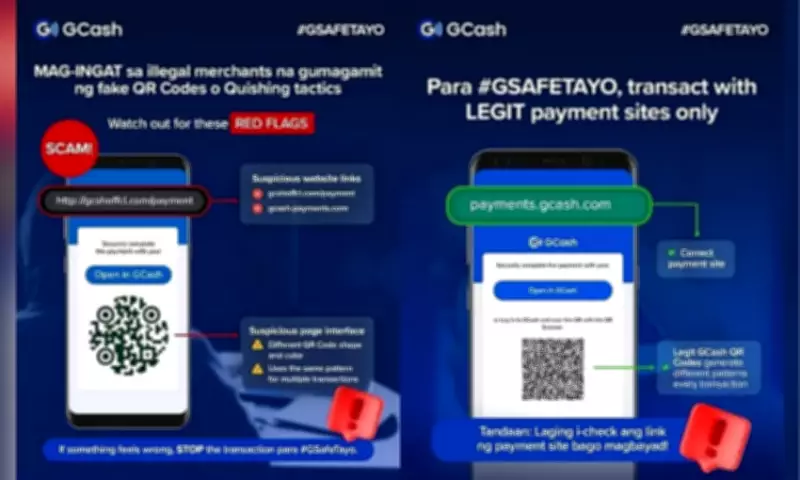
- Suspicious website URLs that imitate GCash domains, such as 'gcash-payments.com' or 'gcsh.payment.com', instead of the official 'payments.gcash.com'.
- Mismatch in merchant identity, especially when the name displayed is random, incomplete, or unrelated to the actual business, like 'XJ82q' or 'Merchant_123'.
- Payment pages that feel inconsistent or unfamiliar, despite using GCash or QRPh logos.
If any of these signs are present, users should stop the transaction immediately to prevent financial loss.
Proactive Enforcement and Collaborative Efforts
GCash has not only blocked wallets linked to these fraudulent activities but has also escalated the takedown of scam websites. The company is working closely with government partners to strengthen enforcement and disrupt online fraud. These efforts build on GCash's sustained anti-fraud and cybersecurity campaigns, including GSafe Tayo.
In 2025, GCash, in collaboration with the Cybercrime Investigation and Coordinating Center (CICC), blocked over 3,200 merchants linked to illicit activities, which often served as channels for fraudulent transactions and scams. Miguel Geronilla, Chief Information Security Officer at GCash, emphasized the company's commitment: 'By proactively blocking unauthorized actors and reporting them to our regulators and authorities, we are helping protect Filipinos and maintain trust in the country's digital financial ecosystem.'
Geronilla added, 'Scammers are evolving alongside digital payments. We have zero tolerance for these actors and are actively blocking and reporting them to protect our users. Protecting users is at the core of our platform, and we will continue to strengthen our safeguards and work hand-in-hand with the government to keep the ecosystem safe.'
Steps to Protect Every Peso
GCash urges users to verify website URLs and merchant details before completing transactions and to stop immediately if anything appears suspicious. To report suspected scams, users can access the GCash Help Center at help.gcash.com by chatting with Gigi and selecting 'I want to report a scam', or by calling the official GCash hotline at 2882.
Additionally, incidents can be reported to the PNP Anti-Cybercrime Group at (02) 8414-1560 or 0998-598-8116, or via email at acg@pnp.gov.ph. The Cybercrime Investigation and Coordinating Center (CICC) can be reached through hotline 1326, mobile 0991-481-4225, or email at report@cicc.gov.ph.
By staying vigilant and using trusted platforms, Filipinos can better protect their funds and ensure that every peso counts in today's challenging economic climate. More information is available at www.gcash.com.