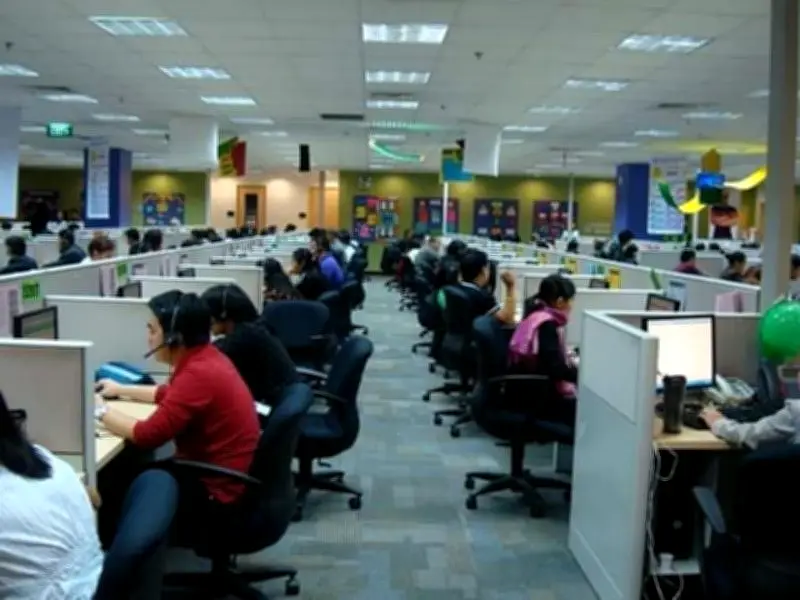
A petition for a P1,200 daily minimum wage by business process management (BPM) workers in Cebu has prompted industry leaders to call for greater investment in upskilling and reskilling programs to help workers transition into higher-value roles that offer better compensation.
Industry leader calls for focus on higher-value jobs
Cebu IT-BPM Organization vice president Darwin John Moises said BPM workers’ concerns about purchasing power and supporting their families amid rising prices are valid, but noted that businesses face mounting operational costs and competition from outsourcing destinations such as India, Vietnam, and Latin America.
“This is why the conversation should not be framed as workers versus employers,” said Moises, who also serves as vice president for partnerships, engagement and governance of the Cebu Chamber of Commerce and Industry. “A more important question is how we help workers move into higher-value roles such as artificial intelligence, analytics, cybersecurity and digital services that command higher pay than traditional rule-based voice and back-office work.”

Petition filed amid economic pressures
The BPO Industry Employees’ Network (Bien)-Cebu secured the docketing of its petition before the Department of Labor and Employment and the Regional Tripartite Wages and Productivity Board (RTWPB) to establish a P1,200 daily minimum wage in Central Visayas.
Bien-Cebu president Kyle Enero said the petition was prompted by worsening economic conditions, including rising fuel prices, inflation, and the weakening peso, which have eroded workers’ purchasing power. “Workers are being asked to survive on wages that no longer reflect economic reality,” Enero said, adding that increases in food, transportation, electricity, and housing costs have pushed many workers deeper into financial hardship.
Inflation data highlights severity
Bien-Cebu cited data showing that Central Visayas posted the country’s highest inflation rate in May 2026 at 10.8 percent, while inflation among the bottom 30 percent of households reached 15.4 percent. Food inflation was recorded at 17.9 percent, with vegetable prices rising by as much as 54 percent. The region has recorded the highest inflation rate among the country’s 18 regions for 10 consecutive months.
The group argued that current wage levels are insufficient to meet basic living costs and that recent economic developments constitute supervening events justifying an emergency wage adjustment before the usual 12-month review period. The proposed wage increase would benefit all private-sector workers and should include adjustments for employees earning above the minimum wage to prevent wage distortions.
Upskilling as a long-term solution
While continuing to advocate for a national living wage policy, Bien-Cebu said immediate relief is needed through available wage-setting mechanisms. Moises reiterated the need for sustained upskilling and reskilling efforts to help workers access higher-paying opportunities in emerging technology fields.
He said enabling more Filipinos to move into higher-value jobs would allow workers to earn better incomes while helping the country’s IT-BPM industry remain competitive and continue creating employment opportunities. The RTWPB 7 has accepted and docketed the petition after Bien-Cebu complied with documentary requirements, and the group has been invited for a wage consultation on June 25.