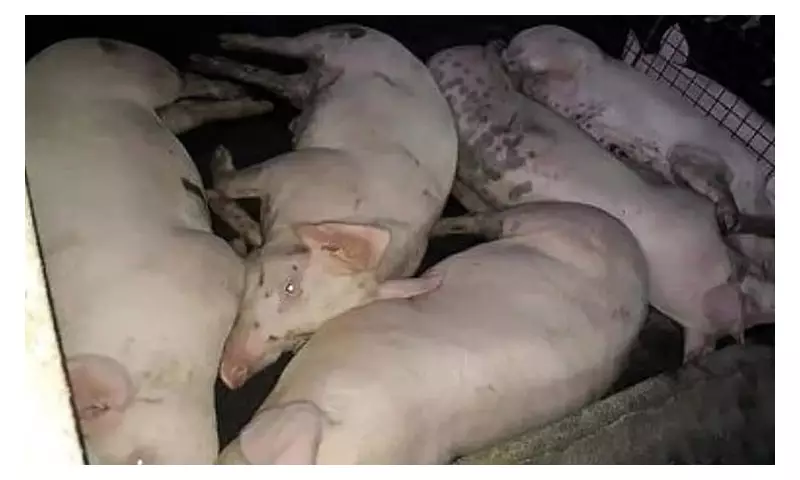
The Cebu Provincial Board has taken decisive action to update its local African Swine Fever (ASF) regulations, bringing them into full alignment with national standards. This move comes as the province grapples with increasing cases of hog illnesses and ongoing worries about the accuracy of testing methods.
Key Revisions to the ASF Ordinance
During its regular session on Monday, December 15, 2025, the Provincial Board approved the revised ordinance, which was authored by PB Member Cesar Baricuatro. The measure specifically updates Ordinance 2023-03 that was originally enacted in April 2023. The previous version had mandated the province to create its own laboratory testing protocol, a requirement that ultimately conflicted with guidelines from the national government.
The new ordinance acknowledges that local government units must ensure their policies are consistent with those set by the Department of Agriculture (DA) and the Bureau of Animal Industry (BAI). It also cites discovered instances of false negative results from Rapid Test Kits, which were not being fully utilized, as a key reason for the update.

New Testing and Movement Protocols
A major change under the revised rules involves centralized testing. All blood, serum, and tissue samples collected by the Provincial Veterinary Office must now be sent exclusively to accredited national laboratories. These include the DA 7 Regional Animal Disease Diagnostic Laboratory, the BAI Animal Disease Diagnosis and Reference Laboratory, and the DA National Animal Diagnostic and Reference Laboratory.
Furthermore, the revision facilitates the free movement of pigs and pork products within Cebu. Provincial border controls and internal zoning restrictions are lifted, provided that all shipments comply with veterinary health certification requirements.
Enhanced Biosecurity and Enforcement Measures
The ordinance establishes a multi-tiered task force system to manage ASF and Classical Swine Fever. Barangay Swine Fever Task Forces will be created in every city and municipality, led by barangay captains. Their duties will include disease surveillance, swine health monitoring, sample collection, and public information campaigns.
On a provincial level, a Provincial ASF Task Force headed by the governor will oversee the ordinance's implementation, supported by a technical working group led by the provincial veterinarian. Local chief executives, barangay officials, and law enforcement are tasked with enforcement.
Strict biosecurity rules are outlined, including:
- Mandatory isolation of sick pigs.
- Daily reporting of animal health status.
- A ban on swill feeding (feeding food scraps to pigs).
- Restrictions on backyard slaughtering.
Pigs confirmed to be ASF-positive will be euthanized and buried under veterinary supervision, with affected areas thoroughly disinfected.
Registration and Penalties
The ordinance mandates registration for all swine farms. Small-hold and semi-commercial operations must submit backyard swine registration forms and veterinary health certificates. Commercial farms need certification from their farm veterinarians, with prior approval from local government veterinarians.
Violations of the biosecurity provisions carry serious consequences. Penalties can include the suspension or cancellation of farm registrations, imprisonment of up to one year, a fine of P5,000, or both. Public officials found violating the ordinance may face administrative, civil, or criminal sanctions.
The revised ordinance will take effect after being posted in prominent locations at the Provincial Capitol and published in a newspaper of general circulation, as required by the Local Government Code.