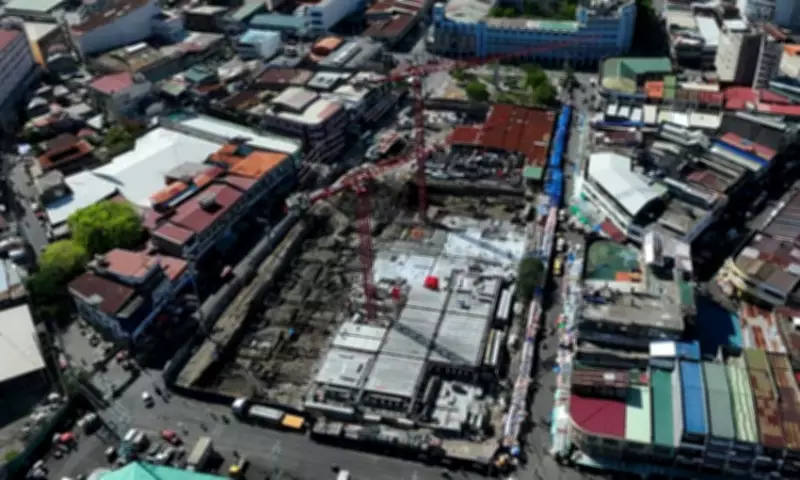
The Regional Trial Court (RTC) of Cebu City has dismissed a petition seeking to stop the implementation of the joint venture agreement (JVA) between the Cebu City Government and Megawide Construction Corp. for the redevelopment of Carbon Public Market, ruling that the petitioners failed to meet the requirements for injunctive relief.
Court Ruling
In a resolution dated April 23, 2026, Branch 16 Presiding Judge Dante Corminal denied the application for a writ of preliminary injunction and temporary restraining order (TRO) filed by the Carbohanong Alyansa Alang sa Reporma ug Bahandianong Ogma sa mga Nanginabuhi (Carbon) and other complainants. The court found that the petitioners did not establish a clear legal right that warranted protection.
Petitioners' Arguments
The petitioners sought to halt the JVA covering the redevelopment of portions of Carbon Market in Barangay Ermita, including Freedom Park, Warwick Barracks, Carbon Market Units, and adjacent reclaimed waterfront areas spanning seven to eight hectares. They argued that the agreement exceeded the city's authority and violated law and public policy. They claimed the project would displace vendors, raise consumer costs, destroy heritage structures, and endanger urban poor communities, particularly residents of Sityo Bato, which was designated for socialized housing.

Concerns were also raised over land ownership, noting that many project areas lacked clear cadastral identification, while some portions remained in the public domain or under national government control, including areas claimed by the Cebu Ports Authority. The group questioned Megawide's qualifications for the project, which involves financing, construction, and long-term operations, as well as the financial structure of the agreement due to the lack of clear valuation of the city's contribution.
Additionally, the petitioners pointed to several provisions they described as onerous, including conditions requiring high occupancy rates before expansion phases, mandatory rental rate increases, and the city's obligation to amend ordinances, relocate vendors, and clear project sites. They noted that only about 800 stalls would be available during construction despite over 1,600 vendors currently operating, and claimed the agreement was entered into without broad public consultation.
Defense Response
In response, the defense argued that the petitioners lacked legal standing to question the contract since they were not parties to the JVA. They asserted that occupying market stalls was merely a privilege and not a vested right under the Cebu City Market Code, and that informal settlers had no legal right to remain on public land indefinitely. The defense further stated that there was no actual displacement, as the project would be implemented in phases, with vendors being transferred to interim facilities or allowed to continue operations until construction affected them. They claimed that alleged damages such as relocation and business disruption were economic in nature and could be compensated through damages, thus not constituting irreparable injury.
Court's Findings
The court emphasized that a writ of preliminary injunction is an extraordinary remedy requiring a clear and unmistakable legal right, a material violation thereof, and an urgent need to prevent irreparable injury. The court found that the petitioners failed to demonstrate these requirements.
The court noted that the petitioners did not show a clear legal right deserving protection, pointing out that market occupancy does not equate to ownership or vested entitlement. It also found insufficient evidence of illegal or imminent displacement, given the project's phased implementation and the availability of interim arrangements for vendors.
Regarding damages, the court ruled that alleged injuries such as temporary relocation, business disruption, and possible cost increases were measurable and compensable, thus not meeting the legal definition of irreparable injury. The court characterized claims of future damages as speculative.

Next Steps
The RTC also denied the request for injunctive relief because granting it would prejudge the main case, which seeks to nullify the JVA. The court stated that questions regarding the agreement's legality must be resolved through a full trial. Following the denial of the TRO and injunction, the court announced it would proceed with the main case and set a pre-trial conference for June 24, 2026.