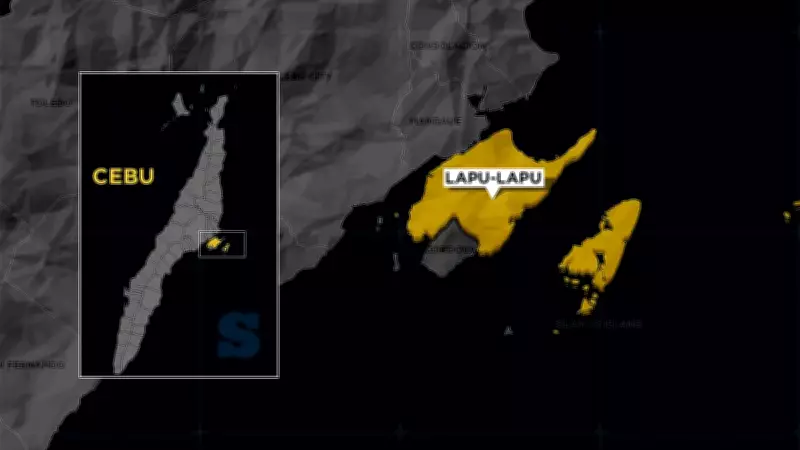
Nearly seven decades of lato farming have helped sustain families in Barangay Calawisan, Lapu-Lapu City, but farmers now say declining yields, polluted waters, and the loss of fish ponds to development are pushing the coastal livelihood toward collapse.
Declining Yields and Shrinking Ponds
Sea grapes (Caulerpa lentillifera), locally known as “lato,” are more than a coastal crop; they are part of the Cebuano diet, valued both as a local delicacy and a dish that attracts foreign tourists. However, in the 2000s, the Bureau of Fisheries and Aquatic Resources (BFAR) 7 observed a 70 percent decline in lato yield, raising serious concerns among farmers who said their numbers are gradually shrinking.
Many attribute this decline to the construction of subdivisions and the Cebu-Cordova Link Expressway (CCLEX), as well as to companies’ neglect of wastewater management, oil spills, and the increasing volume of plastic waste washing into their ponds. The size of the sea grapes has also declined. Older farmers said lato is now three to four times smaller than it was decades ago, with noticeable reductions in both the length and girth of its grape-like structures, known scientifically as assimilators.

Farmers' Struggles
Violeto de los Santos, 43, has been a lato farmer since he was 15. He recalled that during his youth, they could harvest lato every week or at least twice a month. Now, he said, they are lucky if they can harvest even once a month. Despite having 28 years of experience in the industry, De los Santos still rents a small fish pond and is at risk of quitting. He described farming sea grapes as literally and figuratively “weather-weather lang,” adding that relying on luck is no longer enough to cover his family’s daily expenses. The situation worsened when typhoon Tino washed away 90 percent of his expected lato harvest. He said this amounted to a loss of P60,000. He and other lato farmers had to take out loans just to continue their livelihood.
Environmental Hazards
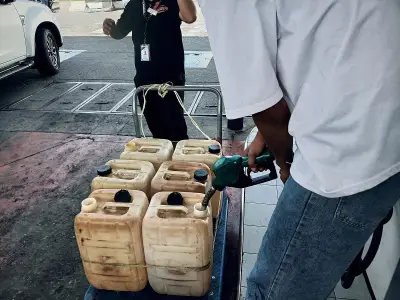
Environmental hazards have also compounded their struggles. De los Santos said that two years ago, a nearby gas station accidentally developed a hole in its fuel reservoir, causing gasoline to leak into the surrounding waters. The contamination poisoned their planted lato, forcing farmers to discard their crops and manually clean the affected ponds. They received no compensation for the damage inflicted by the company.
De los Santos said the number of functional lato ponds in their area has significantly declined. What used to be numerous ponds are now “countable on one’s fingers,” he said, because many pond owners sold their properties to developers who filled the ponds with land to build houses and subdivisions. This January, De los Santos and his fellow farmers filed complaints with the barangay after a residential condominium complex was built near the seashore. They reported that construction waste, including cement, was dumped into the sea, damaging their crops. Construction was temporarily halted but later resumed after the developers promised to manage their waste properly.
Despite these challenges, De los Santos remains hopeful. For him, there is no other path but the livelihood passed down through generations. He said farming lato is often “weather-weather lang,” dependent on unpredictable conditions and chance, yet he continues to hope that farmers like him will still be able to sustain their livelihood and preserve the decades-old tradition of lato farming in their community.
Waste Accumulation
Jeson Berame, 40, has worked as a piyado, or pond caretaker, since he was 14. Over the years, he has been employed in large lato ponds owned by a barangay official. Despite the increase in manpower in recent years, he said the yield of lato continues to decline annually. For Berame, a typical day as a piyado is never complete without removing large amounts of plastic garbage that accumulate in the dilaan, or water control gates, of the ponds. At times, he also has to repair these structures after they are damaged by the combined force of heavy trash buildup and the strong water current pushing through the gates.

The influx of plastic waste becomes especially evident from June to September, which coincides with the Habagat or southwest monsoon season. During this period, large volumes of plastic debris are carried by ocean currents toward the lato ponds of Barangay Calawisan. Berame and other lato farmers said much of this waste originates from coastal communities such as Barangay Pasil and Barangay Mambaling in Cebu City, located approximately five to six kilometers away.
Plastic is not the only waste reaching the ponds. Berame said companies’ wastewater and oil have also been discharged into the waters. He recalled several instances when he was forced to harvest his lato early as brown water slowly crept near the ponds. As a piyado, it is also his task to clean the waters in the pond and replace the poisoned soil. He has to rehabilitate the soil before planting can begin again. The process takes a couple of weeks or, in worse cases, months, which is financially burdensome to the owners.
Berame also recalled the time when the CCLEX was still in its initial stages of construction between April and May 2017. During that period, the seawater constantly had a murky brown color that killed the lato. He deduced that some chemical may have been used during the drilling of the seabed for the bridge’s foundations. He added that there are now at least 10 ponds left that still plant lato, a small number compared with the many ponds during his youth. “Maningkamot lang gyud (Just really work hard),” Berame said.
Balancing Progress
The Cebu-Cordova Link Expressway Corp. (CCLEC), in a statement on Friday, April 24, 2026, said during the planning and construction of the CCLEX, there had been an active engagement with key stakeholders, including the Cordova town’s fishing community. “This was undertaken to ensure that the needs and concerns of local communities were considered in the project design and implementation,” read a portion of CCLEC’s statement. CCLEC also said technical and infrastructure impacts were considered to minimize disruption to marine-based livelihoods, including the construction of four small bridges at strategic intervals across Cordova’s waters to maintain access for fisherfolk and their boats to their traditional fishing grounds. The expressway alignment was also adjusted and extended by approximately 250 meters to preserve Cordova’s mangrove forest, which serves as an important habitat for marine life, CCLEC said. “These measures reflect CCLEC’s commitment to responsible infrastructure development that balances progress with environmental protection and the continuity of local livelihoods,” CCLEC said. “Since the start of CCLEX operations, CCLEC has continued to regularly engage with the Municipal Government of Cordova, fisherfolk groups, and host communities to address concerns and ensure that stakeholder feedback is considered in ongoing development and management efforts,” it added.
In an interview, Calawisan Barangay Captain Arsilito Amado Pejo estimated that roughly 75 percent of the harvested lato is shipped to markets, including Metro Manila and Japan. The remaining 25 percent is sold within Lapu-Lapu City and Cebu Province, highlighting the importance of lato farming to the local economy and the community’s livelihood. Despite its economic and cultural relevance, Pejo admitted that lato farmers receive little to no government support because the ponds are privately owned, and authorities have limited involvement in their management. When asked about the privatization and filling of other ponds, Pejo denied that this was happening, although he acknowledged that some Chinese investors had visited the area in the past. However, some lato farmers, who requested anonymity, said they signed contracts with Russian investors who plan to purchase their ponds, fill them in and convert the land for commercial use.
Scientific and Regulatory Concerns
BFAR 7 Fishery Technologist Joel Clapano noted that rising sea levels and decreasing salinity of the seawater have made lato growth more difficult. Tests conducted by researchers from other institutions showed the salinity at only 18 parts per thousand (ppt), far below the average seawater salinity of 35 ppt. He also explained that ammonia and nitrate pollution, as well as Escherichia coli (E. coli) contamination, are among the main reasons for the decline in lato yield. He added that the presence of these chemicals and bacteria poses a serious risk to the safety of consuming lato, and if their levels exceed acceptable limits, authorities will have no choice but to shut down all operating ponds. Although BFAR 7 received informal complaints about companies’ environmental violations during their visits to Calawisan, Clapano said the agency cannot take action unless farmers file a formal complaint.
Clapano added that despite the emergence of new lato farms in northern Cebu and Bohol, he believes Calawisan will remain a powerhouse of lato farming because of its rich history and its status as the first lato-producing area in the region and the second in the country. Calawisan, with its remaining lato ponds, continues to supply both local and international markets with its delicacy. Despite the shrinking ponds, declining yields, and both environmental and economic pressures, the barangay’s legacy persists.