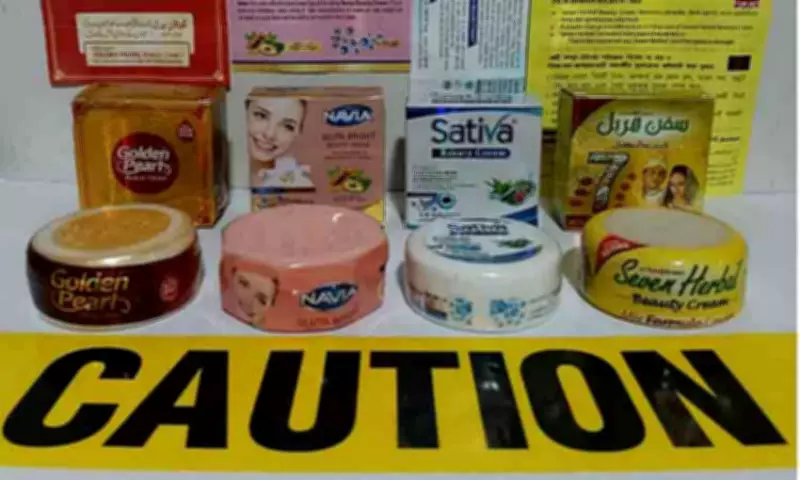
The EcoWaste Coalition's latest online monitoring has identified mercury in four additional skin lightening products manufactured in Pakistan, bringing the total number of such hazardous imports from the South Asian nation tracked by the group to 40. Ironically, all these products bear a "Pakistan Standards Mark" on their packaging, which is intended to signify compliance with national quality and safety protocols.
High Mercury Levels Detected
Using a portable X-Ray Fluorescence (XRF) analyzer, the EcoWaste Coalition detected mercury concentrations ranging from 16,670 to 24,690 parts per million (ppm) in the four products purchased online. These levels far exceed the limits set by the Minamata Convention on Mercury, which originally mandated a phase-out of mercury-added cosmetics by 2020, later adjusted to 2025. Mercury is a potent neurotoxin and a significant endocrine-disrupting chemical (EDC).
Deceptive Marketing Claims
Consumers are lured by promises of lighter, glowing skin, removal of acne marks, blackheads, pimples, freckles, and dark spots. Despite containing high mercury levels, these products falsely guarantee safety. The four products are:

- Navia Gluta Bright Beauty Cream (24,690 ppm mercury, manufactured November 2025) claims to be "highly effective" with "no side effects."
- Seven Herbal Beauty Cream (19,750 ppm mercury, produced November 2022) boasts "pure herbs" and promises whitening in seven days.
- Sativa Beauty Cream (17,480 ppm mercury, made December 2024) claims to remove "toxic matters" from skin.
- Golden Pearl Beauty Cream with Gluta Serum (16,670 ppm mercury, manufactured September 2025) promises brighter, fresher, more radiant skin.
Warnings and Consumer Advice
The EcoWaste Coalition warned that revamped packaging is merely cosmetic and offers no guarantee of safety. Golden Pearl Beauty Cream, for example, has been repackaged at least four times since 2014 while retaining its mercury-laden formula. To prevent mercury exposure, the group advises consumers to:
- Embrace natural skin color and reject colorism.
- Read product labels carefully and be wary of "too good to be true" claims.
- Watch for e-commerce listings of FDA-flagged products.
- Check the FDA verification portal before purchasing.
- Report unauthorized sellers to the FDA.
- Seek medical attention if symptoms occur after use.
According to the World Health Organization (WHO), many skin-lightening products contain hazardous substances like mercury, which is classified as one of the ten chemicals of major public health concern. Even low-level exposure can cause neurological damage and poses risks to fetal and child development. Mercury also persists in the environment, contaminating water and ecosystems.