Philippine Sugar Industry Faces Critical Emergency as Lawmakers Hold Public Consultation in Negros
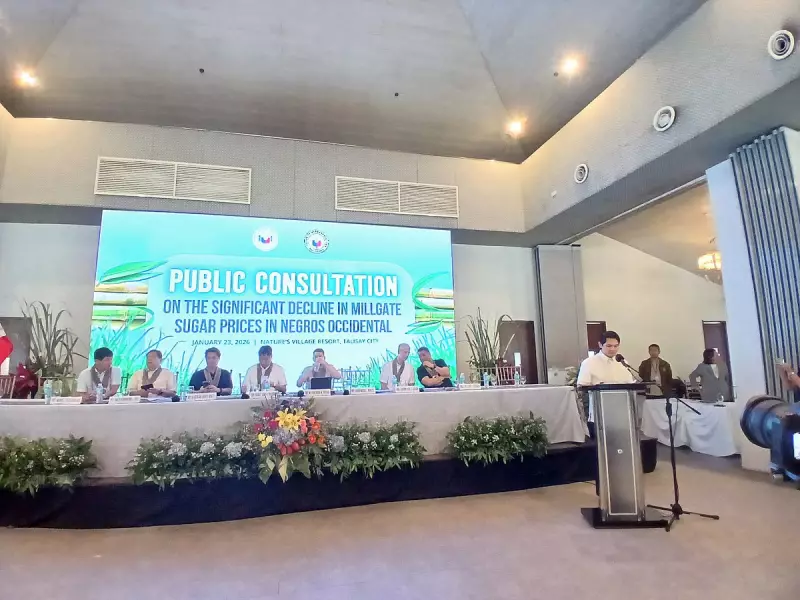
The Philippine sugar industry is confronting what lawmakers describe as a critical emergency situation, prompting both the Senate and Congressional Agriculture Committee to conduct an urgent public consultation in Negros Occidental. The high-level meeting took place at Nature's Village Resort in Talisay City on Friday, January 23, 2026, bringing together national legislators, local officials, and industry stakeholders to address what Representative Javier Miguel Benitez called "an emergency" requiring immediate resuscitation.
Industry in Distress: A Recurring Crisis
Representative Benitez of Negros Occidental's Third District, who attended the consultation, emphasized that the sugar industry's current predicament is neither new nor isolated. "That is the situation that brings us all here today," Benitez stated. "History reminds us that our industry has endured cycles of hardship many times before." He noted that even from painful chapters in the industry's history, positive developments like the world-renowned MassKara Festival have emerged, demonstrating resilience amid adversity.
The consultation attracted significant political figures including Senator Francisco Pangilinan, chairman of the Senate Committee on Agriculture, Food, and Agrarian Reform, and Representative Wilfredo Mark Enverga, Chairman of the House Committee on Agriculture and Food. Also present were Bacolod City Lone District Representative Alfredo Abelardo Benitez, Fourth District Representative Jeffrey Ferrer, Sugar Regulatory Administration Administrator Pablo Azcona, numerous mayors from Negros Occidental municipalities, and key sugar industry stakeholders.

Root Causes of the Crisis
Benitez had previously filed House Resolution 373 on October 13, 2025, urging the House of Representatives to investigate the dramatic plunge in millgate prices for locally produced sugar in Negros Occidental and its devastating economic impacts on producers and laborers. The province, known as the "Sugar Bowl of the Philippines," produces approximately 1.8 million metric tons of sugar annually, accounting for more than half of the nation's total sugar output.
Despite promising global market projections—with Fortune Business Insights valuing the industrial sugar market at USD 39.59 billion in 2023 and projecting growth to USD 50.76 billion by 2032—the Philippine reality tells a different story. "Growth is being driven by expanding food processing activities, particularly in developing regions such as Asia-Pacific, the Middle East, and Africa. Yet here in the Philippines, our reality tells a different story," Benitez explained.
The lawmaker identified several critical factors contributing to the crisis:
- Over-importation: Large volumes of refined sugar, particularly those allowed under Sugar Order No. 8 amounting to 424,000 metric tons, combined with carryover stocks from previous crop years, have flooded the domestic market.
- Changing consumer preferences: Demand for locally produced sugar has weakened due to widespread use of artificial sweeteners and chemical sugar substitutes, which are often cheaper and more potent than natural sugar.
- Rising production costs: Farmers face increasing expenses for fertilizers, labor, fuel, and electricity, making survival nearly impossible for small planters when millgate prices fall.
- Environmental challenges: The industry has been battered by El Niño, resulting in stunted cane growth and reduced yields, while a Red-Striped Soft Scale Insect infestation in Negros Occidental has further threatened crop health and productivity.
Urgent Call for Action
"The alarm has been sounded many times," Benitez warned. "Experts have warned of collapse. Stakeholders have cried out for help. Time is no longer on our side. This is an emergency. The stage of symptoms has passed. What the industry needs now is resuscitation."

He emphasized that the public consultation represents a critical step forward, bringing together the highest legislative bodies of the country to listen to stakeholders' voices. "We will hear different opinions and varying positions on the same issues. That is natural. What matters is that we engage with clear minds, mature judgment, and mutual respect," Benitez concluded, highlighting the need for collaborative solutions to rescue an industry vital to both Negros Occidental and the national economy.