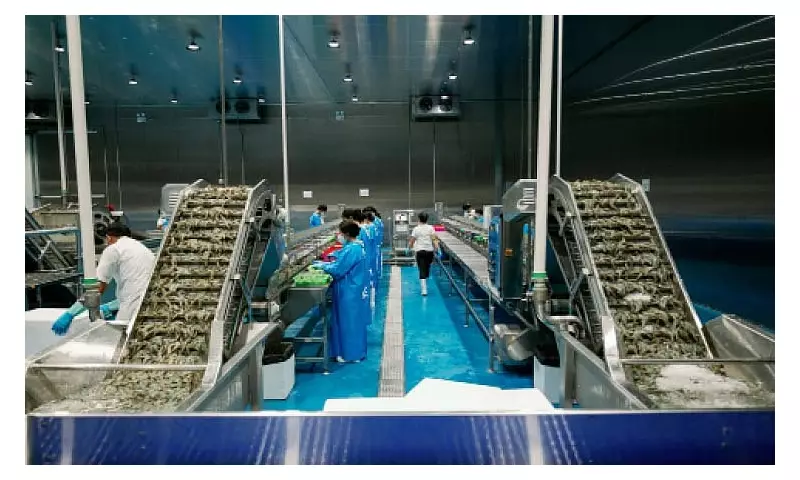
A major development in the Philippine aquaculture sector is underway in Toledo City, Cebu, where a significant investment promises to create hundreds of jobs and reduce the country's dependence on imported shrimp.
Major Boost for Local Employment and Economy
Gideon De Oro Seafood Corp. is launching a P300 million shrimp processing facility in Barangay Talavera. At full capacity, this modern plant is set to employ at least 300 workers. Company president Constantine Tanchan emphasized that priority for these new positions will be given to residents of Toledo, with a special focus on housewives seeking to earn extra income for their families.
The facility will initially operate on a single shift, processing an impressive 200 tons (200,000 kilograms) of shrimp every month. This operation is part of a broader strategy by the Aquatic Phoenix Aquaculture Group, the parent company which has run farms in Cebu and Negros for over three decades.

Stabilizing Prices and Competing Globally
Tanchan explained that the plant's core mission is to stabilize farm-gate prices for local producers and enable them to compete in the international market. He highlighted a critical issue: The Philippines currently imports approximately 5,000 tons of shrimp annually. This new facility is designed to help fill that domestic production gap.
To further support local farmers, the plant includes a massive 900-metric-ton cold storage unit. This allows the company to buy and stockpile shrimp during months when market prices typically fall below production costs, which Tanchan identified as from late May to October. This strategy is intended to protect farmers' profit margins throughout the year.
Innovation and a Return to Export Glory
In a move to manage operational costs, the company has installed a one-megawatt solar power system. Tanchan noted that this is crucial to offset the Philippines' high electricity rates, which he said are more than double those of competitors like Vietnam and Thailand.
The company has ambitious plans to re-enter the global export market, with targets set for Japan, South Korea, and the United States. Tanchan aims to secure the necessary export accreditations early next year. He reflected on the industry's history, noting that the Philippines was once the world's third-largest prawn exporter in the late 1980s and early 1990s before being crippled by disease outbreaks and insufficient government support.
This initiative aligns with the Department of Agriculture’s 2021–2040 Shrimp Industry Roadmap. According to the roadmap, the Philippines ranks among the world's top ten shrimp producers and is fourth-largest in Southeast Asia. The sector is dominated by Giant Black Tiger Shrimp (sugpo) and Pacific White Shrimp (suati). The roadmap sets long-term targets for significant annual production and export growth, a vision that the new Toledo plant is now poised to help achieve.