The Bangko Sentral ng Pilipinas (BSP) expects the country's balance of payments (BOP) deficit to remain elevated through 2027, driven by higher energy prices, geopolitical tensions, and tighter global financial conditions that continue to weigh on the Philippines' external position.
BOP deficit forecast raised
The BOP tracks the country's transactions with the rest of the world, including trade, investments, and remittances. A deficit means more foreign currency is leaving the country than entering, putting pressure on the peso and foreign exchange reserves.
In its latest external sector outlook, the BSP raised its 2026 BOP deficit forecast to US$10.7 billion, or 2.1 percent of gross domestic product (GDP), from the $7.8-billion (1.5 percent of GDP) projection made in the first quarter. The deficit is expected to widen further to $11 billion, or 2.1 percent of GDP, in 2027 from the previous $8.5-billion estimate.

Energy prices overtake weak demand as top risk
The BSP said volatile energy prices driven by tensions in the Middle East have overtaken weak global demand as the biggest risk to the country's external position. It also lowered its gross international reserves (GIR) forecast to $104 billion by end-2026 from $111 billion, before rising slightly to $105 billion in 2027.
The current account deficit is projected at $18 billion (3.6 percent of GDP) this year and $19.7 billion (3.7 percent of GDP) in 2027 as higher fuel and investment-related imports continue to outpace export gains.
First quarter pressures
In the first quarter, the BOP deficit widened as higher import costs and weaker capital inflows offset stronger exports. The current account deficit reached 4.8 percent of GDP, while financial account inflows weakened due to lower foreign direct investment (FDI), foreign loan repayments by domestic banks, and withdrawals of nonresident deposits.
Despite the pressures, the BSP said external buffers remain adequate. Gross international reserves stood at $106.6 billion as of end-March, enough to cover 6.9 months of imports and 4.2 times the country's short-term external debt.
Remittance and FDI outlook
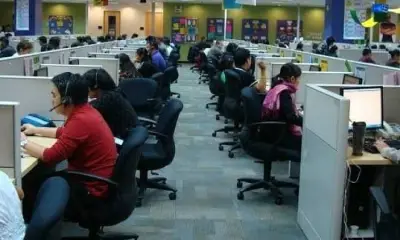
Looking ahead, the BSP expects remittance growth to slow, particularly due to reduced deployment to the Middle East, while IT-BPM earnings could be tempered by AI-driven restructuring and weaker global investment. FDI inflows are expected to remain positive but moderate, while portfolio flows will stay volatile amid tighter global liquidity and higher-for-longer interest rates.
The BSP said any recovery in capital inflows beginning in 2027 is likely to be gradual despite improving global conditions and planned structural reforms.