The Philippines' unemployment rate edged up to 4.8 percent in May 2026, with 2.50 million Filipinos out of work, even as underemployment eased and overall employment rose from the previous month, according to the latest Labor Force Survey released by the Philippine Statistics Authority (PSA) on July 8, 2026.
The jobless rate increased from 4.7 percent in April 2026 and was higher than the 3.9 percent recorded in May 2025. The number of unemployed individuals climbed from 2.41 million in April and 2.03 million a year earlier.
Employment and labor force participation rise
Despite the uptick in joblessness, the number of employed persons increased month-on-month to 49.63 million from 48.89 million in April, though it remained below the 50.29 million employed in May 2025. The employment rate stood at 95.2 percent, slightly lower than 95.3 percent in April and 96.1 percent a year ago.

The labor force participation rate (LFPR), which measures the proportion of Filipinos aged 15 and above who are either employed or actively seeking work, rose to 63.8 percent in May from 62.7 percent in April but was below the 65.8 percent recorded in May 2025. The labor force totaled 52.13 million individuals.
Sectoral employment trends
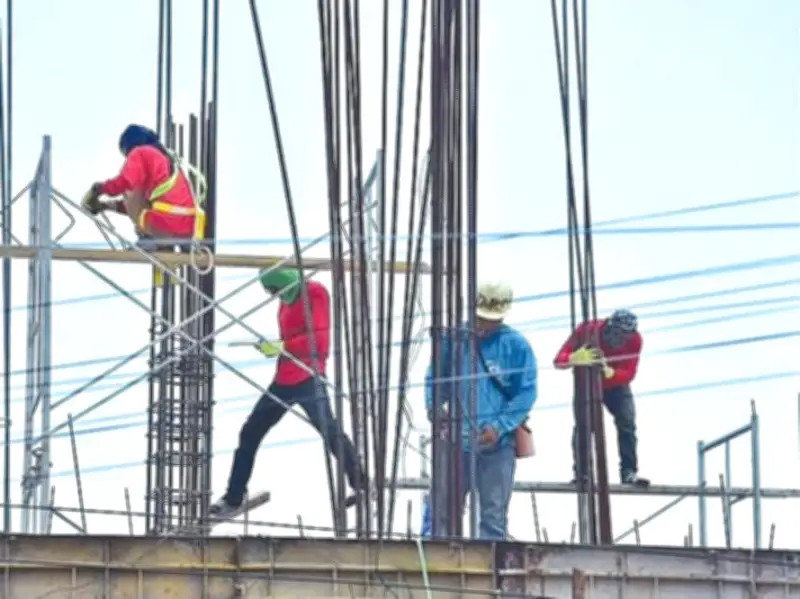
The services sector remained the country's largest source of jobs, accounting for 61.8 percent of total employment, followed by agriculture at 19.9 percent and industry at 18.3 percent. Wholesale and retail trade, including repair of motor vehicles and motorcycles, remained the largest employer with a 19.6-percent share, followed by agriculture and forestry at 17.2 percent and construction at 10 percent.
On an annual basis, the biggest employment gains were recorded in administrative and support service activities, which added 329,000 workers, followed by mining and quarrying (184,000), human health and social work activities (173,000), fishing and aquaculture (170,000) and construction (168,000).
The largest job losses were seen in agriculture and forestry, which shed 905,000 workers from a year ago. Other sectors with significant declines included other service activities, public administration and defense, wholesale and retail trade, and professional, scientific and technical activities.
Compared with April, agriculture and forestry posted the biggest employment increase with an additional 308,000 workers, followed by accommodation and food service activities (266,000), administrative and support services (152,000), construction (147,000) and human health and social work activities (131,000). Meanwhile, employment declined the most in public administration and defense, transportation and storage, other service activities, financial and insurance activities, and electricity, gas, steam and air conditioning supply.
Wage and salary workers continued to comprise the majority of employed Filipinos at 64.3 percent, with nearly four out of five working in private establishments.
Underemployment improves, youth labor market
The survey also showed an improvement in job quality, with the underemployment rate falling to 12.2 percent from 15.2 percent in April and 13.1 percent a year earlier. This translated to 6.04 million workers seeking additional hours of work or another job. Average weekly hours worked rose to 41.1 hours in May from 40.2 hours in April and 39.8 hours in May last year.
Among Filipinos aged 15 to 24 years, the labor force participation rate stood at 32.3 percent. The youth employment rate was 87.6 percent, with about 787,000 young workers classified as underemployed, equivalent to a youth underemployment rate of 12.9 percent.