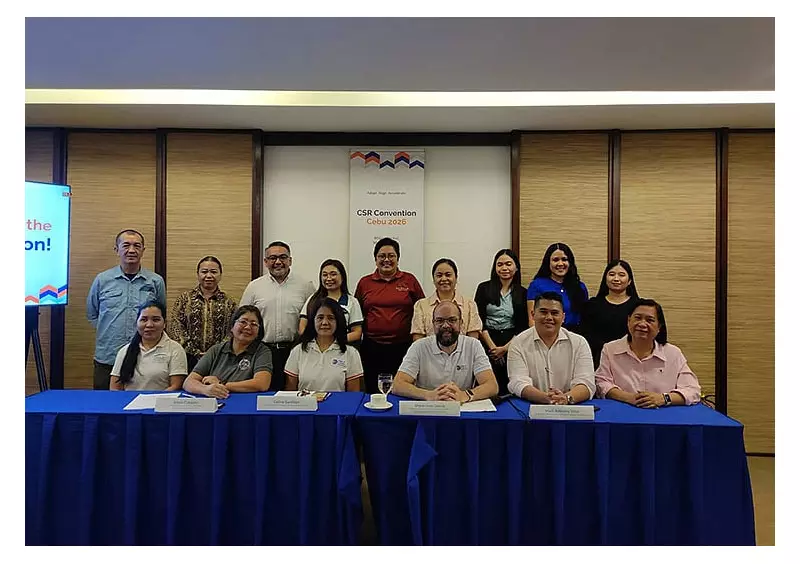
In the wake of a recent series of devastating calamities, corporate foundations and major business groups throughout Metro Manila and Cebu are undertaking a significant reorganization of their budgets and operational strategies. Leaders from the League of Corporate Foundations (LCF), the Mandaue Chamber of Commerce and Industry (MCCI), and the Primary Structures Educational Foundation Inc. (PSEFI) confirm this strategic shift to address the escalating needs.
Navigating Budgetary Realities in Disaster Response
Celine Santillan, the Executive Director of the LCF, highlighted the immediate challenges. She revealed that the organization is carefully managing expectations for its upcoming two-day corporate social responsibility (CSR) convention. While the event typically attracts around 150 participants in Metro Manila, the group now hopes to gather at least 120 attendees each day, with each day dedicated to a specific focus area.
Beyond event logistics, Santillan explained that handling finances for disaster relief remains a persistent hurdle for corporate foundations. She noted that while most member companies allocate annual budgets for CSR, which includes disaster relief, major calamities frequently force them to seek additional funds. Companies have disaster or calamity budgets, but when something hits, they have to go back to their parent companies and ask for more, Santillan stated. She added that other organizations turn to buyers, consumers, and their own employees to raise support for urgent requirements.

Corporate Experiences: From Allocated Funds to Overwhelming Needs
Shem Jose Garcia, LCF Chairperson who also oversees CSR at Vivant, shared a similar experience, particularly after the back-to-back disasters. He disclosed that Vivant had initially used only a small part of its annual disaster-relief budget. However, the recent earthquake consumed the entire allocation. Shortly after, a typhoon struck, compelling the company to put its medium-term rebuilding plans on hold.
We had to redirect funds that were reserved for long-term rehabilitation because the immediate needs after the storm were overwhelming, Garcia emphasized. To manage the situation, Vivant sourced additional resources from other business units and decided to spread its rebuilding funds across the current and the following fiscal year. We'd love to say we have unlimited resources, but the reality is that we have to juggle budgets when disasters happen one after another, he added.
In Cebu, the business community itself was not spared. Mark Anthony Ynoc, President of the Mandaue Chamber of Commerce and Industry, expressed how moved he was by the number of companies that chose to help others despite suffering heavy losses themselves. He pointed to factories in Mandaue City, including those in textiles and paint manufacturing, that experienced unusually severe flooding. Many of our members were badly affected, yet they still reached out to the community, Ynoc said, also noting the challenge of managing donor fatigue among the chamber's members.
Grassroots Efforts and Strategic Shifts in Aid
Beyond formal corporate contributions, employee-led initiatives continue to be a major force in disaster response. Jessie Cubijano, Executive Director of the Primary Structures Educational Foundation Inc., explained that while their core CSR program centers on education and scholarships, disaster relief has naturally become an extension of their work, leveraging their expertise in construction.
Their disaster response program began 12 years ago during Super Typhoon Yolanda, when employees started a model to adopt and rebuild an entire community—a model they continue to use. In response to the latest disasters, the group delivered food and water to Northern Cebu and prepared skills-training programs for affected households. Although the recent typhoon delayed their rollout, they remain committed to rebuilding homes and providing construction-related skills training for livelihood.

In a significant decision, the foundation has also canceled its upcoming Christmas celebration. We realized it wasn't the right time to hold a party. Instead, we're redirecting the entire budget to help reconstruct the homes of families affected by the disaster, Cubijano stated.
Recent assessments from the Cebu Provincial Disaster Risk Reduction and Management Office paint a stark picture, indicating that approximately 15,000 families across 10 local government units have lost their homes—a number far exceeding what CSR groups can handle alone. Nevertheless, corporate foundations stress that assisting even a fraction of these families can create a meaningful impact.
Despite facing budget constraints and operational setbacks, corporate foundations and businesses affirm their unwavering commitment to providing immediate relief and supporting long-term recovery efforts in communities ravaged by these consecutive calamities.