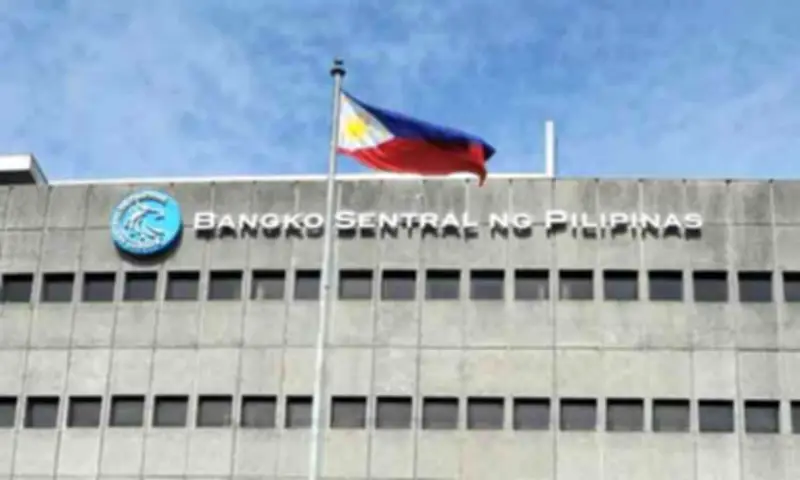
The Bangko Sentral ng Pilipinas (BSP) has declared Mindanao's financial system one of the country's most resilient regional banking markets, citing a strong deposit base, manageable credit exposure, and robust banking buffers that have insulated the island from major financial shocks despite recent earthquakes and global economic uncertainties.
The assessment was delivered during the launch of the 2025 Financial Stability Report (FSR) Regional Briefings at the BSP Mindanao Regional Office in Davao City on July 8, 2026. This marked the first time the Financial Stability Coordination Council (FSCC) took its flagship financial stability roadshow outside Luzon, highlighting Mindanao's growing role in the Philippine economy.
Philippine financial system resilient
BSP Assistant Governor Veronica B. Bayangos, head of the Office of Systemic Risk Management and FSCC Technical Secretariat, said the Philippine financial system continues to withstand both domestic and external challenges, including recent seismic events in Mindanao and geopolitical tensions abroad.

"Basically, the Philippine financial system is resilient," Bayangos said. She noted that while the BSP remains vigilant against evolving risks — from geopolitical conflicts and global market volatility to shifts in the international economy — the country's banking sector operates from a position of strength, supported by healthy capitalization, ample liquidity, and solid macroeconomic fundamentals.
The BSP closely monitored recent tensions involving the United States and Iran, which raised concerns over possible spillover effects on global financial markets. However, Bayangos said the central bank found no material impact on the Philippine financial system.
"We are preparing for other shocks, for other challenges that may affect our country. Fortunately, we did not see any material impacts on the Philippine financial system. We continue analyzing how the financial system can maintain its robustness and prepare for future challenges," she said.
High capital adequacy ratio
Bayangos highlighted that banks maintain an average capital adequacy ratio of around 16 percent, significantly higher than the BSP's minimum regulatory requirement of 10 percent. "The banks are strong enough. They have very high capital that could withstand any shocks that may affect the banks moving forward," she said. Banks also maintain high liquidity levels, allowing them to meet unexpected withdrawals while sustaining lending activities during periods of uncertainty.
The BSP also cited the country's healthy gross international reserves as another layer of protection against external shocks, providing a substantial buffer against future crises.
Mindanao's limited systemic risk
Despite Mindanao's growing contribution to the national economy, Bayangos emphasized that the region poses minimal systemic risk to the banking sector due to its relatively small share of total loans. Loans in Mindanao account for only about four percent of total loans granted by the Philippine financial system.
"The share of loans of Mindanao is only around four percent. So we don't expect a big risk coming from that," she said. Instead, she described the island's banking sector as financially healthy, noting that deposits continue to outpace loans — a sign that banks maintain ample funding sources to support economic activity.
"Very much stable. In fact, your share of deposits is even higher than the loans. That means the funding source of your economy is great," Bayangos said. She also downplayed concerns over non-performing loans (NPLs), explaining that banks have built sufficient provisions to absorb potential credit losses. "Although there are non-performing loans, the loan-loss coverage is around 91 percent, which is very high. There may be pockets of credit risk, but not enough to say that Mindanao is not okay. It's very much vibrant," she added.
Regulatory relief for earthquake-hit borrowers
Bayangos said the BSP has rolled out regulatory relief measures for borrowers affected by the recent earthquakes that struck parts of Mindanao. The temporary measures provide banks with regulatory flexibility to grant payment accommodations to households and businesses struggling to recover from the disaster.

"We have released regulatory relief measures, especially for those areas affected by the earthquake. Businesses and households with loans were given relief measures so they would have flexibility in paying their loans and interest for a certain period," she said. The relief package aims to ease the financial burden on affected borrowers while ensuring banks remain financially sound to support local economic recovery.
Bringing financial stability closer to Mindanao
Holding the Financial Stability Report briefing in Davao City reflects the BSP's commitment to making financial stability discussions more accessible outside Metro Manila. Bayangos said the central bank wants financial information to become more understandable and relevant to regional stakeholders.
"Very important because we wanted our initiatives and programs to be closer to the people. Financial stability is also about financial inclusion. We also want to hear feedback from banks and the academe so we can craft measures that are closer to the needs of the regions," she said. The briefing gathered representatives from banks, financial institutions, business groups, government agencies, and universities to discuss emerging financial risks and strengthen coordination in promoting financial resilience across Mindanao.
Local bankers welcome BSP assessment
Davao City Bankers Association President Jan Clem Del Castillo told SunStar Davao that the BSP's findings challenge long-standing perceptions that Mindanao remains a high-risk lending environment. He noted that some bank head offices based in Metro Manila still view portions of Mindanao — particularly remote areas and parts of the Bangsamoro Autonomous Region in Muslim Mindanao (BARMM) — as difficult lending markets because of historical and geographical factors.
"Maybe they're still looking at Mindanao as a rural area that is somewhat dangerous when it comes to loans. There are still areas, especially in BARMM and some outskirts, where loan approvals remain difficult. That's still the reality," Del Castillo said. However, he said the BSP's latest financial data paints a much stronger picture of the region's banking sector. "The deposits are higher than the loans, which means the funding source of the economy is healthy. We also haven't seen significant risks coming from Mindanao loans," he said.
Del Castillo added that the briefing gave local bankers a broader understanding of how regional lending activities contribute to the country's overall financial stability. "Sometimes at the branch level, we only see our transactions with clients. But looking at it from a macro perspective, we understand how these affect the national economy and even the global financial system," he said. The Davao City Bankers Association plans to cascade the BSP's findings to member institutions across the region to encourage a better appreciation of Mindanao's improving financial profile.
While Del Castillo said Mindanao's improving financial indicators should encourage more investments, he emphasized that investment decisions should still be based on an individual's financial goals and risk tolerance. "It's good to invest because the risks are relatively low. But risk is always relative. Every investor has a different risk appetite, and that's why financial suitability assessments remain important," he said.
The BSP intends to continue holding regional Financial Stability Report briefings across the country to strengthen public understanding of financial stability, deepen financial inclusion, and ensure policies remain responsive to the unique economic conditions of regions outside Metro Manila. With Mindanao posting healthy banking fundamentals and strong institutional buffers, the central bank said the island remains well-positioned to sustain growth while weathering future economic and financial challenges.