Davao Light Advances Franchise Expansion with Court-Ordered Control of Samal Power System
Davao Light and Power Co., Inc. (Davao Light) has achieved a pivotal legal victory in its franchise expansion efforts, with the Regional Trial Court, Branch 34 in Panabo City issuing a Writ of Possession in favor of the utility company. This court order authorizes Davao Light to take operational control of the power distribution system serving the Island Garden City of Samal (Igacos), a significant step under the provisions of Republic Act No. 12144.
Legal Framework and Operational Transition
The issuance stems from expropriation proceedings initiated by Davao Light, as permitted by RA 12144, which legally transfers franchise areas including Tagum City and Igacos from the Northern Davao Electric Cooperative (Nordeco) to Davao Light. Fermin Edillon, spokesperson for Davao Light, emphasized during a briefing with the Davao Peace and Security Press Corps on January 28, 2026, that this development enables the company to assume operational responsibility for ensuring safe, reliable, and uninterrupted electricity service to consumers.
Edillon outlined that the transition will adhere to established legal, regulatory, and operational procedures, calling for full cooperation from Nordeco during the handover process. "The sooner this transition is completed, the sooner we can deliver affordable, world-class electricity service to households, businesses, and the local government of Igacos," he stated, highlighting the importance of a collaborative approach to minimize disruptions.

Electricity Rate Adjustments and Consumer Guidance
Concurrently, Davao Light has addressed recent changes in electricity rates, noting that residential rates for the billing period from January 11 to February 10, 2026, have increased to P11.72 per kilowatt-hour. This represents a rise of approximately P2.01 per kWh compared to December 2025 levels. The company attributes this hike primarily to higher generation costs from the Wholesale Electricity Spot Market and the implementation of the Green Energy Auction Allowance, partially mitigated by lower feed-in tariff charges.
Edillon advised consumers to monitor their electricity usage closely to manage costs effectively, especially during periods of rate adjustments. He added that the company anticipates rates to stabilize and potentially decrease starting in February, following the current billing cycle, as market conditions evolve.
Regulatory and Legislative Context
The Energy Regulatory Commission (ERC) has confirmed Davao Light's authorization to operate in its expanded franchise areas, granting provisional authority that counters claims by Nordeco regarding uncertainty over the company's mandate. RA 12144, which took effect on April 6, 2025, formally extends Davao Light's franchise to areas historically served by Nordeco, marking a legislative milestone in the region's power distribution landscape.
In response, Nordeco filed a petition with the Supreme Court in June 2025, seeking to declare RA 12144 unconstitutional and to halt its implementation through a temporary restraining order. Meanwhile, lawmakers have pursued alternative measures, with House Bill No. 7006 filed on December 22, 2025, proposing a distinct franchise for Nordeco to operate distribution systems in Davao del Norte and Davao de Oro, potentially creating a parallel regulatory pathway.
Future Implications and Priorities
Davao Light has stressed that consumer service continuity and compliance with legal and technical standards remain top priorities as it navigates this expansion. The Writ of Possession is viewed as a significant milestone, but successful implementation will depend on ongoing collaboration among Davao Light, Nordeco, regulators, and local authorities to ensure a smooth transition for residents and businesses in the affected areas.

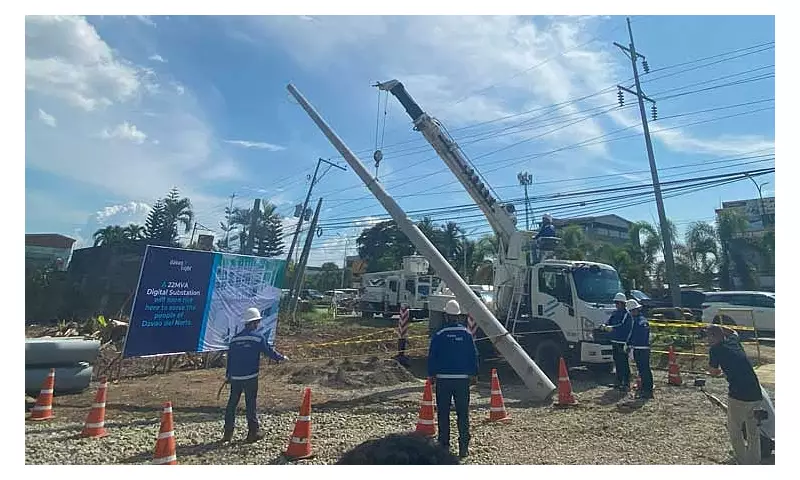
This development follows Davao Light's earlier milestone on July 8, 2025, when it installed its first electric pole in Tagum City, signaling the start of operations under RA 12144. As the situation evolves, stakeholders are closely watching how these legal and operational changes will impact electricity service and rates in the region.