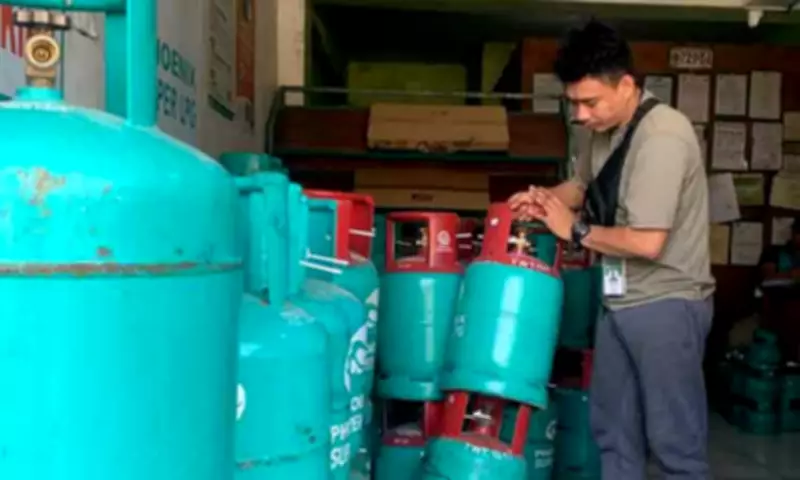
Store owners of liquefied petroleum gas (LPG) in Davao City are facing a dramatic downturn in business, with sales volumes slashed by half as of Wednesday, April 15, 2026. This sharp decline comes amid persistently high fuel and energy costs that are forcing consumers to tighten their budgets and seek more affordable options for daily cooking needs.
Consumer Shift Away from LPG
Retailers report that their daily sales have plummeted significantly, reflecting a notable shift in household behavior. With the price of a standard 11-kilogram LPG tank ranging from ₱1,619 to ₱1,656, many families are exploring cheaper alternatives to manage their expenses. This trend underscores the broader economic pressure on Filipino consumers as they navigate rising living costs.
Government Response to the Crisis
In response to the escalating energy costs, President Ferdinand "Bongbong" Marcos Jr. has taken action by suspending the excise tax on LPG and kerosene, effective Monday, April 13, 2026. This move aims to provide some relief, but the impact on consumer spending remains evident as sales continue to drop.

Fuel Prices Remain Elevated
According to the Department of Energy (DOE), fuel and household LPG prices in Davao City stayed high as of April 14, 2026, despite government efforts to reinforce domestic supply. The global oil market's volatility continues to drive prices upward, with gasoline hovering near or above the ₱100-per-liter mark in some stations.
Detailed Price Breakdown
The latest DOE monitoring reveals a wide range of fuel costs:
- Premium Plus gasoline (RON 97/100): Priced between ₱101 and ₱101.10 per liter, averaging ₱101.05.
- Premium gasoline (RON 95): Varies from ₱82.45 to ₱101.80, with an average of ₱91.
- Regular gasoline (RON 91): Ranges from ₱81.95 to ₱99.75, averaging ₱89.70 per liter.
- Diesel: A key fuel for public transport and logistics, it remains among the costliest, ranging from ₱114.10 to ₱136.50 per liter, averaging ₱127.86.
- Kerosene: Posted the highest range overall, from ₱142.85 to ₱163.66 per liter.
- Household LPG: An 11-kilogram cylinder costs between ₱1,550 and ₱1,770 in the local market.
Global Factors Driving Prices
The DOE attributes the persistently high prices to several factors, including global oil market movements, currency fluctuations, and supply conditions. As the Philippines relies heavily on imported petroleum, local pump prices remain sensitive to geopolitical developments abroad, adding to the economic strain on households and businesses.
Emergency Supply Measures
To cushion the country from external shocks, the government has intensified efforts to secure fuel supply. The DOE recently confirmed the arrival of a second diesel shipment under its Emergency Energy Security Program, amounting to 329,000 barrels or about 52.3 million liters from Malaysia. This follows an earlier delivery of 142,000 barrels from Japan in late March.
These shipments are part of a broader strategy directed by President Marcos through Executive Order No. 110, with the Philippine National Oil Company-Exploration Corporation facilitating procurement. Energy Secretary Sharon S. Garin emphasized that the additional supply strengthens the country's position amid ongoing risks, particularly in the Middle East.
Future Outlook
The DOE continues to coordinate with industry players to ensure steady distribution and prevent supply disruptions. However, officials acknowledge that price movements will likely remain tied to global market conditions in the near term, suggesting that relief for consumers may be slow to materialize. As households adapt by reducing LPG usage, the economic impact of high fuel costs is expected to persist, shaping consumer behavior and market dynamics in the coming months.