Pampanga Governor Implements Energy Conservation and Flexible Work Policies
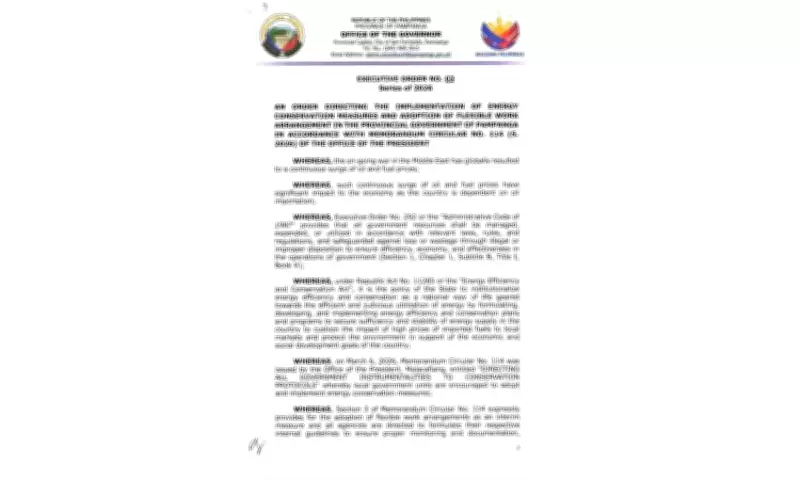
Governor Lilia G. Pineda of Pampanga has issued Executive Order No. 03, Series of 2026, over the weekend, implementing mandatory energy conservation measures and a flexible work arrangement for provincial government employees. This decisive action comes in response to the global surge in oil and fuel prices, which has been exacerbated by the ongoing war in the Middle East. The Philippines' heavy reliance on imported oil is anticipated to have significant economic repercussions, affecting various sectors nationwide.
Impact on Transportation and Economy
The rising fuel prices have already begun to impact commuters, motorists, and the transport sector, creating financial strain and operational challenges. In light of this, the provincial government is taking proactive steps to mitigate these effects through structured policy changes. The flexible work arrangement, while maintaining the required 40-hour workweek, will see employees completing their on-site duties from Monday to Thursday. Working hours are set from 7 a.m. to 12 noon and from 1 p.m. to 6 p.m., aiming to optimize productivity while reducing energy consumption during peak periods.
Energy-Saving Directives for Government Offices
Governor Pineda has mandated strict energy-saving rules across all government offices. According to the executive order, air conditioners cannot be operated before 8:30 a.m., during the lunch break from 12 p.m. to 1 p.m., and after 5 p.m. Additionally, thermostat settings must not be lower than 24°C to ensure efficient energy use. The order further stipulates that lights and electronic equipment must be turned off when not in use, with non-essential lighting switched off during lunch hours and devices set to power-saving modes to minimize electricity waste.

Fuel Conservation Measures for Government Vehicles
Provincial officials have been directed to implement comprehensive fuel conservation strategies for government vehicles. These measures include consolidating official trips to reduce the number of vehicle deployments, utilizing the shortest and least congested routes to save fuel, turning off engines during extended waiting periods to prevent unnecessary consumption, and suspending attendance at conferences that require government-funded transportation unless deemed absolutely necessary. The order also introduces the "full-tank method" to closely monitor fuel usage and ensure accountability in consumption patterns.
Exemptions for Essential Services
It is important to note that offices providing essential services are exempt from the flexible work arrangement. This exemption applies to critical facilities such as hospitals, dialysis centers, and other vital institutions that must maintain continuous operations to serve the public. By focusing these measures on non-essential areas, the provincial government aims to balance energy and fuel savings with the uninterrupted delivery of crucial services, ensuring that community needs are met while addressing the broader economic challenges posed by the global fuel crisis.