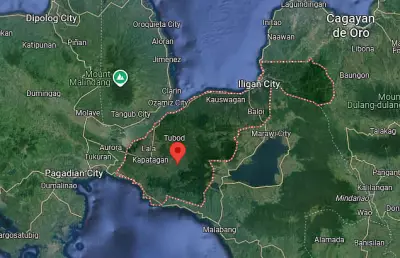
I almost did not write this. Not because the lesson is unimportant — in truth, it may be the most important governance lesson I have shared in close to twenty years of advising family businesses across Asia. I hesitated because the family at the center of this story is one I know personally. I grew up in Iloilo. My family knew many branches of this family well. Some were childhood friends of mine and my siblings. I write this anyway because I believe their experience can help other families avoid the same pain.
Unexpected turnout at governance webinar
When we designed the W+B Family Governance Webinar last May 23, 2026, we expected 50 family business owners. Nearly 200 came instead. What struck me most was who participated. High-net-worth families from across the Asean region attended alongside founders and next-generation leaders. They did not come out of curiosity. They came because they understood the stakes. Some invited families chose not to attend. They believed governance conversations could wait. This article is written for them too. Because the same invisible governance gaps that brought one of the Philippines’ most storied business families to a public crossroads almost certainly exist inside many successful families today. They simply have not seen them yet.
Not a story of failure, but of complexity
This is not a story about a family that failed. It is a story about a family that has existed for nearly two centuries — and whose extraordinary success over the last century eventually created a complexity that informal governance could no longer contain. The Lopez family is of Chinese descent, but after nearly two centuries in the Philippines, they are as deeply Filipino as any family in this nation. Iloilo is in their bones. From sugar and trading, one branch eventually expanded to Manila and built one of the country’s most influential business empires. At its height, that branch was often called the “Rockefellers of the Philippines.” Power. Media. Infrastructure. Banking. Energy. Telecommunications. Real estate. By every measure of business success, they had done almost everything right. Except for one thing.

The moral center
Every great family enterprise eventually develops a moral center — a patriarch whose presence alone keeps competing interests aligned. In this family, that role was carried by two brothers across nearly a quarter of a century. The first was Eugenio “Geny” Lopez Jr., known within the group as “Kapitan.” He built ABS-CBN into a national institution and became the moral center of the Lopez Group for decades. When he passed away in 1999, his brother Oscar Lopez stepped into the void. Not through a written succession plan. Not through a formal governance framework. But through moral authority, shared values, and the trust of the family. For another 24 years, Oscar Lopez held the family together. Then he passed away in 2023.
What followed
What followed was not a lack of talent. The family had capable leaders and accomplished next-generation members. What they lacked was a structure strong enough to survive the loss of the men who personally kept the family aligned. For nearly two centuries, relationships had been the governance system. Eventually, relationships alone became insufficient. In January 2026, the family gathered in Iloilo for a reunion. Hundreds attended. There were matching shirts, photographs, shared meals, and all the warmth of a family bound by nearly two centuries of shared identity. One month later, a contested board vote triggered a leadership dispute. Legal proceedings followed within weeks. The reunion photographs were barely four weeks old.
The hardest governance lesson
Families do not fracture only because they lack love. Sometimes they fracture because love was expected to do the work of structure. And that may be the hardest governance lesson of all. The greatest risk facing many successful Asian family enterprises today is not competition or economic uncertainty. It is the illusion that strong relationships alone are enough. They are not. And by the time most families realize it, the fracture has already begun. In Part 2, I will examine the five governance gaps that make even the strongest family enterprises vulnerable to conflict, division, and eventual decline.