Frustrated by years of relentless traffic gridlock and unfulfilled promises, a prominent Cebu City official is escalating his appeal to the highest levels of government. Councilor Winston Pepito has issued a direct plea to President Ferdinand Marcos Jr., urging immediate intervention to fast-track the long-delayed Cebu Bus Rapid Transit system, a project mired in setbacks for over a decade.
A Desperate Call for Presidential Action
In a formal letter dated February 8, 2026, Pepito, who chairs the City Council Committee on Transportation, warned that without decisive government action now, Cebu's mobility crisis will only intensify. He transmitted his urgent appeal through Executive Secretary Ralph Recto, requesting "utmost attention" and improved inter-agency collaboration to finally propel the stalled project forward.
"As the country's second-largest metropolitan area, Cebu plays a vital role in national growth, yet its people continue to suffer from severe traffic congestion and unreliable mobility," the councilor's letter emphatically states. Pepito underscored that the CBRT represents a critical solution to the city's chronic traffic woes, cautioning that further delays could condemn Cebu to another ten years of paralyzing gridlock.

Chronic Delays and Shifting Timelines
The Cebu Bus Rapid Transit project has languished in planning phases for more than ten years, originally approved by the National Economic and Development Authority in 2014 as a 23-kilometer mass transit network. Actual construction on the current design only commenced in February 2023, following numerous revisions and adjustments.
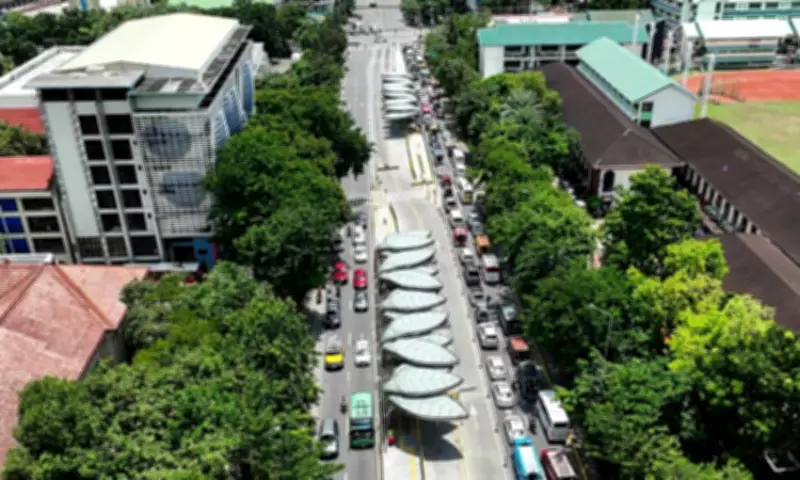
While officials initially targeted a fully operational system by mid-2025, those ambitious deadlines have repeatedly slipped. The city now aims for a 2026 rollout of "Package 1," a modest 2.38-kilometer segment stretching from the Cebu South Bus Terminal to the Capitol area. Although construction on this section is largely complete, its official inauguration has been postponed due to adverse weather conditions and coordination challenges with the Department of Transportation.
A planned dry run and launch scheduled for December 2025 failed to materialize, with no new date established. Mayor Nestor Archival has emphasized that finalizing the entire route remains a paramount priority to ensure the system functions effectively rather than serving as a mere symbolic gesture.
Substantial Hurdles and Financial Concerns
The project confronts multiple significant obstacles. Progress has been severely hampered by right-of-way disputes and land acquisition complications in Packages 2 and 3, where private landowners still occupy the intended routes. Additional delays stem from heritage preservation concerns near the Provincial Capitol and weather disruptions, including those caused by Typhoon Tino.
The situation has grown so dire that the World Bank has rated the CBRT's implementation as "unsatisfactory" and assigned it a high-risk status. The Bank highlighted that major construction for the project's later stages has not even begun, increasing the likelihood that the initiative will remain incomplete when the loan agreement concludes in 2026. Consequently, the World Bank has recommended reassessing subsequent packages until Package 1 becomes fully operational.
Exploring Alternative Pathways Forward
Despite these formidable funding and logistical challenges, Councilor Pepito remains steadfast in seeking viable solutions. He noted that while the World Bank has partially withdrawn its financial support, the Philippine government could potentially utilize domestic resources or pursue Public-Private Partnerships to accelerate the remaining work.
Pepito concluded his letter by asserting that successfully completing the CBRT would stand as a defining achievement for the Marcos administration in the Visayas region. More importantly, it would deliver much-needed, immediate relief to millions of Cebuanos who endure daily traffic struggles. Copies of this urgent correspondence were also distributed to the Department of Transportation, NEDA, and the Department of Budget and Management.