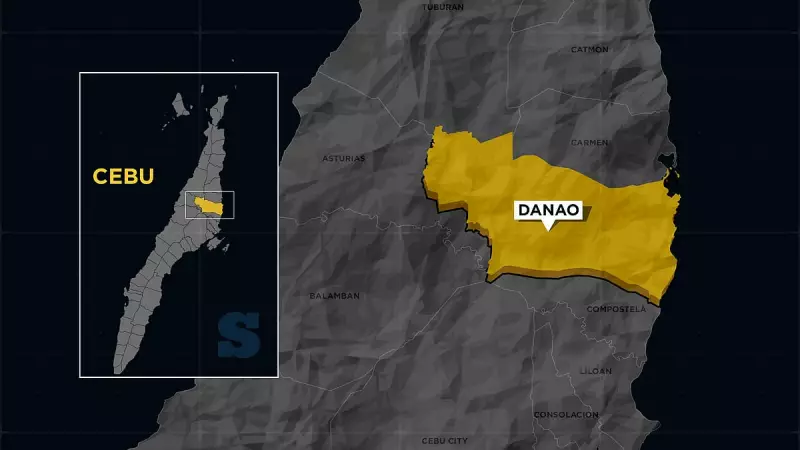
The local government of Danao City in Cebu has taken a bold stand against the national Department of Public Works and Highways (DPWH), creating a significant impasse over infrastructure priorities and the use of public funds.
A City's Defiant Stand Against National Projects
On Saturday, December 20, 2025, Danao City Mayor Ramon “Nito” Durano III officially declined to issue permits for several DPWH infrastructure projects scheduled for 2026. This decision, communicated via the official Danao City Government Facebook page by Vice Mayor Ivy Durano, blocks projects worth approximately ₱89.35 million from the national budget.
The city argues that the DPWH's planned works—which include road re-concreting and the construction of a new district office—ignore the pressing aftermath of Typhoon Tino. Instead, local leaders are urgently calling on the National Government, including President Ferdinand Marcos Jr., to reprogram these millions toward the reconstruction of critical bridges and flood mitigation systems.

The Core of the Conflict: Good Roads vs. Broken Bridges
This standoff highlights a frequent disconnect in Philippine infrastructure planning. National agencies often focus on preventive maintenance and road widening, while local governments grapple with immediate disaster recovery. A technical review by the City Engineering Office found that DPWH intended to tear up and re-concrete roads that were still “structurally sound and serviceable.”
“Sad to note that the projects submitted by the DPWH to Mayor Nito for 2026 are not among the city’s priority projects,” stated Vice Mayor Durano. She encapsulated local frustration by asking, “There are still many roads in Danao that truly need to be concreted, why tear up those that are already in good condition?”
This “good road to better road” approach is seen as a misallocation when vital infrastructure like the impassable Danao Bridge 1 remains broken, severing emergency routes and crippling local commerce.
Broader Implications and What Comes Next
The city's move is a high-stakes gamble for fiscal accountability and local autonomy. By rejecting the DPWH plan, Danao is asserting that public funds must address the most acute needs first, particularly climate resilience and disaster risk reduction. This challenges the traditional top-down budgeting model, setting a potential national precedent for local governments to veto projects misaligned with ground realities.
Historical data from the DPWH web portal shows Danao City received ₱3.4 billion for 132 projects from 2016 to 2025, including ₱417 million for five flood control projects from 2022 to 2023. Despite this, the current disaster damage necessitates a different focus.
The DPWH district engineer has acknowledged the city's findings on some projects but indicated the 2026 program remains focused on the Cebu North–Hagnaya Wharf Road and the district office. The agency warned that without city support, the projects may be canceled.
The ball is now in the National Government's court. Danao City awaits a response from Malacañang and the Department of Budget and Management (DBM) regarding its request to reprogram the ₱89.35 million. The risk is a funding vacuum: if the request is denied, the city faces a lose-lose scenario of accepting unneeded projects or losing the allocation entirely, leaving its critical bridges in ruins for the 2026 fiscal year.