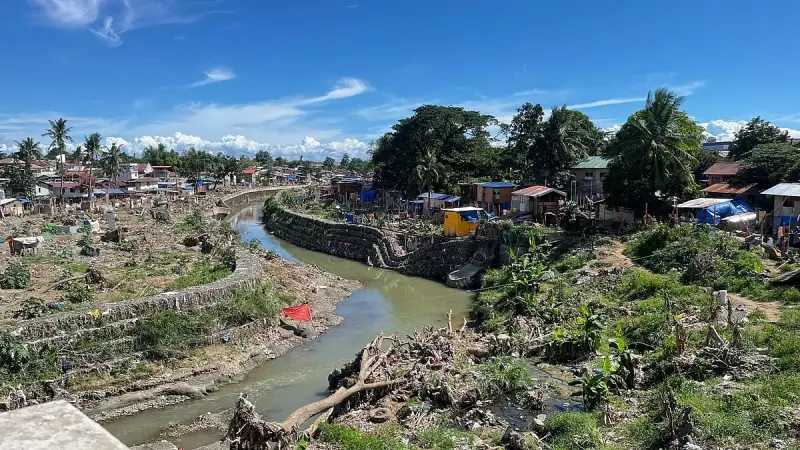
During a critical inspection visit to Mananga Bridge 3 in Talisay City, Cebu, on Tuesday, January 27, 2026, Department of Public Works and Highways (DPWH) Secretary Vince Dizon unveiled a comprehensive flood mitigation strategy aimed at safeguarding communities from devastating inundations similar to those experienced during Typhoon Tino.
Restoring the River's Natural Flow Capacity
Secretary Dizon personally assessed the river's condition and discovered that certain sections of the waterway have narrowed to a mere 15 meters in width. To address this critical bottleneck, the DPWH has committed to a bold initiative: widening the Mananga River to a full 30 meters. This ambitious expansion is designed to significantly enhance the river's capacity to channel water safely during periods of intense rainfall and severe weather events.
"The extensive damage and disruption to numerous households we witnessed here can be directly attributed to the river's constricted width," Dizon explained, emphasizing the urgent need for intervention. "By doubling its breadth, we aim to create a more resilient natural drainage system that can withstand future climatic challenges."

Oplan Kontra Baha: A National Flood Defense Program
This river widening endeavor forms a crucial component of the national Oplan Kontra Baha program. This holistic initiative encompasses not only structural modifications but also essential maintenance activities like dredging and desilting. These processes involve the meticulous removal of accumulated sediment, debris, and waste from the riverbed, thereby deepening the channel and improving overall water flow efficiency.
In a show of local support and collaboration, Talisay City Mayor Gerald Anthony "Samsam" Gullas Jr. confirmed that the city government will deploy its own equipment and resources to assist in the cleanup operations. Work has already commenced at the strategic river mouth located in Barangay Dumlog, marking the first phase of this extensive environmental and infrastructure project.
Regional Coordination for Watershed Management
Recognizing that flooding is a transboundary issue affecting multiple jurisdictions, Secretary Dizon announced plans for high-level coordination meetings. He will convene officials from the Cebu Provincial Government alongside leaders from the cities of Cebu, Mandaue, and Talisay. The primary objective is to develop a unified, integrated master plan for the sustainable management of several key river systems, including the Butuanon River and the Cotcot River.
The DPWH has set an aggressive timeline for these immediate remedial works, targeting completion between January and June 2026. This six-month window capitalizes on the prevailing dry season, providing optimal working conditions before the anticipated onset of the rainy season in mid-year.
"We must maximize this period of favorable weather to implement tangible, on-ground solutions well before the next rainy season arrives," Dizon stated, underscoring the project's time-sensitive nature.
Long-Term Infrastructure and Relocation Strategies
Beyond immediate repairs, engineers are evaluating long-term structural interventions, such as the construction of a water-impounding area. This specialized infrastructure would function by capturing and temporarily storing excess rainwater upstream, subsequently releasing it in a controlled, gradual manner to prevent sudden, destructive flash floods downstream.
Concurrently, the government is prioritizing the safety of residents living in high-risk zones. A systematic relocation program is being organized for families residing within designated "no build zones" along the vulnerable riverbanks. The National Housing Authority (NHA) will spearhead efforts to construct permanent, secure housing for these displaced communities, effectively moving them out of harm's way.
"Strict enforcement of our 'no build zones' is non-negotiable; we have no alternative but to ensure these areas remain clear for public safety," Dizon firmly added.

Collaborative Execution and Future Outlook
The ultimate success of these multifaceted projects hinges on seamless cooperation between national agencies and local government units. While river widening and potential dam construction promise to reduce flood risks for thousands of residents, officials acknowledge the pressing need to swiftly identify suitable land for relocation sites.
"Expeditious action is paramount. We are hopeful that suitable lands can be identified promptly, allowing construction to commence before the rainy season begins," Dizon remarked, highlighting the interconnected challenges of infrastructure and social planning.
The Mananga River serves as a vital drainage conduit for both Cebu province and Talisay City. Its propensity to overflow during typhoons and heavy monsoon rains has cemented its status as a top-priority infrastructure concern for the national government, driving these urgent and comprehensive mitigation efforts.