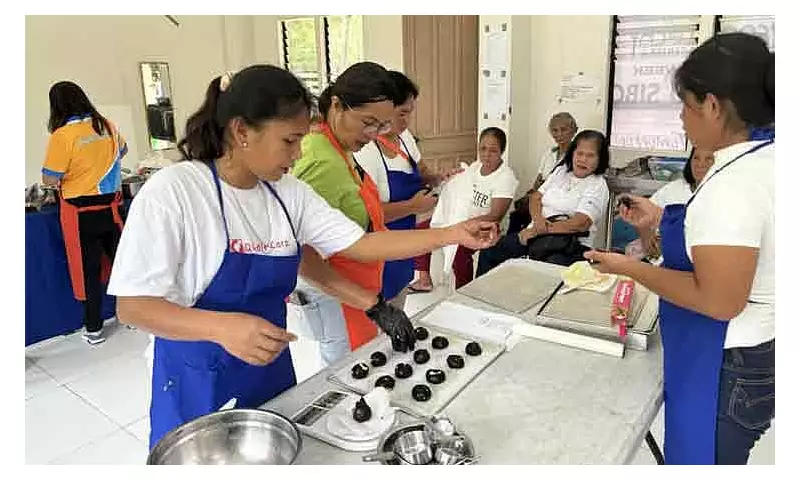
A specialized skills training program in basic pastry making has provided a new avenue of hope for parents of identified child laborers in Malita, Davao Occidental. The initiative underscores the critical link between economic empowerment, particularly for women, and the prevention of abuse and exploitation within families.
Building Skills and Awareness for Stronger Families
The Department of Labor and Employment Davao Occidental Field Office (DOLE-DavOcc) led the practical training session, which was held on December 2, 2025 at the Food Tech Processing Building in Barangay Fishing Village, Malita.
While participants, predominantly mothers, learned the art of pastry creation, the program also integrated crucial legal education. They were informed about the key provisions of the Anti-Violence Against Women and their Children (VAWC) Act of 2004, connecting livelihood support directly with the protection of rights.

A Collaborative Effort for Child Welfare
This activity was a joint endeavor with the Technical Education and Skills Development Authority (TESDA) and the Department of Education (DepEd) in Davao Occidental. It formed part of the local observance of the 18-day Campaign to End Violence Against Women.
DOLE-DavOcc Provincial Director Paul V. Cruz explained the core objective: to equip parents with viable livelihood skills that can generate an alternative income. "This can serve as an alternative source of income — ultimately contributing to the withdrawal of their children from hazardous or exploitative work," Cruz stated.
He emphasized the collective responsibility to safeguard children. "Our children must be shielded from all forms of abuse and exploitation. It is our collective obligation to ensure that they grow in environments that nurture their dreams, not hinder them," he added in his message.
Messages of Support and Encouragement
The event also featured supportive messages from partner agencies. TESDA-Davao Occidental provincial director Engr. Alfredo V. Panuela Jr. and DepEd master teacher Maria Teresa B. Lugo encouraged the participants to take pride in their newly acquired capabilities, framing the skills as tools for sustainable family development.
Director Cruz concluded by calling for continued collaboration, stating, "Let us continue working together to free every child from the grips of child labor and guide them toward a safer, brighter, and more hopeful future." The program stands as a concrete example of how inter-agency cooperation can address the root causes of child labor through family empowerment.