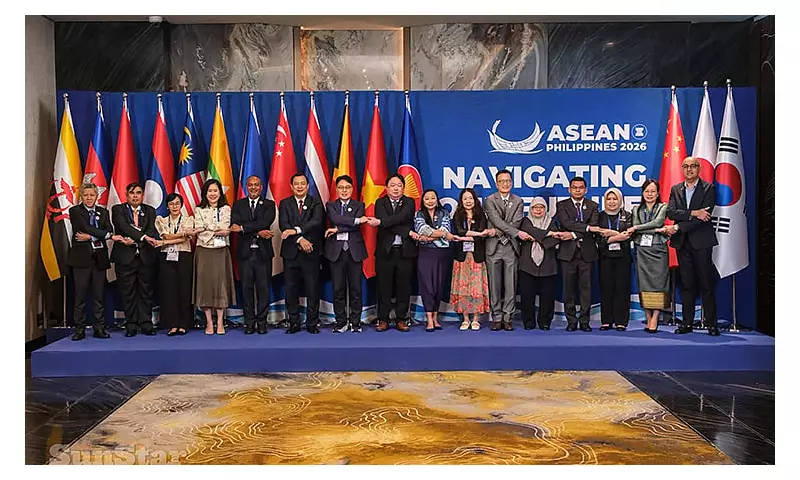
ASEAN Strengthens Tourism Alliance with Key Asian Partners in Cebu Summit
Tourism leaders from the Association of Southeast Asian Nations (ASEAN) have reaffirmed their commitment to enhanced collaboration with major dialogue partners China, Japan, and South Korea during a significant regional gathering in the Philippines. The 48th ASEAN Plus Three National Tourism Organizations Meeting, held on Tuesday, January 27, 2026, at the Nustar Convention Center in Cebu City, brought together officials to discuss strategies for sustaining visitor growth and fostering economic development across Southeast Asia.
Vital Alliance for Regional Prosperity
During the opening session, Tourism Undersecretary Verna Emeralda Buensuceso emphasized that this partnership represents a vital alliance that underscores tourism's critical role in promoting unity, cultural exchange, and shared prosperity. Tourism serves as a vital bridge that connects diverse cultures, fosters international understanding, and stimulates economic growth, Buensuceso stated, highlighting the need for continued cooperation amid evolving challenges and opportunities in the global tourism landscape.
The statistical data presented at the meeting revealed impressive figures: ASEAN member states recorded more than 20 million visitor arrivals from China, over three million from Japan, and more than nine million from South Korea in 2024 alone. These markets are projected to experience further growth throughout 2025, solidifying tourism as one of the region's most dynamic and economically significant sectors.

Plus Three Partners Reaffirm Commitment
Representatives from the three key partner nations expressed strong support for closer tourism cooperation with ASEAN during the discussions. Japan, represented by Hironobu Nara of the Japan Tourism Agency, reaffirmed its dedication to promoting tourism through active exchanges and building resilience against natural disasters. Nara extended condolences to communities affected by recent calamities in parts of ASEAN and emphasized that cooperation remains essential for regional recovery and strengthening people-to-people connections.
South Korea was represented by Jang Youhyun of the Korea Tourism Organization, while China's delegation included Huang Yaping from the Embassy of the People's Republic of China. All parties acknowledged the instrumental role of regional institutions such as the ASEAN China Center, ASEAN Japan Center, and ASEAN Korea Center in advancing shared tourism objectives through the ASEAN Plus Three Tourism Cooperation Work Plan.
Expanding Cooperation with Russia
Beyond the Plus Three framework, ASEAN also pledged to strengthen tourism ties with Russia during the parallel 16th Meeting of the ASEAN–Russian Federation Tourism Consultation. Officials reported that tourist exchanges between Southeast Asia and Russia have not only recovered but exceeded pre-pandemic levels, creating new opportunities for collaboration in areas such as:
- Enhanced connectivity and transportation infrastructure
- Workforce development and skills exchange programs
- Digital transformation and technological innovation
Buensuceso revealed that Southeast Asia welcomed more than two million visitors from Russia in 2024, with this figure already surpassed in 2025. She described Russia as a long-standing partner in promoting resilient and inclusive tourism based on meaningful people-to-people exchanges.
Russian official Igor Maksimov of the Ministry of Economic Development noted that tourism relations with ASEAN span 35 years and have demonstrated steady recovery since the COVID-19 pandemic. He advocated for adopting a new joint work plan to address remaining challenges and deepen bilateral cooperation.
Future Directions and Collaborative Initiatives
Looking ahead, ASEAN officials called for comprehensive cooperation that focuses on several key areas:

- Improving traveler confidence and safety through enhanced security measures
- Supporting skills exchanges and professional development programs
- Enhancing connectivity through improved transportation networks
- Advancing digitalization efforts including joint promotional campaigns and data sharing mechanisms
The discussions in Cebu are expected to shape joint programs focused on skills development, digital initiatives, and market expansion as both ASEAN and its partners aim to sustain cross-border travel momentum well beyond 2026. This renewed commitment represents a strategic effort to harness tourism's potential as an engine for economic growth, cultural understanding, and regional stability across Asia.