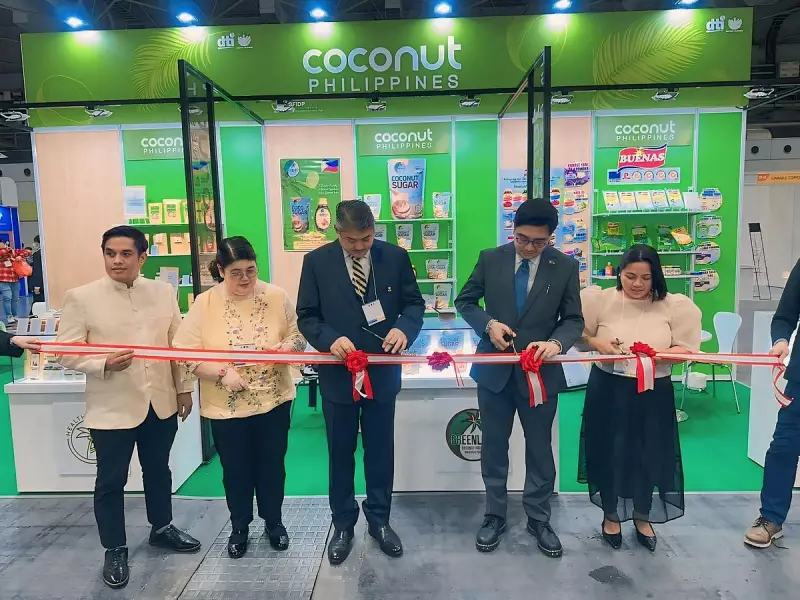
Philippine food and wellness exporters have made a significant breakthrough in the Japanese market, securing immediate sales and promising leads worth US$1.72 million during their participation in Fabex Kansai 2025. The event, which concluded recently, highlighted the rising demand for high-quality Philippine coconut products and opened doors for long-term supply agreements in Japan's expanding health-focused consumer sector.
Philippine Pavilion Draws Major Interest
The success story was centered at the dedicated Philippine Pavilion, inaugurated by PTIC-Osaka Commercial Counsellor Michael Alfred V. Ignacio and Consul General Voltaire D. Mauricio. A total of 25 Filipino export companies showcased a diverse range of products perfectly aligned with Japanese trends toward healthier living.
The offerings included plant-based beverages, natural sweeteners, and specialty oils derived from coconuts. This strategic product alignment was no accident, as it directly catered to Japan's well-documented preference for natural, plant-based ingredients in food and wellness products.

Strategic Preparation and Market Insight
Prior to the exhibition, the delegation engaged in thorough market preparation to ensure competitiveness. Organized by PTIC-Osaka and the DTI-Export Marketing Bureau, with backing from DTI Laguna and Region IV-A under the Coconut Farmers and Industry Development Plan (CFIDP), the group conducted detailed market scoping and retail audits.
These activities allowed exporters to deeply understand Japanese pricing strategies, packaging preferences, consumer behavior, and competitor positioning. A particularly insightful visit was made to Cocowell’s Sari-Sari Store, which provided a real-world view of how Philippine coconut products are marketed and sold within Japan's unique retail environment for wellness goods.
Confidence and Quality on Display
The results at Fabex Kansai, which attracted over 30,800 visitorsJapan's strong confidence in the Philippine coconut supply chain and its capacity for innovation.
"These results strengthen our long-term positioning in the Japanese market and open new opportunities for sustainable commercial growth," Ignacio noted.
Consul General Mauricio added that the delegation's performance underscored the world-class quality of Philippine coconut products and the readiness of local micro, small, and medium enterprises (MSMEs) to meet the exacting standards of international markets. "We are committed to further enhancing these partnerships to create lasting, mutually beneficial economic opportunities," Mauricio said.
Broader Impact on Philippine Exports
The Department of Trade and Industry (DTI) highlighted that this successful outing contributes to larger national goals. The performance at Fabex Kansai is part of concerted efforts to:
- Grow regional MSMEs and integrate them into the global export economy.
- Build greater resilience in the country's export sectors.
- Secure higher value placements for Philippine agricultural products in advanced markets like Japan.
This milestone demonstrates the effective synergy between government support programs like the CFIDP, which assists coconut farmers and MSMEs, and the proactive market-seeking initiatives of Filipino businesses. It marks a significant step in solidifying the Philippines' reputation as a reliable and innovative source of premium wellness ingredients for discerning markets worldwide.