Eduardo Rama Proposes Landmark Bill to Scrap Travel Tax for Filipino Nationals
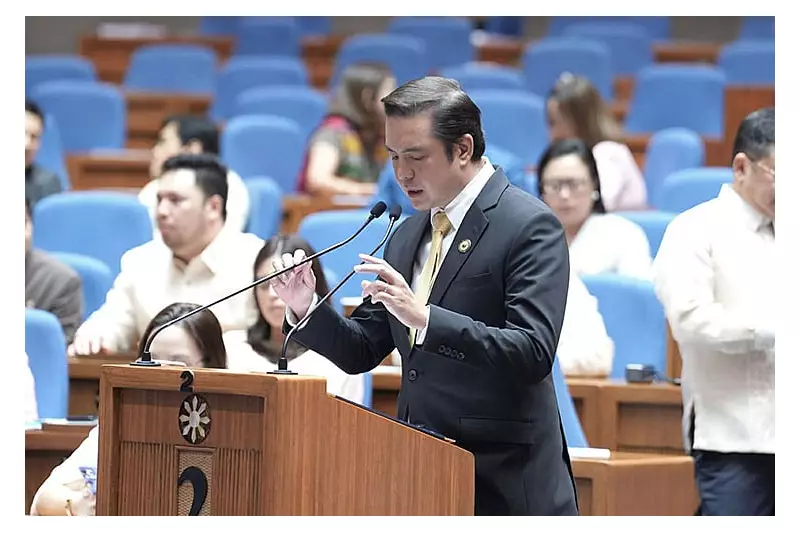
Cebu City South District Representative and House Deputy Majority Leader Eduardo “Edu” Rama Jr. has introduced a groundbreaking legislative measure aimed at removing the travel tax imposed on Filipino citizens departing from the Philippines. The bill, designated as House Bill 7367, was formally submitted on Tuesday, January 27, 2026, and is now awaiting review and committee assignment in the House of Representatives.
Constitutional Right and Financial Relief
In his explanatory note, Representative Rama emphasized that the freedom of movement is a fundamental right guaranteed by the Philippine Constitution. He argued that the current travel tax places an undue financial burden on Filipino families, overseas workers, students, and senior citizens, who should be able to travel without excessive regulatory or monetary obstacles.
“All Filipinos must be able to travel freely, without undue financial or regulatory hindrance,” Rama stated. “Policies that unnecessarily burden the exercise of this right deserve careful re-examination.”

Current Travel Tax Structure and Proposed Changes
Under existing regulations, Filipino travelers are required to pay varying amounts based on their flight class and eligibility for reduced rates:
- Full Travel Tax: P2,700 for First Class and P1,620 for Economy
- Standard Reduced Rate: P1,350 for First Class and P810 for Economy
- OFW Privileged Rate: P400 for First Class and P300 for Economy
Rama highlighted that these fees represent a significant additional expense, particularly for groups or individuals traveling for essential personal or professional reasons. The proposed bill seeks to prohibit the collection of travel taxes for flights booked after the Act’s effectivity, effectively repealing Presidential Decree 1183 and related laws that authorize such levies.
Alignment with Regional Agreements and Economic Goals
The legislation is aligned with the Philippines’ commitments under the ASEAN Tourism Agreement signed in 2002, which encourages member states to facilitate travel within the region and phase out travel taxes on ASEAN nationals. Rama also pointed to recent policy developments, such as Memorandum Order 29, which exempts travelers from Mindanao and Palawan airports from travel tax when traveling to BIMP-EAGA destinations.
“This measure represents a concrete step toward fulfilling our regional obligations, advancing regional integration, and enhancing the competitiveness of the Philippines as a regional tourism and transit hub,” Rama explained.
Funding Concerns and Alternative Solutions
While acknowledging that travel tax revenues currently support programs under the Tourism Infrastructure and Enterprise Zone Authority, the Commission on Higher Education, and the National Commission for Culture and the Arts, Rama contended that these initiatives should be financed through existing government funds. He argued that Filipino travelers already contribute to state coffers via income tax, value-added tax, and other forms of taxation, making additional travel levies redundant and burdensome.
The bill’s proponents believe that eliminating the travel tax will promote mobility, boost tourism, and stimulate economic growth by making international travel more accessible and affordable for all Filipinos.