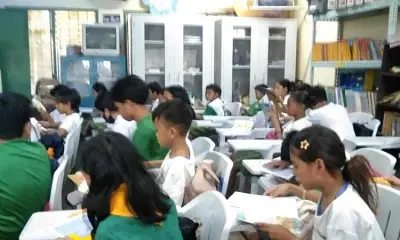
The Department of Education Central Visayas (DepEd 7) assured families on Monday, June 8, 2026, that students in northern Cebu using blended learning due to earthquake-induced classroom shortages will not suffer literacy setbacks. Despite extensive damage to school infrastructure caused by the magnitude 6.9 earthquake that struck northern Cebu on Sept. 30, 2025, DepEd 7 said learning can continue through alternative delivery modes that have been used during previous emergencies.
The department earlier reported that more than 7,500 classrooms across Cebu were affected by the earthquake, with 5,587 sustaining minor damage, 803 suffering major damage, and 1,187 completely destroyed. DepEd officials drew parallels with the Covid-19 pandemic, when schools nationwide shifted to online and blended learning to ensure educational continuity despite prolonged disruptions to face-to-face classes.
"We have been implementing the blended modality since Covid times, and we have essential competencies given to every student," DepEd 7 Information Officer Amaryllis Villarmia said. She said the department already has systems and learning standards in place to ensure students continue acquiring the competencies expected of them regardless of the learning modality. According to Villarmia, these measures are designed to guarantee educational continuity during disasters, allowing schools to adapt to emergencies while minimizing disruptions to learning. She added that the curriculum undergoes extensive planning, consultation and research to ensure learning competencies remain appropriate and responsive to students' needs.

The assurance comes amid concerns raised by education advocates and policymakers about the long-term effects of pandemic-related learning disruptions. According to the Second Congressional Commission on Education (EDCOM II), learning losses and educational backlogs accumulated during the pandemic have left Filipino students lagging in literacy and other foundational skills by as much as four to five years. Despite these concerns, DepEd maintained that literacy development is influenced by a range of factors and should not be assessed solely on whether students learn through face-to-face, online or blended modalities.
"There are many factors we have to consider other than the efforts of DepEd," said Villarmia. She stressed that literacy development ultimately depends on meaningful classroom engagement, particularly the quality of interaction between teachers and learners, regardless of the platform or modality used. Villarmia noted that several external factors can affect a student's ability to concentrate and learn effectively, prompting the department to implement support programs that address barriers to learning beyond the classroom.
"There are times when no matter how effective a teacher may be, students are unable to fully absorb the lessons because they are hungry and unable to concentrate," she said in Cebuano. To help address such challenges, DepEd is expanding its School-Based Feeding Program (SBFP) to help undernourished students focus, Villarmia said. Through programs such as the SBFP, the department seeks to address nutritional deficiencies and other concerns that may hinder academic performance, recognizing that learning outcomes are shaped by both educational and socioeconomic factors. Villarmia added that whenever issues arise that affect students' concentration, participation or overall learning experience, the department works to address them as quickly as possible to ensure learners remain engaged and supported throughout the school year.