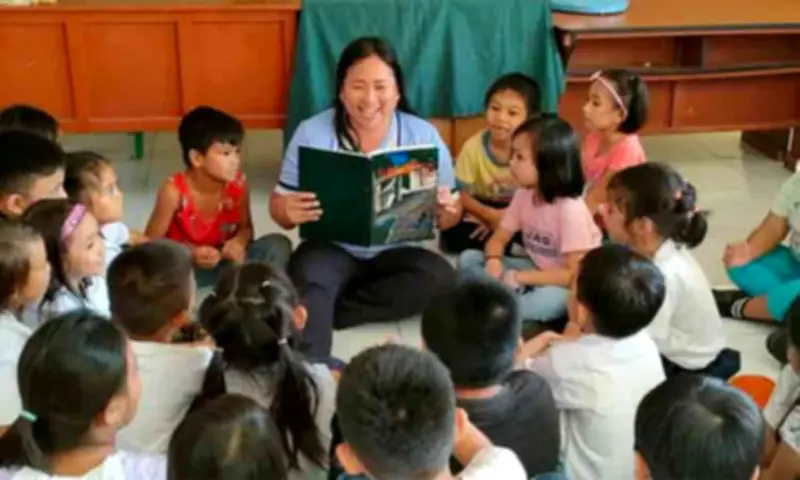
The Department of Education-Davao Region (DepEd-Davao) has achieved a significant reduction in the region's literacy problem rate, with the percentage of struggling readers dropping to 11.71 percent by the end of School Year 2025 from 47.84 percent at the start of the academic year.
Substantial Gains in Reading Proficiency
DepEd-Davao Regional Director Allan G. Farnazo announced that end-of-school-year assessments showed substantial gains in reading proficiency among learners from kindergarten to junior high school. He noted that literacy challenges were widespread at the beginning of the school year, affecting learners from kindergarten to Grade 6 and even junior high school students.
Pandemic's Lingering Effects
Farnazo attributed much of the problem to the lingering effects of the COVID-19 pandemic, which disrupted face-to-face classes for nearly three years and left many students struggling with foundational reading skills. While welcoming the improvement, he stressed that DepEd still has more work to do.

"Let's celebrate, but let us work hard so we can reduce the numbers even further," Farnazo said. He emphasized that the sharp decline in struggling readers shows that the department's literacy programs are working. However, the gains resulted from a collective effort involving teachers, parents, local governments, higher education institutions, and community partners.
Notable Improvements in Divisions
Among the divisions that posted notable improvements was Davao Occidental, which had previously been identified as one of the country's areas with the highest percentage of struggling readers. According to the Second Congressional Commission on Education (EdCom II), Davao Occidental ranked 10th nationwide in the Comprehensive Rapid Literacy Assessment conducted at the start of Academic Year 2025-2026, with 57.17 percent of learners struggling with reading. Farnazo said the province has since posted significant gains following the implementation of targeted literacy interventions.
He also cited the Division of Digos, which has declared zero non-readers and achieved mastery-level performance across its schools. Meanwhile, Panabo City recorded the region's highest performance in Science in the National Achievement Test.
Interventions and Programs
To address literacy gaps, DepEd-Davao implemented several interventions, including the Aral Program, summer remediation classes, and a pull-out system that provides struggling learners with additional reading support. Farnazo also credited state universities and colleges for deploying education students as volunteer tutors to help learners improve their reading skills.
Sustaining Gains
The department plans to sustain its gains through the Regional Learning Inventory Program (RLIP), which requires every division to align reading interventions with the specific needs of learners in their communities. Farnazo said the goal is not only to reduce the number of struggling readers but also to ensure that learners achieve reading proficiency and academic success.
DepEd-Davao officials said improving literacy remains a top priority as the region continues to recover from pandemic-related learning losses and works to raise overall educational outcomes.